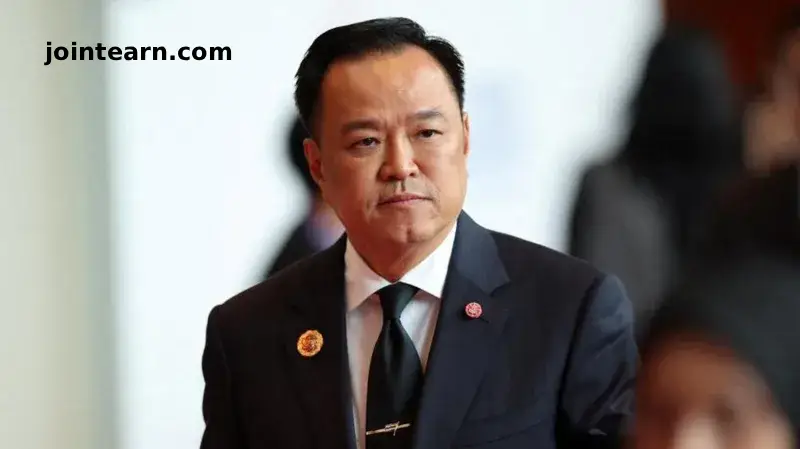
Thailand’s Prime Minister Anutin Charnvirakul has officially dissolved parliament, citing ongoing challenges including deadly clashes along the Cambodian border and political instability within his minority government. A general election is now set to be held within the next 45 to 60 days, marking a significant turning point in the country’s recent political turbulence.
Anutin’s Statement: “Returning Power to the People”
In a royal decree published on Friday, Anutin emphasized that the dissolution of parliament is intended as a democratic measure to restore authority to Thai citizens.
“The appropriate solution is to dissolve parliament… which is a way to return political power to the people,” Anutin stated.
Anutin, a business tycoon and leader of the Bhumjaithai Party, became Thailand’s third prime minister since August 2023. When he assumed office in September, he had initially promised to dissolve parliament by the end of January. However, with an imminent vote of no confidence looming, he brought forward the election.
Political Context: Minority Government Under Pressure
Anutin’s government has faced widespread criticism for its handling of several crises. Last month, severe flooding in southern Thailand resulted in at least 176 fatalities, further undermining confidence in his administration. Additionally, renewed fighting along the Cambodia-Thailand border has killed at least 20 people and displaced hundreds of thousands.
In his decree, Anutin wrote that while the government had taken “every means in public administration to quickly resolve urgent issues,” political instability hindered effective governance. Endorsed by King Maha Vajiralongkorn, the decree stresses the importance of stability for effective administration.
Break With the People’s Party
The dissolution comes after the People’s Party, Thailand’s largest and youthful progressive political group, withdrew its support for Anutin. Previously, the People’s Party had backed Anutin’s premiership but conditioned its support on reforms to Thailand’s military-drafted constitution and a commitment to dissolve parliament within four months.
Accusing the Bhumjaithai Party of failing to honor this agreement, the People’s Party had planned to submit a no-confidence motion against the government. The party issued a statement on Facebook, saying:
“See you at the polling stations.”
This rift highlights the growing ideological divide between Thailand’s progressive and conservative political forces, with Anutin’s pragmatic Bhumjaithai Party often clashing with the People’s Party’s reform agenda.
Thailand’s Recent Political Turmoil
Thailand has experienced ongoing political instability over the past year, with two prime ministers removed from office by the courts.
- Paetongtarn Shinawatra, Anutin’s immediate predecessor, was dismissed for ethical violations after a leaked call criticized the Thai army and referred to Cambodia’s former leader Hun Sen as “uncle.”
- Srettha Thavisin, who served prior to Paetongtarn, was also removed for ethical violations related to cabinet appointments.
This rapid turnover has fueled political uncertainty and heightened public interest in the upcoming elections.
Upcoming General Election
Thailand’s voters will now head to the polls within 45 to 60 days, with the election expected to reshape the country’s political landscape. Analysts predict the vote will test public support for Anutin’s Bhumjaithai Party, the progressive People’s Party, and other opposition forces.


Leave a Reply