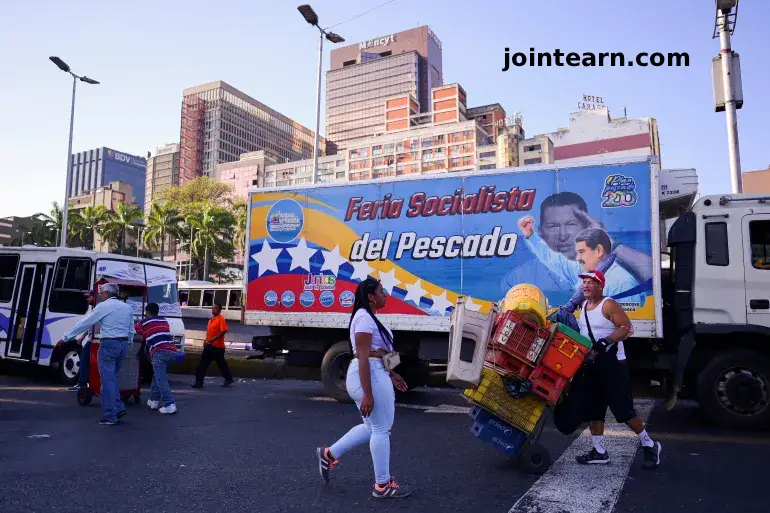
Caracas, Venezuela – Daily life in Caracas continues with street vendors selling fruit and shopkeepers stocking shelves, but a growing sense of tension underlies the routine. With US military assets deployed near Venezuelan waters and heightened rhetoric from Washington, residents are bracing for the possibility of direct confrontation.
Divided Views Among Venezuelans
Some Venezuelans see the US presence as a possible catalyst for change, while others view it as an imperial threat to national sovereignty.
David Oropeza, a 52-year-old farmer and merchant, told Al Jazeera:
“The homeland is the homeland, and my army is my army. I would help however I could.”
Oropeza, who has health challenges, said he would stand with the Venezuelan army if the US attacked. Yet, like many, he is skeptical of both his government and foreign intentions, emphasizing that war is not the solution.
US Strikes and Military Pressure
Since September, the US has conducted nearly two dozen strikes in the Caribbean and Pacific, reportedly targeting suspected narcotics traffickers. These strikes have killed more than 80 people, though the Trump administration has not provided evidence supporting its claims or offered legal justification.
President Donald Trump has warned of potential land-based operations and deployed the USS Gerald R Ford, F-35 jets, and thousands of troops to the region—the largest US show of force in decades.
Venezuelans’ Political Sentiment
Despite the pressure, polls suggest most Venezuelans are concerned with daily survival rather than geopolitics.
- A Datanalisis poll found 55% oppose US sanctions on Venezuela, while only 21% support them.
- On the prospect of a foreign military attack, 55% opposed it, and 23% supported it.
- Sixty percent of Venezuelans describe themselves as politically unaffiliated, compared with 13% supporting Maduro and 19% backing the opposition.
Carolina Tovar, a 60-year-old vendor, expressed hope that US pressure might lead to freedom:
“The day will come when we obtain liberty. I think Maduro already feels a lot of pressure.”
Yet, many like Oropeza caution that external interference rarely benefits a nation, citing historical examples from Panama, Syria, and Libya.
Concerns Over Resources and Sovereignty
Younger residents, such as Diego Mejia, 24, view US interest in Venezuela as primarily resource-driven. Venezuela holds the world’s largest proven oil reserves, along with gold, diamonds, bauxite, iron ore, and rare minerals vital for modern industry.
“Venezuela is a country with too many resources. They are interested because they need its resources,” he said.
Faith and resilience help many cope with uncertainty. The bustling streets suggest residents do not believe an imminent invasion is likely, though anxiety persists.
Government Response
President Nicolas Maduro has ramped up domestic preparations, mobilizing troops, militia, and testing anti-air systems along the Caribbean coast. By November, the government announced a massive mobilisation to prepare for any potential US action.
For many, the priority is peace and survival, with contingency plans focused on family safety and basic resources. Dalibeth Brea, a 34-year-old homemaker, reflected the mixed feelings of fear and hope:
“I would shelter myself out of fear… keep all my family in one place.”
Conclusion
As the sun sets over Caracas, residents remain caught between geopolitical tensions and everyday survival. Opinions vary widely—from defiance and nationalism to cautious hope and pragmatic fear—but the overarching sentiment is clear: most Venezuelans want security, stability, and sovereignty, regardless of external pressures.


Leave a Reply