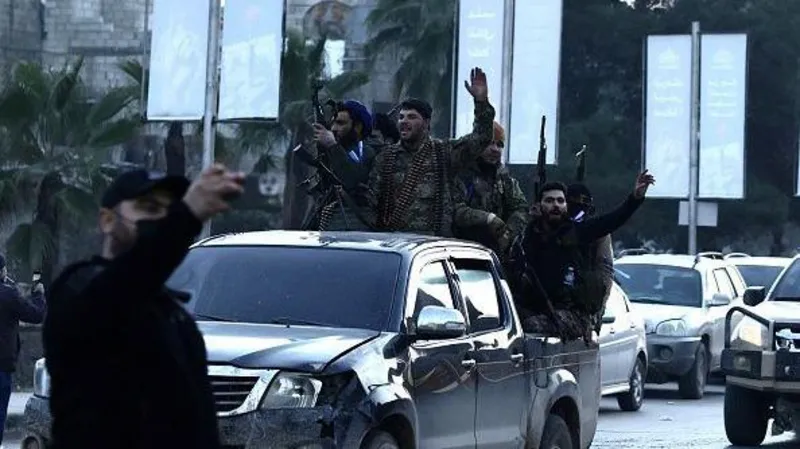
At least 12 people have been killed amid two days of intense clashes between Syrian government forces and Kurdish-led Syrian Democratic Forces (SDF) in the northern city of Aleppo. The fighting has prompted tens of thousands of civilians to flee, primarily from the Kurdish-majority neighborhoods of Sheikh Maqsoud and Ashrafieh, raising fears of a growing humanitarian crisis in the region.
Shelling Forces Mass Displacement
Syrian government forces designated Sheikh Maqsoud and Ashrafieh as “closed military areas”, prompting heavy shelling on Wednesday afternoon. Officials claimed the operation targeted armed groups in the neighborhoods and was “solely aimed at preserving security”.
Residents, however, described scenes of chaos and devastation. One Aleppo resident told reporters, “All my friends have left for other towns. Sometimes it is calm and suddenly war starts again.”
Displaced families, such as Samer Issa and his young children, found shelter in mosques turned into emergency housing. Issa said, “The shelling intensified. We left because our children could no longer endure the hits and the shelling. It was heartbreaking.”
The clashes highlight the precarious position of President Ahmad al-Sharaa, whose government continues to struggle with territorial control and governance a year after the overthrow of Bashar al-Assad in December 2024.
SDF Resistance and Kurdish Autonomy
The Syrian Democratic Forces, controlling much of Syria’s north-east and numbering tens of thousands of fighters, maintain they have no active military presence in Aleppo. They condemned the shelling as a “criminal attempt” to forcibly displace residents.
In March 2025, the SDF signed a deal with the Syrian government to integrate all military and civilian institutions into state structures, including Kurdish forces and administrative bodies. However, the integration has stalled, with both sides accusing the other of trying to undermine the agreement.
The SDF has historically resisted giving up the autonomy it earned during Syria’s 13-year civil war, particularly after playing a crucial role alongside US-led forces in defeating the Islamic State (IS) group.
Risk of Regional Tensions
The Aleppo standoff carries potential regional consequences. Turkey, which supports the Syrian government, classifies the SDF and its dominant faction, the Kurdistan Workers’ Party (PKK), as a terrorist organization. Escalation in Aleppo could therefore draw Ankara further into the conflict, complicating Syria’s fragile stability.
Analysts warn that continued clashes in urban centers like Aleppo risk worsening the humanitarian crisis, disrupting access to food, water, and medical care for civilians, and potentially triggering further displacement across northern Syria.
Humanitarian Concerns
Civilians fleeing the conflict face harsh conditions. Many are living in makeshift shelters, including mosques and community centers. Aid agencies have expressed concern over overcrowding, winter weather, and lack of basic resources, echoing warnings previously issued after clashes elsewhere in Syria.
The Aleppo crisis underscores the challenges of implementing the SDF-government integration deal, as local residents continue to suffer amid ongoing military operations and delayed political solutions.
Looking Ahead
The Syrian government has vowed to assert control over Kurdish-majority areas, while the SDF has signaled that any further attempts to forcibly displace civilians will be met with resistance. Observers predict that without a comprehensive political settlement, clashes may continue in Aleppo and other contested areas, threatening regional stability and the prospects for lasting peace in northern Syria.


Leave a Reply