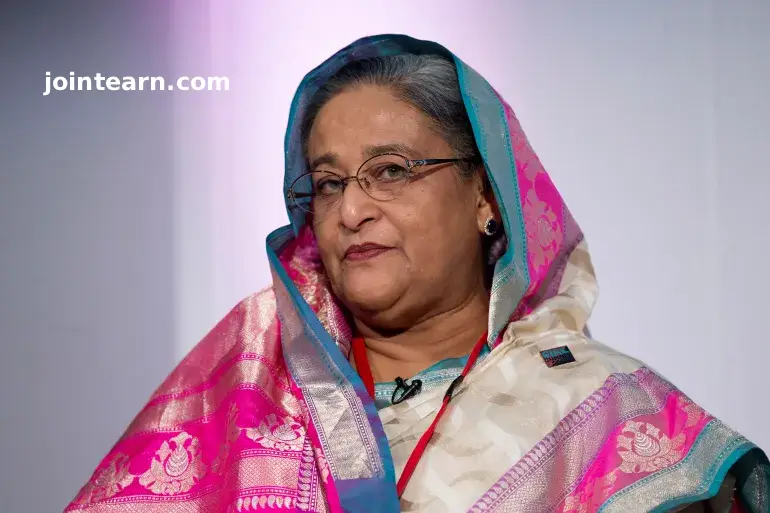
A recent inquiry in Bangladesh has revealed that thousands of people may have been forcibly disappeared during the tenure of former Prime Minister Sheikh Hasina. The report raises serious concerns over human rights violations and politically motivated crackdowns during her administration.
The Inquiry and Its Findings
The Commission of Inquiry on Enforced Disappearances reported that out of 1,913 complaints filed regarding enforced disappearances, 1,569 cases were verified and categorized as confirmed disappearances. Among these, 287 individuals fell into the “missing and dead” category.
However, commission member Nabila Idris cautioned that the real number of disappearances could be much higher, ranging between 4,000 and 6,000 people, as many victims have not come forward or have relocated abroad.
“Contacting many victims of the missing finds more victims through those who have not contacted us, don’t know about us, or have moved to another country,” Idris explained.
Political Context and Hasina’s Death Sentence
In November 2025, Sheikh Hasina was sentenced to death in absentia after fleeing to India, following her government’s brutal crackdown on student-led protests in 2024, which resulted in the deaths of hundreds of demonstrators.
The commission emphasized a primarily political motive behind the disappearances, targeting opposition parties such as the Bangladesh Nationalist Party (BNP) and Jamaat-e-Islami.
Who Were the Victims?
The report details that among the disappeared who later returned alive:
- 75% were Jamaat-e-Islami members
- 22% were BNP leaders and members
For those still missing:
- 68% were BNP leaders or affiliates
- 22% were associated with the Jamaat-e-Islami camp
The inquiry’s findings implicate Sheikh Hasina, her defence adviser Tarique Ahmed Siddique, and former Home Minister Asaduzzaman Khan Kamal in ordering the enforced disappearances. Specific targeted individuals included:
- BNP leaders: Ilias Ali, Hummam Quader Chowdhury, Salahuddin Ahmed, Chowdhury Alam
- Jamaat-e-Islami leaders: Abdullahil Amaan Azmi, Mir Ahmad Bin Quasem, Maruf Zaman
Interim Government Response
Bangladesh’s Chief Adviser Muhammad Yunus, head of the interim government, described the report as “historic” and a critical documentation of abuses of democracy.
“Those who made this horrible incident are people like us. They are living normal lives in society by causing the most brutal events. As a nation, we must come out of this atrocity forever,” Yunus said.
He emphasized the importance of preventing such atrocities from ever recurring and called for national unity in addressing the human rights violations.
Legacy and Political Implications
The inquiry comes shortly after the death of Khaleda Zia, former BNP leader and Hasina’s long-time political rival. Her passing at age 79 marks the end of an era in Bangladeshi politics. Attention now turns to her son, Tarique Rahman, who may seek to continue his mother’s political legacy.
The report underscores ongoing tensions in Bangladesh’s political landscape and highlights the need for accountability and systemic reforms to protect citizens from enforced disappearances.
Key Takeaways
- The Commission of Inquiry verified 1,569 enforced disappearances, with 287 in the “missing and dead” category.
- Real numbers could range from 4,000 to 6,000 victims, including those abroad or unreported.
- The disappearances primarily targeted BNP and Jamaat-e-Islami members.
- Sheikh Hasina and her senior officials are implicated in ordering the disappearances.
- The report has drawn attention to the political and human rights challenges in Bangladesh.
- The death of Khaleda Zia has shifted political focus to Tarique Rahman as a potential leader.


Leave a Reply