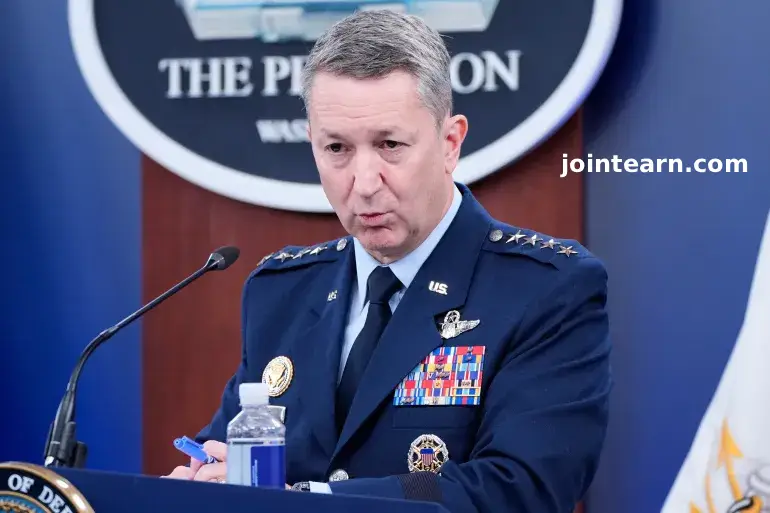
The United States’ top military officer, General Dan Caine, chairman of the Joint Chiefs of Staff, visited Puerto Rico on Monday as part of a high-profile tour of the Caribbean amid one of Washington’s largest naval deployments in the region in decades. The trip underscores the growing role of the US military in pressuring Venezuela over alleged drug trafficking operations.
During the visit, Caine met with troops stationed in Puerto Rico and aboard a Navy warship in regional waters. His office stated the visit was intended to “engage with service members and thank them for their outstanding support to regional missions,” highlighting the administration’s focus on military readiness and regional security operations.
Expanding US Military Presence in the Caribbean
This is Caine’s second trip to the Caribbean since the Pentagon expanded operations, including the deployment of the USS Gerald R. Ford, the Navy’s newest and largest aircraft carrier. US Defense Secretary Pete Hegseth previously described the deployed Marines as “on the front lines of defending the American homeland.”
The current operation involves roughly 15,000 US personnel, including Marines on amphibious ships and around 5,000 troops based in Puerto Rico. The US has also intensified joint military exercises with Trinidad and Tobago, launching a second round of drills within a month aimed at countering drug trafficking and violent crime. Caine is expected to meet with Trinidad and Tobago Prime Minister Kamla Persad-Bissessar during his visit.
US Strikes on Venezuela and the Cartel of the Suns
The US campaign against Venezuela has included maritime strikes on vessels alleged to be involved in drug trafficking, which have resulted in the deaths of at least 83 people on 21 boats. However, authorities have released no evidence confirming narcotics on board. Legal experts argue that the strikes could potentially violate international law, even if drug activity were proven.
To intensify pressure on Caracas, the US designated the Cartel de los Soles (Cartel of the Suns) as a foreign terrorist organization (FTO), despite the group not being a conventional cartel. The administration claims the network includes Venezuelan President Nicolas Maduro and senior officials, alleging their involvement in narcotics shipments to the US. Venezuela has denounced the designation as “ridiculous” and a baseless justification for intervention.
This move follows previous actions against eight Latin American criminal organizations linked to drug trafficking and migrant smuggling. Officials claim that the Cartel de los Soles has collaborated with Venezuela’s Tren de Aragua gang—also designated an FTO—to transport drugs northward. While US officials have hinted at potential military options, legal scholars note that FTO designations do not provide explicit authorization for military operations.
Caracas Pushback and Regional Implications
The Venezuelan government strongly denies involvement in criminal networks and accuses Washington of attempting regime change to gain control of Venezuela’s natural resources. Oil Minister Delcy Rodriguez emphasized on state television:
“They want Venezuela’s oil and gas reserves. For nothing, without paying. They want Venezuela’s gold. They want Venezuela’s diamonds, iron, bauxite. They want Venezuela’s natural resources.”
Foreign Minister Yvan Gil called the US designation “an infamous and vile lie” meant to justify “an illegitimate and illegal intervention.” Analysts from InSight Crime, a foundation monitoring organized crime, describe the US portrayal of the cartel as “an oversimplification,” emphasizing systemic corruption rather than a conventional criminal organization.
The US campaign has sparked domestic debate as well. A Reuters poll indicates only 29% of Americans support the use of lethal force against suspected traffickers without judicial oversight. Former officials stress that FTO designations were never intended to justify military action, raising questions about the legal basis for US operations in the region.
Growing Tensions in the Caribbean
The US military buildup in the Caribbean, coupled with diplomatic pressure and legal designations, highlights the increasingly complex US-Venezuela relations. With tensions escalating, the Caribbean has become a focal point for counter-narcotics operations, military readiness, and geopolitical maneuvering, as Washington continues to seek influence over the region while addressing alleged criminal networks.


Leave a Reply