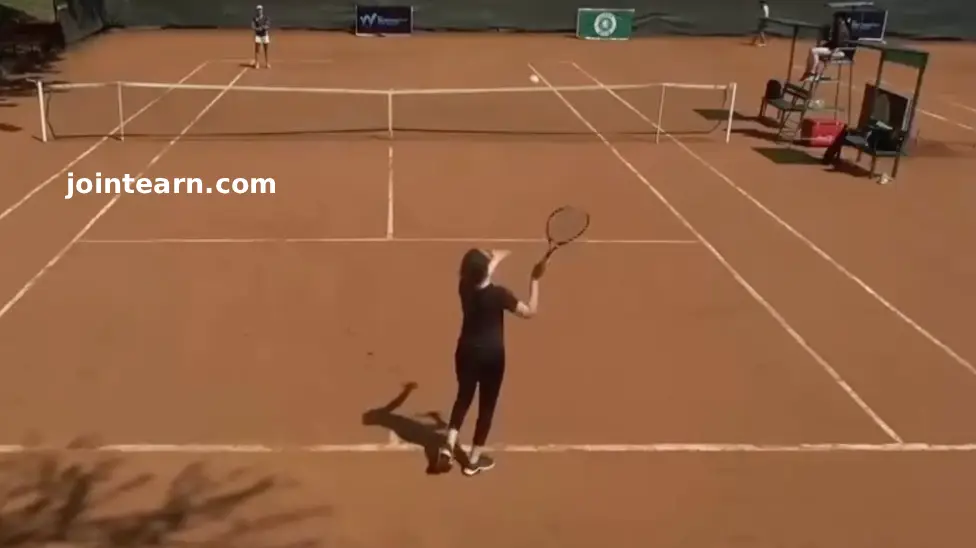
Tournament officials have acknowledged serious errors after a women’s professional tennis match went viral on social media due to the shockingly low standard of play displayed by a wildcard entrant.
The controversy unfolded at an International Tennis Federation (ITF) W35 tournament in Nairobi, where 21-year-old Egyptian player Hajar Abdelkader suffered a 6-0, 6-0 defeat in her opening-round match on Wednesday. Footage of the match spread rapidly online, prompting widespread disbelief and raising questions about player vetting at professional tournaments.
Viral Match Draws Scrutiny
Abdelkader’s performance immediately attracted attention for the wrong reasons. During the 37-minute match against Germany’s Lorena Schaedel, ranked 1,026th in the world, Abdelkader committed 20 double faults and won just three points in total.
Two of those points came from double faults by Schaedel, while the third was the result of an unforced error. The amateur player appeared unable to serve properly, leading many viewers to question whether she had any competitive tennis experience.
Social media users across platforms described the match as “bizarre” and “unprecedented,” with clips garnering millions of views and sparking debate about the integrity of wildcard entries in professional tennis.
Tournament Chiefs Admit Player Should Not Have Competed
In response to the backlash, Tennis Kenya, the national governing body and host of the tournament, admitted that Abdelkader should not have been allowed to play.
In a statement, Tennis Kenya confirmed that Abdelkader had applied for a wildcard entry and was accepted at the last minute following the withdrawal of another player.
The organisation said the decision was made to maintain a balance of players and national representation in the draw but conceded that the move was a mistake.
“With hindsight, she should not have been allowed to compete,” Tennis Kenya said.
“The federation has taken note of this experience and will ensure that such an extremely rare occurrence never happens again.”
Support Offered Amid Online Backlash
Tennis Kenya added that it had contacted both Abdelkader and Schaedel to offer support, acknowledging the intense scrutiny generated by the viral footage.
The governing body stressed its commitment to protecting players’ welfare while also upholding professional standards.
“Tennis Kenya remains committed to fairness, transparency and the integrity of competition, as well as the continued development of tennis in Kenya, East Africa and across Africa,” the statement said.
Egyptian Tennis Federation Distances Itself
Amid speculation online, the Egyptian Tennis Federation (ETF) moved quickly to distance itself from the incident.
Speaking to the BBC, ETF technical director Dia Nabil Loutfy confirmed that Abdelkader is not registered with the Egyptian Tennis Federation and has never been listed as an official Egyptian player.
“We would like to clarify that she is not registered with the Egyptian Tennis Federation, nor is she included in any of our official player lists,” Loutfy said.
According to the ETF, Abdelkader had previously been living in Kenya and entered the tournament solely through a wildcard granted by Tennis Kenya, without any involvement from Egyptian tennis authorities.
“The Egyptian Tennis Federation had no role whatsoever — directly or indirectly — in the nomination, approval or issuance of this wildcard,” Loutfy added.
Questions Raised About Wildcard Oversight
The incident has reignited debate within the tennis community about wildcard entry criteria, particularly at lower-tier professional tournaments designed to bridge the gap between amateur and elite levels.
While wildcards are often used to promote local talent or provide opportunities to emerging players, critics argue that minimum standards must be enforced to protect the credibility of professional competition.
Abdelkader’s ITF biography states that she began playing tennis at the age of 14, a relatively late start compared to most professional players, further fuelling questions about eligibility and preparation.
A Rare but Embarrassing Episode
Tennis Kenya described the incident as an “extremely rare occurrence” but acknowledged the reputational damage caused by the viral footage.
As governing bodies review procedures, the match is likely to remain a cautionary tale about the importance of proper player verification, especially in an era where moments from even small tournaments can attract global attention within minutes.


Leave a Reply