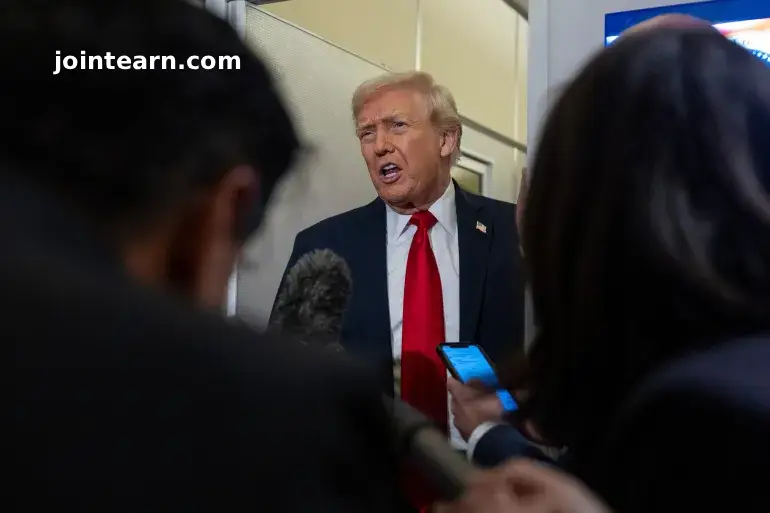
In a major diplomatic move, US President Donald Trump has announced that South Africa will not be invited to next year’s G20 summit in Miami, Florida, citing unsubstantiated claims of a “genocide” against white Afrikaners. The announcement escalates tensions between Washington and Pretoria, highlighting growing friction in US-South Africa relations.
Trump’s Claims Against South Africa
Trump used his social media platform, Truth Social, to reiterate allegations that South Africa is perpetrating human rights abuses against Afrikaners. In his post, he warned that all US funding and subsidies to South Africa will be halted immediately.
“South Africa has demonstrated to the World they are not a country worthy of Membership anywhere,” Trump wrote. “We are going to stop all payments and subsidies to them, effective immediately.”
Despite Trump’s repeated claims, human rights experts emphasize that there is no evidence supporting the existence of a white Afrikaner genocide. Nevertheless, the US president has used these allegations to apply diplomatic pressure on South African President Cyril Ramaphosa and his administration.
Diplomatic Fallout at the G20 Summit
Tensions came to the forefront during the recent G20 summit in Johannesburg, which marked the first time the African continent hosted the meeting. Trump boycotted the summit entirely, refusing to attend and sending no senior US officials.
A particularly controversial incident involved the ceremonial G20 gavel handover, which traditionally passes from the host nation to the next host. Ramaphosa reportedly declined to pass the gavel to a US representative, prompting Trump to announce the exclusion of South Africa from the 2026 summit.
“At the conclusion of the G20, South Africa refused to hand off the G20 Presidency to a Senior Representative from our U.S. Embassy… Therefore, at my direction, South Africa will NOT be receiving an invitation to the 2026 G20,” Trump said.
Background of US-South Africa Relations
Historically, US-South Africa relations have been largely amicable, with the US serving as South Africa’s second-largest trading partner after China. Bilateral trade was valued at approximately $26.2 billion in 2024.
The diplomatic rift began earlier this year when Trump issued an executive order in February 2025, halting all US aid to South Africa over alleged human rights abuses and calling for the resettlement of Afrikaners as refugees in the US.
- US aid: $441.3 million in fiscal year 2023, rising to an estimated $581 million in 2024.
- Refugee policies: Trump set the lowest US refugee cap in history, prioritizing Afrikaners “victims of illegal or unjust discrimination.”
Despite these measures, South African President Cyril Ramaphosa has consistently denied the allegations and emphasized the country’s commitment to global solidarity and cooperation.
Ramaphosa Responds with Diplomacy
During the G20 summit, Ramaphosa focused on unity, equality, and global collaboration, deliberately avoiding direct confrontation over the US boycott. In a statement on social media, he said:
“While some have sought to create division and polarisation between nations, we have reinforced our shared humanity. We have fostered collaboration and goodwill. Above all, we have affirmed that our shared goals outweigh our differences.”
Implications for International Relations
Trump’s decision to bar South Africa from the 2026 G20 underscores rising tensions and could have significant economic and diplomatic repercussions:
- Potential disruption of US-South Africa trade agreements.
- Increased strain on multilateral cooperation within the G20.
- Heightened scrutiny of US foreign policy decisions in Africa.
Experts warn that such unilateral actions may undermine international consensus-building and complicate efforts to address global challenges through the G20 platform.


Leave a Reply