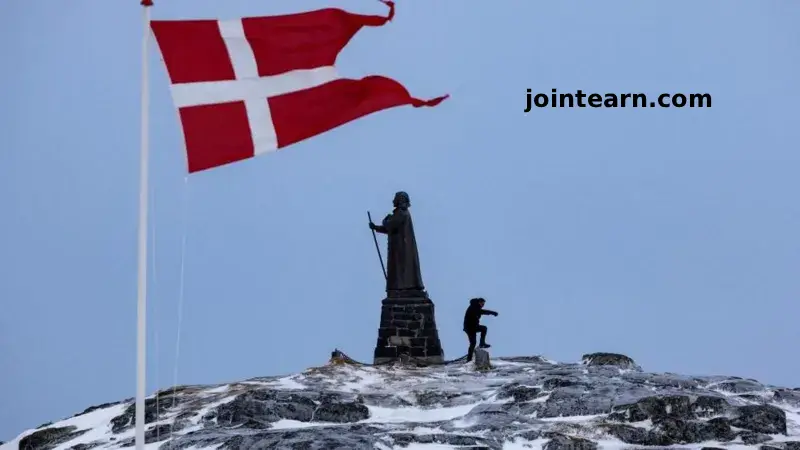
In a bold statement, U.S. President Donald Trump asserted that the United States needs to “own” Greenland to prevent strategic rivals, particularly Russia and China, from gaining influence over the Arctic territory. Trump’s comments, made during a press briefing with reporters, have reignited international debate over the semi-autonomous island, which is part of the Kingdom of Denmark.
“Countries have to have ownership, and you defend ownership—you don’t defend leases. And we’ll have to defend Greenland,” Trump said in response to a question from the BBC. He further emphasized that the U.S. would pursue this objective “the easy way or the hard way,” implying that both diplomatic and more aggressive options were on the table.
The White House has previously acknowledged that the administration is considering purchasing Greenland, but it has not entirely ruled out using military means, raising serious concerns among NATO allies and international observers.
Greenland and Denmark Reject Trump’s Proposal
Both Denmark and Greenland have firmly rejected the notion of selling the territory. Danish officials warned that any military attempt to acquire Greenland would undermine the trans-Atlantic alliance. In a joint statement, Greenlandic party leaders—including those in opposition—expressed their disapproval, stating:
“We do not want to be Americans, we do not want to be Danes, we want to be Greenlanders. The future of Greenland must be decided by the Greenlandic people.”
These statements highlight the strong sense of national identity in Greenland and the importance of self-determination in decisions affecting the island’s future.
Strategic Importance of Greenland
Despite its small population and remote location, Greenland holds considerable strategic value for global powers. Positioned between North America and the Arctic, the island serves as a crucial hub for early warning systems against potential missile attacks and for monitoring naval activity in the Arctic region.
The United States already maintains a significant military presence in Greenland, with over 100 personnel stationed at the Pituffik Space Base in the north-western part of the island. This base has been operated by the U.S. since World War II under agreements with Denmark, which allow U.S. forces to bring in additional troops if necessary.
However, Trump argued that these arrangements are insufficient, claiming that the U.S. must have full sovereignty rather than relying on lease agreements or temporary deployments.
“Countries can’t make nine-year deals or even 100-year deals,” he said.
Reactions from NATO Allies and the International Community
Denmark has received strong support from its NATO allies, including major European nations and Canada, following Trump’s remarks. Officials stressed that Greenland’s future decisions must remain in the hands of Denmark and Greenland, in line with international law.
European leaders and NATO representatives have emphasized the need to address Arctic security collaboratively, warning that unilateral moves could destabilize the region. Statements from these countries consistently cited the importance of upholding the UN Charter principles, including sovereignty, territorial integrity, and the inviolability of borders.
Natural Resources and Climate Change: Why Greenland Matters
Greenland’s appeal extends beyond military strategy. The island is rich in natural resources, including rare earth minerals, uranium, and iron, which are becoming increasingly accessible due to climate change and melting ice. Scientists also speculate that Greenland may hold substantial oil and gas reserves, further heightening international interest in the region.
As global demand for rare earth elements grows—critical for electronics, renewable energy, and defense technologies—Greenland’s mineral wealth adds an economic dimension to the geopolitical stakes.
Public Opinion and Local Sentiment
Greenlanders have expressed deep concern and indignation over Trump’s comments. Many residents fear that external powers seeking control of the island could undermine local governance and threaten their autonomy. Local leaders continue to insist that any discussions about Greenland’s future must involve the Greenlandic people directly.
“It makes me feel sick to my stomach,” said one Greenlander in response to Trump’s remarks, reflecting widespread apprehension among residents.
The Broader Geopolitical Context
Trump’s interest in Greenland is not unprecedented. In 2019, during his first term as president, he made a formal offer to buy the island, which Denmark rejected outright. Recent U.S. military operations in the region, including actions against Venezuela, have also raised questions about the limits of U.S. interventionism abroad.
Meanwhile, Secretary of State Marco Rubio is scheduled to hold discussions with Danish officials to address ongoing tensions and explore diplomatic solutions.
The debate over Greenland reflects broader trends in Arctic geopolitics, where melting ice is opening new shipping lanes, increasing resource extraction opportunities, and intensifying competition among global powers. The situation underscores the delicate balance between national security interests, international law, and local sovereignty in the high north.
Key Takeaways
- Trump emphasized U.S. “ownership” of Greenland as a strategic necessity to counter Russia and China.
- Denmark and Greenland have rejected the proposal, asserting the island is not for sale.
- NATO allies stress that Arctic security must be managed collectively and respect Greenland’s sovereignty.
- Greenland’s strategic location and rich natural resources make it a focal point in global geopolitics.
- Local Greenlanders insist on self-determination, highlighting the tension between global powers and indigenous governance.


Leave a Reply