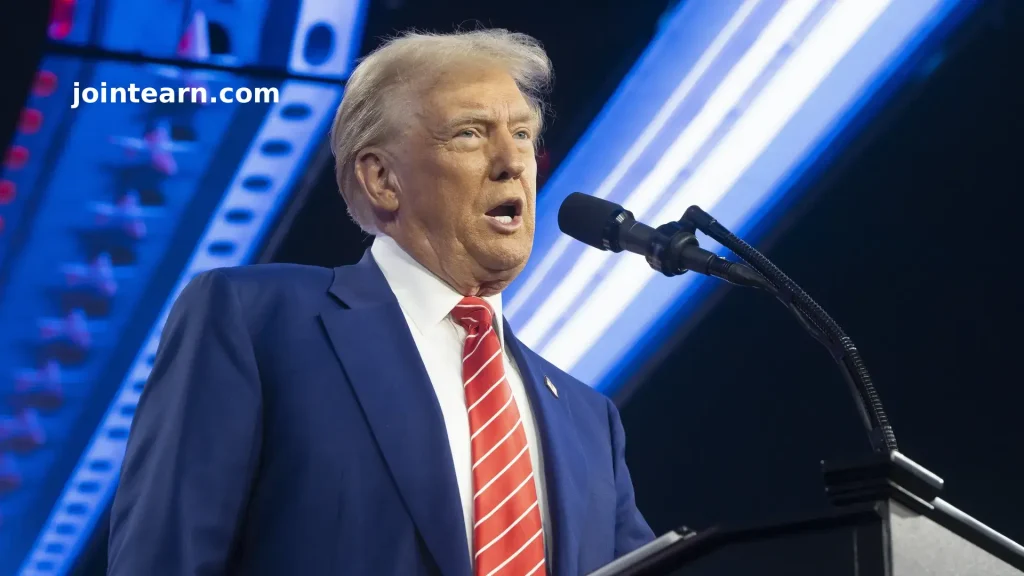
The White House has confirmed that US President Donald Trump and his national security team are actively discussing a potential purchase of Greenland, the vast Arctic territory controlled by Denmark. This revelation has reignited debate over Arctic security, territorial sovereignty, and the strategic importance of Greenland in global geopolitics.
White House Confirms Talks
White House spokeswoman Karoline Leavitt told reporters that the discussions are ongoing, emphasizing that “all options are always on the table” but that President Trump prefers diplomacy as the first approach. She clarified that while military force had not been ruled out in prior statements, the administration’s initial focus remains on negotiating a purchase.
Both Greenland and Denmark have consistently stated that the territory is not for sale, underscoring the diplomatic sensitivities surrounding any potential acquisition.
Strategic Importance of Greenland
Despite its sparse population, Greenland holds immense strategic value for the United States:
- Arctic military and early warning systems: Greenland’s location between North America and the Arctic allows monitoring of potential missile threats and maritime activity.
- Pituffik Space Base (formerly Thule Air Base): Operated by the US since World War II, the base remains a critical part of American defense infrastructure.
- Natural resources: Melting ice has made Greenland’s rare earth minerals, uranium, iron, oil, and gas more accessible, increasing its economic and strategic significance.
US Secretary of State Marco Rubio announced plans to engage in talks with Denmark in the coming week to discuss the situation further.
Past and Present US Interest in Greenland
This is not the first time the United States has expressed interest in Greenland. During his first presidential term in 2019, Trump reportedly made an official offer to buy the island, which Denmark immediately rejected. White House officials emphasize that Greenland could play a critical role in deterring Russian and Chinese expansion in the Arctic, making the discussion “in the best interest of the United States.”
Leavitt stated, “The acquisition of Greenland by the United States is not a new idea. The president has been very open and clear that it is to enhance US national security in the Arctic region.”
European Response and NATO Concerns
European leaders have strongly defended Denmark’s sovereignty over Greenland. A joint statement from France, the UK, Germany, Italy, Poland, Spain, and Denmark affirmed:
“Greenland belongs to its people, and only Denmark and Greenland can decide on matters concerning their relations.”
They stressed that Arctic security must be pursued collectively within NATO, emphasizing sovereignty, territorial integrity, and the principles of the UN Charter.
Denmark, as a NATO ally, warned that any military action against Greenland would jeopardize the alliance, following heightened concerns after the US’s unilateral action in Venezuela.
Local Perspectives in Greenland
Greenlandic politicians and residents expressed alarm at the possibility of a US takeover:
- Aaja Chemnitz, Greenlandic MP, described the discussions as a “clear threat” and “disrespectful to a NATO ally”, though she considered actual annexation unlikely.
- Aleqatsiaq Peary, an Inuit hunter from Qaanaaq, expressed indifference, viewing Greenland as already under Danish control and facing existential challenges due to melting sea ice.
Peary explained that local communities are struggling with climate change impacts, including difficulty maintaining traditional hunting and fishing livelihoods.
Cultural and Environmental Implications
Beyond geopolitics, the potential acquisition of Greenland raises questions about Indigenous sovereignty, environmental stewardship, and climate change adaptation. The Arctic region is rapidly changing due to melting ice and shifting ecosystems, making governance and resource management increasingly urgent.
What Comes Next
The US plans to continue diplomatic discussions with Denmark, while monitoring international reactions closely. While the idea of buying Greenland remains highly controversial, it highlights Washington’s ongoing focus on Arctic strategy, defense, and natural resources.


Leave a Reply