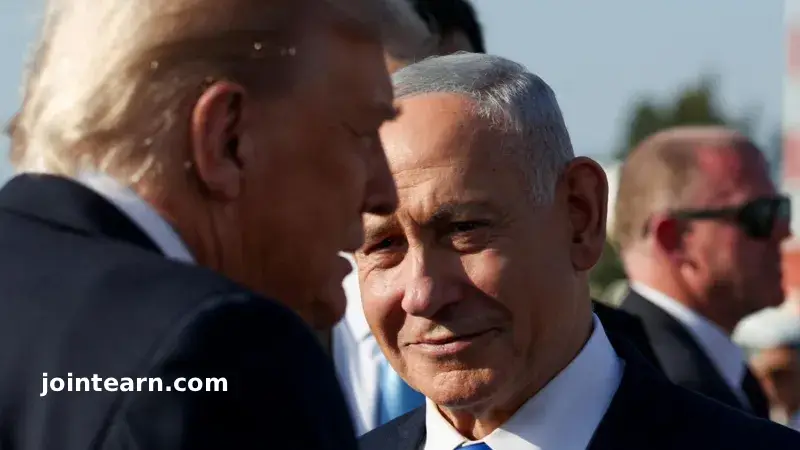
US President Donald Trump met with Israeli Prime Minister Benjamin Netanyahu at Mar-a-Lago on Monday for high-level talks focusing on the Gaza ceasefire, regional security, and broader Middle East issues. The meeting marks the sixth encounter between the two leaders since Trump returned to office 11 months ago and is widely seen as a test of their alignment on key strategic and political matters.
Key Issues on the Agenda
The discussions are expected to cover:
- Gaza ceasefire progress: Phase two of the Trump-backed 20-point plan, which includes Hamas disarmament, the establishment of a Palestinian technocratic government, the deployment of an international security force, Israeli troop withdrawal, and the start of reconstruction in Gaza.
- Syria relations: The future of Israel’s relationship with the new Syrian government under President Ahmed al-Sharaa.
- Iranian rearmament: Concerns over Iran rebuilding its missile and nuclear capabilities following the 12-day conflict in June.
- Hezbollah in Lebanon: Security and military threats from the Lebanese militant group.
The Trump administration is pressing for a quick progression to phase two of the ceasefire, aiming for January, but critics suggest Netanyahu may delay the process, prioritizing Hamas disarmament before Israeli troop withdrawal. Hamas officials insist that disarmament should occur in tandem with steps toward an independent Palestinian state.
Humanitarian Concerns in Gaza
The meeting takes place amid worsening humanitarian conditions in Gaza, exacerbated by severe winter storms. Hundreds of thousands of displaced Palestinians remain in tents with little protection from cold or flooding. Recent reports include:
- Death of a two-month-old baby, bringing the winter death toll to three since 10 December.
- 17 additional deaths due to collapsing storm-damaged buildings.
- UN and aid agencies reporting continued restrictions on full access to basic supplies, despite Israeli claims of facilitating aid deliveries.
Since the ceasefire’s implementation, at least 414 Palestinians have been killed by the Israeli military, while three Israeli soldiers have died in incidents attributed to Hamas. The unresolved return of hostages, including the body of Ran Gvili, remains a sensitive issue.
Political and Security Tensions
The Trump-Netanyahu talks also address ongoing regional tensions:
- US mediation may influence Netanyahu to take softer positions on Gaza and other contentious issues, including opposition to Turkey’s involvement in the planned International Stabilisation Force in Gaza.
- Netanyahu is expected to discuss potential military actions against Iran, citing concerns over the country’s alleged rearmament of missile and nuclear facilities.
- Israeli media reports indicate Netanyahu may attempt to revisit plans to annex parts of the West Bank, a move that Trump opposes and which is considered illegal under international law.
Trump’s involvement underscores the United States’ role as Israel’s key military and political ally, particularly in light of two years of war in Gaza and ongoing regional instability.
Outlook
Observers note that the Florida meeting could be pivotal in shaping the near-term trajectory of the Gaza ceasefire, Palestinian political progress, and broader Middle East stability. How effectively Trump and Netanyahu align on these issues may have far-reaching consequences for the Israel-Palestine conflict, Iran-US-Israel relations, and regional security across Syria and Lebanon.


Leave a Reply