The Trump administration has announced a 5 percent tariff on Mexican imports, escalating tensions over Mexico’s alleged failure to comply with the 1944 US-Mexico Water Treaty. The move comes as farmers and ranchers on both sides of the border demand more water for crops and livestock amid historic drought conditions.
Trump Targets Mexico for Water Shortfalls
In a statement on Truth Social, President Donald Trump accused Mexico of violating the treaty and creating a “water debt” to the United States.
“Mexico still owes the U.S over 800,000 acre-feet of water for failing to comply with our Treaty over the past five years,” Trump wrote.
“As of now, Mexico is not responding, and it is very unfair to our U.S. farmers who deserve this much-needed water.”
Trump set a deadline for Mexico to release 200,000 acre-feet (246 million cubic meters) of water by December 31, warning that the punitive 5% tariff would remain in place until the release occurs.
Background: The 1944 Water Treaty
The 1944 Water Treaty governs cross-border water distribution from the Rio Grande, Colorado River, and their tributaries. Under the treaty:
- The US provides Mexico with 1.5 million acre-feet (1.85 billion cubic meters) of water annually.
- Mexico sends at least 350,000 acre-feet (431 million cubic meters) north to the US.
Years of drought have left Mexico struggling to meet its obligations, with over 75% of the country experiencing moderate to exceptional drought in 2024—the highest level recorded since 2011.
Texas Farmers Push for Action
Texas agricultural interests, including Governor Greg Abbott, have pressed the US government to enforce compliance. Abbott stated:
“Mexico must be held accountable for their continued breaches of our long-standing water agreement. Texas farmers are enduring preventable hardship and erosion of the agricultural viability of the Rio Grande Valley.”
Delays in water deliveries have caused economic losses for farmers, according to the Texas Commission on Environmental Quality (TCEQ).
Mexico’s Response
The Mexican government denies treaty violations, citing extreme drought conditions. President Claudia Sheinbaum emphasized that Mexico had provided water “to the extent it was available,” while also facing domestic pressure from farmers to ease local water restrictions.
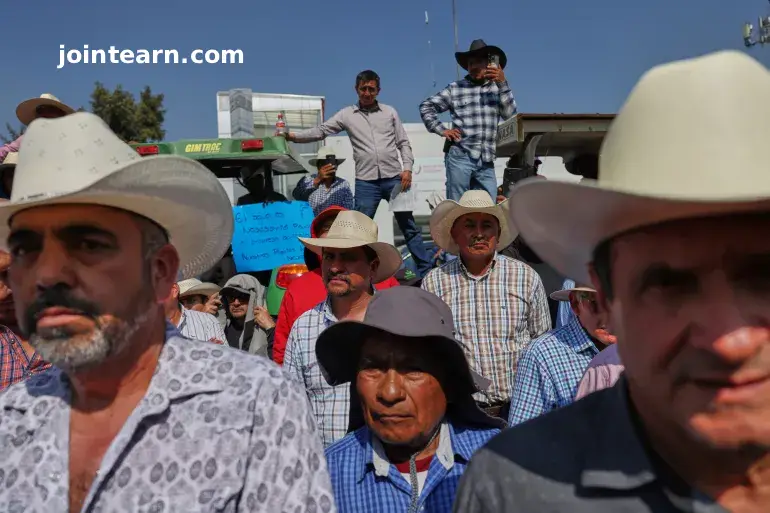
Recent protests in Mexico City saw farmers block access to the Chamber of Deputies with tractors, opposing a bill that would further restrict water usage.
Recent History of Disputes
Tensions over cross-border water flow are long-standing. In 2020, Mexican farmers took control of a dam in Chihuahua to prevent water deliveries to the US. Trump has previously threatened tariffs and sanctions to enforce compliance, including denying special Colorado River water deliveries to Tijuana in 2025—a historic first since the treaty’s signing.
A temporary agreement reached in April 2025 required Mexico to release additional water from international reservoirs, but US officials claim Mexico fell short of the targets. Disruptions from a 43-day US government shutdown also complicated water transfers during the last treaty cycle.
Broader US-Mexico Tensions
Water disputes are just one element of a broader friction between the countries. Trump has also pressed Mexico on cross-border drug trafficking and migration, while Sheinbaum has warned against US actions infringing on Mexican sovereignty. Despite generally steady relations, the recent tariff signals growing strain.
“Let me just put it this way,” Trump said last month. “I am not happy with Mexico.”


Leave a Reply