In a surprising turn of events, United States President Donald Trump has invited Colombian President Gustavo Petro to the White House, just days after leveling serious accusations against him and threatening military action. The sudden detente comes after an hour-long phone call between the two leaders, where they reportedly discussed “the situation of drugs” and “other disagreements,” according to Trump.
This marks a dramatic shift in relations between the two nations, which had been strained since Trump’s aggressive rhetoric and previous sanctions on Colombia.
Background: Rising Tensions Between Trump and Petro
Tensions between the United States and Colombia escalated earlier this week following the US’s controversial abduction of Venezuelan President Nicolas Maduro in Caracas. In response, Trump publicly warned Petro of potential military operations if Colombia did not cooperate, prompting the Colombian president to call for nationwide protests in defense of the country’s sovereignty.
Petro, Colombia’s first left-wing president, has been a vocal critic of Trump’s policies, particularly regarding the US attack on Venezuela. He described the operation as “abhorrent” and convened emergency meetings with the United Nations and the Organization of American States.
Prior to the White House invitation, Trump had accused Petro’s administration—without evidence—of facilitating cocaine trafficking into the US, even describing Petro as “a sick man who likes making cocaine and selling it to the United States.” These claims, coupled with prior diplomatic disputes, including the revocation of Petro’s visa in 2025, had made relations increasingly volatile.
The Phone Call and White House Invitation
On Wednesday, the two leaders held their first direct conversation since the crisis erupted. In a post on his Truth Social platform, Donald Trump stated:
“It was a great honour to speak with the President of Colombia, Gustavo Petro, who called to explain the situation of drugs and other disagreements that we have had. I appreciated his call and tone and look forward to meeting him in the near future.”
Although no specific date has been set, arrangements are reportedly underway for Petro to visit Washington, D.C. This meeting signals a possible thaw in the often tense US-Colombia relationship, which remains critical to both nations’ security and counter-narcotics strategies.
Petro’s Response and Domestic Reaction
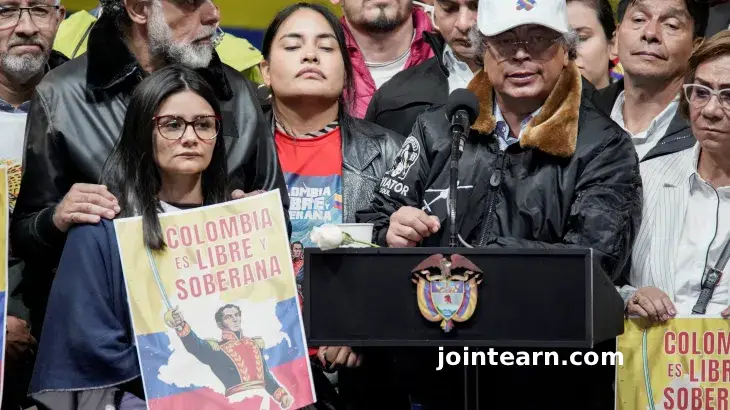
Following the call, President Petro addressed thousands of demonstrators at Bogota’s Plaza Bolivar, acknowledging the detente and emphasizing the importance of diplomacy.
“If we don’t speak, there is war. Colombia’s history has taught us that,” Petro said, highlighting the urgent need to re-establish communication. He added that discussions focused on Venezuela and drug trafficking, with Colombia providing detailed data on its anti-drug operations.
Petro also blamed Colombian politicians for exacerbating tensions with the United States, describing the crisis as “diplomatic, verbal for now,” and stressing that he had worked to restore dialogue.
US-Colombia Relations: Strategic Importance
Despite political disagreements, the United States continues to view Colombia as a key ally in Latin America. Colombia has received roughly $14 billion in military and counter-narcotics support from Washington over the past two decades. The country remains a Major non-NATO ally, providing vital intelligence and operational support to US efforts in the Caribbean and Latin America.
Colombia’s government confirmed that cooperation on intelligence, defense, and law enforcement continues uninterrupted, with joint operations involving the Navy, Coast Guard, DEA, FBI, and ATF ongoing.
Experts Weigh In
Analysts note that the relationship between Trump and Petro remains “volatile and unpredictable.” Anthea McCarthy-Jones, a Latin America expert at the University of New South Wales, told Al Jazeera:
“It seems to oscillate from exchanges involving threats and inflammatory language to more reasoned attempts to use diplomacy as a way forward.”
The recent phone call and White House invitation suggest a willingness to engage diplomatically, at least temporarily, despite deep-seated disagreements over drugs, Venezuela, and regional security.
What’s Next
As Colombia prepares for a potential White House visit, both nations are balancing security, diplomacy, and domestic politics. The invitation may mark the beginning of a more cooperative phase in US-Colombia relations, but experts caution that the alliance remains fragile and subject to sudden shifts.
For the United States, Colombia remains an essential partner in counter-narcotics operations and regional stability. For Petro, the engagement provides an opportunity to defend Colombia’s sovereignty while maintaining access to critical US support.


Leave a Reply