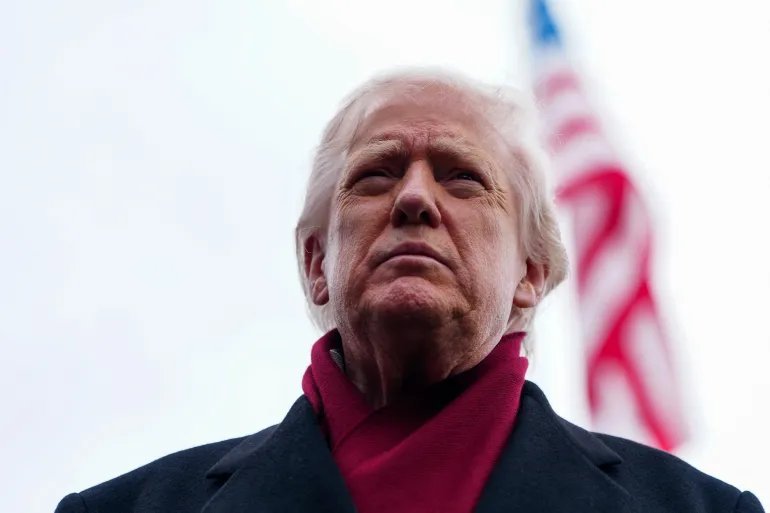
Washington, DC – United States President Donald Trump has ordered his administration to begin a formal process to designate the branches of the Muslim Brotherhood in Egypt, Lebanon, and Jordan as terrorist organizations, citing alleged support for the Palestinian group Hamas and accusing them of waging campaigns against US interests and allies in the Middle East.
The executive decree, signed on Monday, reflects Washington’s ongoing strategy to intensify pressure on groups perceived to be hostile to Israel and the United States.
Allegations Against Muslim Brotherhood Branches
The White House accused the Jordanian branch of the Muslim Brotherhood of providing “material support” to Hamas. It also claimed that Lebanon’s Muslim Brotherhood branch, al-Jamaa al-Islamiya, aligned with Hamas and Hezbollah in their conflict with Israel.
In Egypt, a Muslim Brotherhood leader was reportedly cited for calling for violent attacks against US partners during the war in Gaza. However, the White House did not provide clear evidence to support this allegation. The group has been banned in Egypt and largely forced underground.
“President Trump is confronting the Muslim Brotherhood’s transnational network, which fuels terrorism and destabilization campaigns against US interests and allies in the Middle East,” the White House said in a statement.
Process for Terrorist Designation
Trump’s order directs the US Secretary of State and the Treasury Secretary to consult with the US intelligence community and submit a report on the proposed designations within 30 days. Following that report, a formal foreign terrorist organization (FTO) designation would take effect within 45 days.
The decree also allows for the potential blacklisting of additional Muslim Brotherhood branches globally. If designated, the groups would face:
- Prohibition on providing or receiving material support in the United States
- Restrictions on entry for current and former members
- Economic sanctions aimed at disrupting funding streams
Historical Context of the Muslim Brotherhood
Founded in 1928 by Egyptian scholar Hassan al-Banna, the Muslim Brotherhood has political, social, and charitable branches throughout the Middle East. Many affiliated parties claim to participate in elections peacefully and advocate for nonviolent political engagement.
Despite this, the group has been outlawed in several countries, including Egypt, where it has been driven underground. In the United States, right-wing activists have long pushed for designations labeling the Muslim Brotherhood as a terrorist organization.
Domestic and International Reactions
Critics warn that Trump’s order could empower authoritarian regimes and restrict political freedoms in the Middle East. Concerns also extend to Muslim American advocacy groups, as critics fear the order could be misused to target US-based charities or civic organizations linked, however tenuously, to the Brotherhood.
Nihad Awad, executive director of the Council on American-Islamic Relations (CAIR), emphasized that American Muslim organizations operate independently and provide vital humanitarian services abroad.
“The American Muslim organizations are solid. They serve millions of people abroad, and I hope this will not impact their work,” Awad told Al Jazeera.
Recently, Texas Governor Greg Abbott also designated both the Muslim Brotherhood and CAIR as “foreign terrorist organizations,” prompting lawsuits from the latter against the state.
Analysts suggest that Trump’s move is largely symbolic, aimed at domestic audiences rather than the Middle East. Rami Khouri, a distinguished fellow at the American University of Beirut, described the policy as “amateurish foreign policy” that appeals to right-wing constituencies in the US while having minimal practical impact abroad.
“It’s very much about domestic television audiences and donors rather than real Middle East policy,” Khouri said, noting that the move coincides with US efforts to broker a ceasefire in Gaza.


Leave a Reply