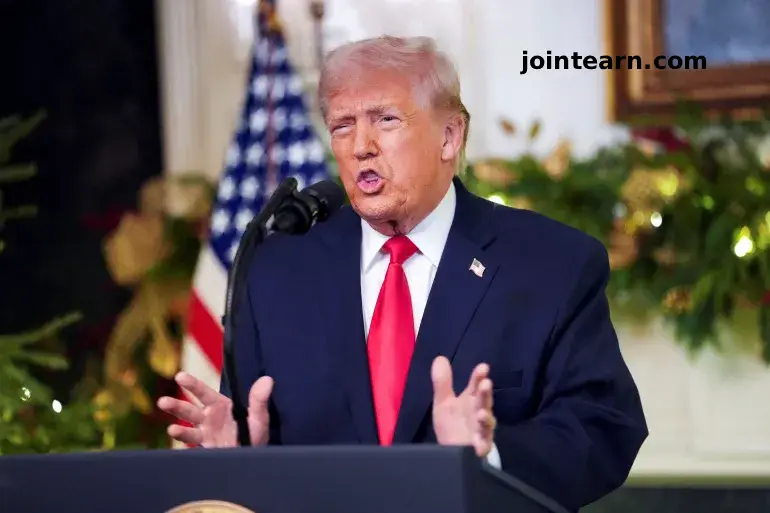
The administration of US President Donald Trump has ordered the recall of dozens of career diplomats, including multiple ambassadors, as part of a renewed effort to align American embassies abroad with the president’s “America First” agenda. The move has sparked sharp criticism from diplomats and lawmakers, who warn it could undermine US credibility and influence overseas.
The recalls are expected to take effect by mid-January, according to diplomats’ representatives, and have been described as unusually abrupt and unexplained.
State Department Confirms Widespread Recalls
While the US State Department declined to release an official list of those affected, a senior official confirmed to Reuters that the recalls are underway and framed them as routine.
“An ambassador is the personal representative of the president,” the official said, speaking on condition of anonymity. “It is the president’s right to ensure that individuals serving overseas are advancing the America First agenda.”
However, diplomats familiar with the matter say the scope of the recalls is unusually broad and heavily targets career Foreign Service officers, rather than political appointees.
Nearly 30 Ambassadors Affected
According to Reuters and the Associated Press, nearly 30 senior diplomats posted to smaller and strategically sensitive countries have already received notice to return to Washington.
The American Foreign Service Association (AFSA), which represents career diplomats, said it had received “credible reports” that multiple ambassadors appointed during the Biden administration were ordered by phone to leave their posts by January 15 or 16, without being given a reason.
“This pattern of abrupt, unexplained recalls is already harming morale, effectiveness, and US credibility abroad,” AFSA spokesperson Nikki Gamer said in a statement.
Africa Hit Hardest by Diplomatic Shake-Up
Africa appears to be the region most affected by the recalls. According to the Associated Press, ambassadors are being removed from 13 African countries, including:
- Nigeria
- Senegal
- Rwanda
- Somalia
- Uganda
- Niger
- Ivory Coast
- Cameroon
- Burundi
- Madagascar
- Mauritius
- Cape Verde
- Gabon
Diplomatic changes are also reportedly underway in Asia, the Pacific, Europe, the Middle East, and Latin America, including countries such as Vietnam, the Philippines, Egypt, Armenia, Slovakia, Nepal, Sri Lanka, Guatemala, and Suriname.
Career Diplomats Not Fired, But Reassigned
Officials emphasized that the recalled ambassadors are not being dismissed from the Foreign Service. Instead, they are expected to return to Washington and may be reassigned to other roles if they choose to remain in government service.
Ambassadors typically serve three to four years in a post, regardless of which party controls the White House, a practice designed to preserve continuity and nonpartisan diplomacy.
Critics say the sudden recalls break with that tradition and risk politicising the diplomatic corps.
Lawmakers Warn of Strategic Consequences
The move has drawn criticism from senior Democrats, including Senator Jeanne Shaheen, the top Democrat on the Senate Foreign Relations Committee.
Shaheen said Trump was “giving away US leadership to China and Russia” by sidelining experienced career ambassadors.
“This makes America less safe, less strong and less prosperous,” she wrote on social media, warning that the diplomatic vacuum could be quickly filled by rival powers.
Foreign policy analysts have echoed those concerns, arguing that abrupt ambassadorial turnover could disrupt relationships, weaken intelligence gathering, and reduce US leverage in sensitive regions.
‘America First’ and US Foreign Policy
Trump has long argued that US diplomacy should be directly aligned with his administration’s priorities, often criticising what he calls the “foreign policy establishment.” Supporters say the recalls are a legitimate effort to ensure loyalty and policy coherence.
Opponents, however, warn that removing apolitical professionals in favour of ideological alignment risks eroding the institutional independence of the US Foreign Service and damaging America’s reputation as a reliable partner.
Uncertain Impact on US Global Standing
As the recalls proceed, diplomats and allies alike are watching closely to see how embassies function during the transition and whether replacements will be quickly named.
With rising global competition and ongoing conflicts across multiple regions, critics say the timing of the shake-up could have lasting consequences for US leadership on the world stage.


Leave a Reply