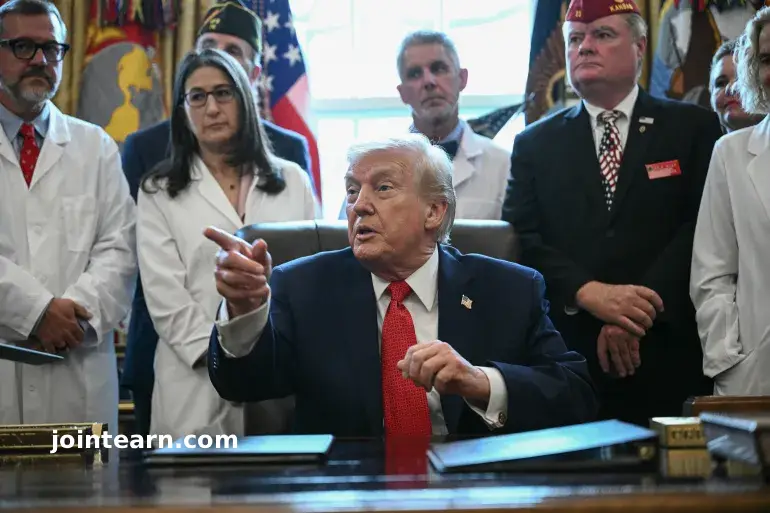
US President Donald Trump signed an executive order on December 18, 2025, directing the Attorney General to expedite the federal reclassification of marijuana, aiming to reduce barriers for scientific research while maintaining federal control over recreational use.
The move instructs Attorney General Pam Bondi to act through the Drug Enforcement Administration (DEA) to reclassify marijuana from Schedule I, the most restrictive category, to Schedule III, a classification that includes substances such as ketamine and anabolic steroids.
Understanding the DEA Drug Scheduling System
The DEA organizes drugs into a five-tier system, with Schedule I drugs deemed most dangerous and illegal for medical use, and Schedule V substances considered least restricted. Marijuana has historically been listed as Schedule I alongside heroin and LSD, making research highly restricted.
Trump emphasized that the reclassification does not legalize marijuana:
“This is not the legalization of marijuana. It in no way sanctions its use as a recreational drug,” he said, highlighting that the policy is intended primarily to facilitate medical and scientific studies.
Implications for Research and Medical Studies
Reclassifying marijuana to Schedule III dramatically eases regulatory hurdles for researchers. Schedule III drugs require less administrative approval than Schedule I substances, potentially unlocking new avenues for medical research, including studies into pain management, neurological disorders, and other therapeutic applications.
Trump noted earlier that public support for the change is strong:
“It leads to tremendous amounts of research that can’t be done unless you reclassify, so we are looking at that very strongly.”
Context: Federal vs. State Laws
Several US states have legalized marijuana for medical and recreational use, creating a patchwork of state-level regulations that conflict with federal law, where marijuana remains illegal. Previous efforts by former President Joe Biden included pardons for minor possession convictions and attempts to reclassify marijuana to Schedule III, though the effort was incomplete when his administration ended in January 2025.
Biden’s reforms sought to address the disproportionate impact of marijuana convictions on minority communities and the broader problem of mass incarceration in the US.
Political Pushback and Public Opinion
Trump’s executive order has faced opposition from some within his own Republican Party. Earlier in 2025, 20 Republican senators signed a letter urging the president to maintain stricter restrictions, arguing that marijuana remains dangerous and that easing rules would undermine the “Make America Great Again” agenda.
Despite political debate, public support for recreational marijuana has surged in recent years, rising from 36% in 2005 to 68% in 2024, according to Gallup polls. This growing public approval underscores the demand for more research and a re-evaluation of marijuana’s federal classification.
Potential Outcomes
The reclassification is expected to:
- Simplify clinical research on marijuana’s medical properties
- Reduce bureaucratic hurdles for universities and pharmaceutical companies
- Encourage standardized federal regulations that align with state policies
- Promote further scientific understanding while maintaining recreational restrictions
Experts warn that while reclassification is a significant step, it does not equate to full legalization, leaving federal prohibitions in place for recreational and commercial use.


Leave a Reply