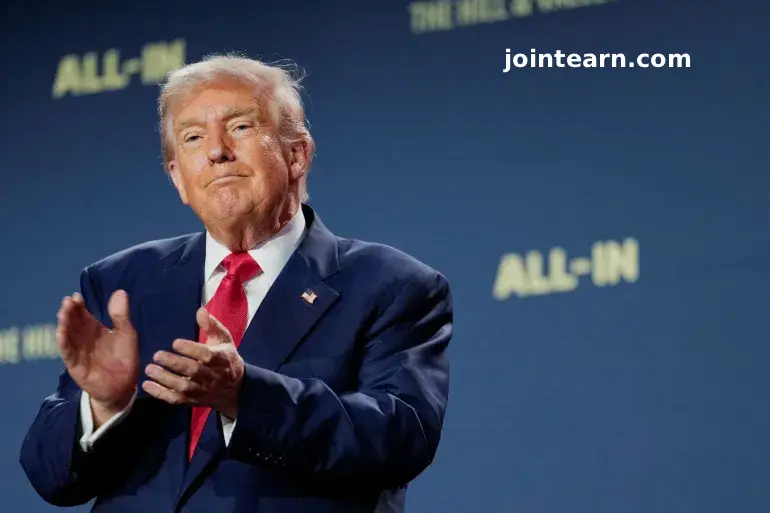
United States President Donald Trump has announced plans to sign an executive order establishing a single federal rulebook for artificial intelligence (AI) development, bypassing state-level approvals. The move is part of the administration’s push to make the US the global leader in AI, but it has sparked debate among lawmakers, including members of Trump’s own Republican Party.
Trump’s AI “One Rule” Executive Order
Trump announced the plan on Monday via Truth Social, calling the initiative a critical step in maintaining US competitiveness in AI technology. The order would override state regulations governing AI development and deployment, though legal experts question whether a presidential directive can legally preempt state laws.
“There must be only One Rulebook if we are going to continue to lead in AI. We are beating ALL COUNTRIES at this point in the race, but that won’t last long if we are going to have 50 States, many of them bad actors, involved in RULES and the APPROVAL PROCESS,” Trump said.
Trump warned that fragmented regulations could stifle AI innovation, saying, “AI WILL BE DESTROYED IN ITS INFANCY!” in his signature all-caps style.
Federal AI Framework and Defence Budget
The White House is pushing for federal AI provisions to be included in this year’s defense budget, aiming to create a unified regulatory framework that governs AI across all sectors. The administration argues that a consistent, national approach is necessary to maintain US technological leadership globally.
Trump has also initiated related programs, including the AI Genesis Mission, which he compared to the Manhattan Project in terms of scale and ambition.
Republican Party Divisions Over State Authority
The executive order has caused friction within the Republican Party, which traditionally supports states’ rights and limited federal oversight. Critics argue that federal preemption could override important state measures designed to protect citizens from AI-related risks.
Representative Marjorie Taylor Greene, once a close Trump ally, criticized the plan, stating:
“States must retain the right to regulate and make laws on AI and anything else for the benefit of their state.”
A bipartisan coalition of state lawmakers echoed her concerns in a letter to Congress, emphasizing that state-level AI regulations ensure consumer transparency, responsible procurement, patient safety, and protection for artists and creators. They warned that federal preemption could sweep aside these safeguards and expose communities to potential AI harms.
Trump’s AI Policy Track Record
Since taking office in January 2025, Trump has focused heavily on AI development:
- Signing an earlier executive order to remove barriers to AI innovation
- Publishing a comprehensive AI action plan
- Launching the AI Genesis Mission, a program intended to accelerate scientific breakthroughs using AI
The administration has cultivated strong ties with tech industry leaders, positioning AI as a key component of national security, economic growth, and technological supremacy.
Implications for AI Regulation in the US
Trump’s “one-rule” executive order highlights the growing tension between federal authority and state oversight in emerging technologies. Experts warn that centralizing AI regulation could streamline innovation but also risks overriding protections for consumers, artists, and vulnerable populations.
As Congress considers the legal and policy ramifications, the executive order could become a flashpoint in the debate over AI governance, shaping the future of AI deployment and oversight in the United States.


Leave a Reply