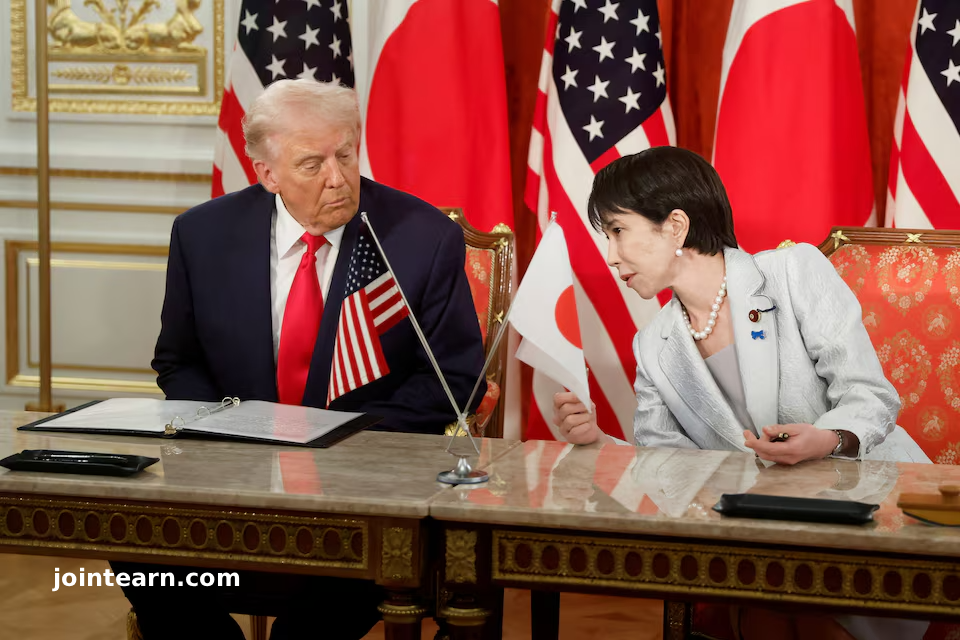
TOKYO / WASHINGTON, November 27, 2025 – U.S. President Donald Trump reportedly urged Japanese Prime Minister Sanae Takaichi not to escalate tensions with China during a call earlier this week, sources familiar with the matter said. The discussion comes amid a fragile trade truce between the United States and China, and rising regional tensions over Taiwan.
Background: Takaichi’s Controversial Taiwan Remarks
Takaichi ignited one of the most significant diplomatic disputes between Japan and China in years after telling parliament that a hypothetical Chinese attack on Taiwan, threatening Japan, could justify a Japanese military response. Beijing reacted angrily, warning its citizens against traveling to Japan and denouncing the remarks as provocative.
In the subsequent phone call, Trump reportedly expressed that he did not want to see further escalation of the dispute, according to Japanese government sources who requested anonymity due to the sensitivity of the matter. However, he made no specific demands, and Japan has maintained that Takaichi’s comments reflect longstanding government policy.
U.S. Balances Trade and Security
The conversation occurred shortly after Trump spoke with Chinese President Xi Jinping, who emphasized that Taiwan’s return to China is central to Beijing’s vision of world order. Taiwan, a democratically governed island, rejects China’s sovereignty claims.
Trump, who plans to visit Beijing in April, has refrained from public commentary on whether Taiwan was a central topic of the call, instead emphasizing that U.S.-China relations remain strong and that a broad trade deal is nearing completion. “The United States’ relationship with China is very good, and that’s also very good for Japan, who is our dear and close ally,” Trump said.
Concerns in Tokyo
Some officials in Tokyo worry that Trump might soften U.S. support for Taiwan in pursuit of a trade deal, potentially emboldening Beijing. Professor Kazuhiro Maejima of Sophia University noted, “For Trump, what matters most is U.S.-China relations. Japan has always been treated as a tool or a card to manage that relationship.”
The U.S. envoy to Tokyo has reiterated support for Japan amid China’s “coercion,” but senior lawmakers have expressed frustration at Trump’s public silence, fearing it could signal tacit approval for increased Chinese pressure.
Rising Tensions Over Taiwan and Yonaguni
China’s military has warned that Japan will pay a “painful price” if it interferes in Taiwan, following Tokyo’s plans to deploy air defence missiles on Yonaguni Island, just 110 km (68 miles) from Taiwan. Beijing has also accused Japan of reviving militarism, with editorials in the People’s Daily emphasizing Japan as a historical adversary.
Takaichi’s parliamentary remarks, which broke from previous strategic ambiguity, are now public and difficult to retract, complicating efforts to defuse the diplomatic dispute and maintain stable China-Japan economic and security relations.
Implications for Regional Security
The episode highlights the delicate balancing act Japan faces between strengthening defence capabilities, managing relations with the U.S., and avoiding direct confrontation with China. Analysts warn that missteps could escalate tensions in the Taiwan Strait, impacting trade, regional security, and East Asia’s geopolitical stability.


Leave a Reply