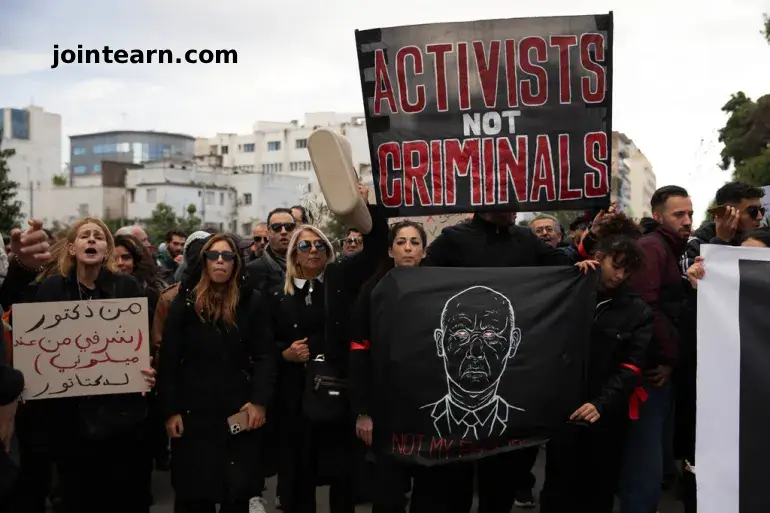
Tunisia is facing renewed international scrutiny after a court sentenced dozens of political, business, and media figures to long prison terms on charges of “conspiracy against state security” and “belonging to a terrorist group,” according to local media. The move has been widely condemned by rights groups and European lawmakers, who view the trial as politically motivated.
Heavy Sentences in Controversial Case
On Friday, the Court of Appeal in Tunis delivered final rulings in the so-called “conspiracy against the state” case. Sentences ranged from five to 45 years, targeting nearly 40 defendants, many of whom have publicly criticized President Kais Saied. Earlier in April, some of these defendants were sentenced to up to 66 years, intensifying fears over the politicization of Tunisia’s judicial system.
Local radio station Mosaique FM reported that the verdicts mark the continuation of what rights organizations describe as a crackdown on dissent and civil society in Tunisia.
European Union Condemnation
The European Parliament recently passed a resolution calling for the release of political prisoners, including prominent lawyer Sonia Dahmani, a vocal critic of Saied. Although Dahmani was freed from prison on Thursday, she remains under judicial supervision.
President Saied responded strongly, labeling the resolution as “blatant interference” in Tunisia’s internal affairs. He said in a video statement:
“They can learn lessons from us on rights and freedoms.”
The EU resolution also called for the repeal of a 2022 law criminalizing “spreading false news,” under which Dahmani and other activists were prosecuted. The European lawmakers urged the Tunisian government to release all individuals detained for exercising freedom of expression, including political prisoners and human rights defenders.
Protests Against Saied’s Rule
The latest sentences have reignited public anger. Thousands of protesters marched through Tunis, chanting slogans such as “the people want the fall of the regime” and “no fear, no terror, the street belongs to the people.” The demonstrators, many dressed in black and carrying red ribbons, demanded an end to Saied’s authoritarian measures.
Human rights groups have long warned of the erosion of civil liberties in Tunisia since Saied’s sweeping power grab in 2021. Originally elected in 2019 after Tunisia’s post-Arab Spring democratic transition, Saied has been accused of consolidating power and restricting political freedoms.
The Case of Sonia Dahmani
Sonia Dahmani, 60, was arrested in May 2024 by masked men and faced multiple charges for publicly denouncing racism and government policies. She was convicted in at least three cases in recent months, including violations under the 2022 law banning “false news.”
The EU resolution specifically called for repeal of this law, emphasizing that it has been used to silence dissenting voices and target civil society actors. Dahmani’s case has become a symbol of the broader crackdown on media and opposition figures in Tunisia.
International Implications
The situation in Tunisia highlights the growing tension between domestic political actions and international human rights standards. European countries and human rights organizations continue to press for reforms, warning that the continued imprisonment of political opponents undermines Tunisia’s reputation as a democratic nation in the post-Arab Spring era.


Leave a Reply