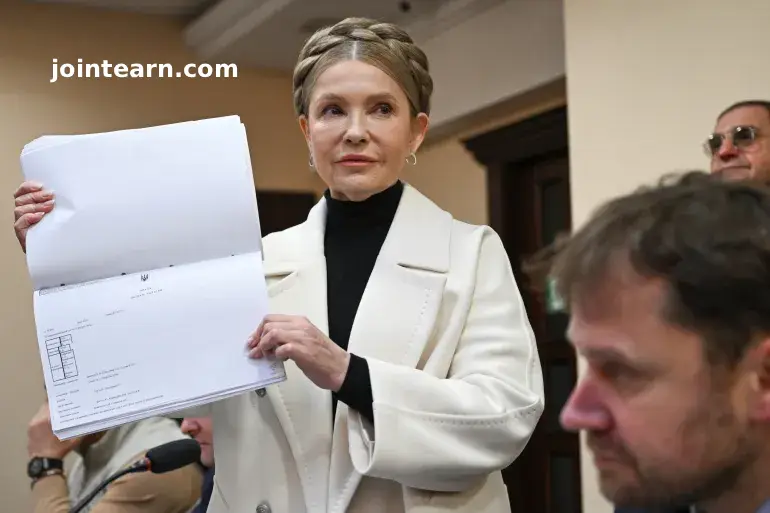
Ukraine’s opposition leader Yulia Tymoshenko is at the center of a political and corruption scandal that threatens to complicate wartime governance and parliamentary decision-making. The former Orange Revolution figure and ex-prime minister faces accusations from the National Anti-Corruption Bureau of Ukraine (NABU) and the Specialized Anti-Corruption Prosecutor’s Office of attempting to buy lawmakers’ votes to block cabinet appointments.
Accusations Against Tymoshenko
Investigators say Tymoshenko, leader of the Motherland (Batkivshchyna) party, orchestrated a scheme involving advance payments of $10,000 per vote to influence parliamentary decisions. A recording released by prosecutors allegedly captures Tymoshenko discussing these bribes with a member of President Volodymyr Zelenskyy’s Servant of the People party, specifically to prevent the appointment of new defence and energy ministers.
Her party, which holds only 25 of 450 seats in the Verkhovna Rada, has nonetheless become pivotal for passing key legislation, as Zelenskyy’s majority has been weakening.
Political Context
Tymoshenko’s political rise began during the 2004 Orange Revolution, making her Ukraine’s first female prime minister. Despite her early prominence, she has failed in multiple presidential bids, including the 2019 election won by Zelenskyy. Analysts note her current approval ratings are extremely low (3–4%), and she is considered no real electoral threat to Zelenskyy.
However, her opposition during wartime, particularly blocking cabinet appointments, is viewed by military and political figures as potentially dangerous. Lieutenant General Ihor Romanenko described her actions as “the most outrageous crime during the war,” emphasizing the critical importance of the defence and energy ministries amid ongoing Russian attacks.
Tymoshenko’s Response
Tymoshenko claims the corruption investigation is politically motivated to bar her from a future presidential election, although national elections are prohibited during the ongoing war. She has denied wrongdoing, stating she is “honest before myself, the people, and Ukraine”, and maintains that she has been fearless in the face of political pressure.
She has posted bail of 33 million hryvnia ($761,000) and is restricted from leaving the Kyiv region. A court is expected to decide soon whether her assets should be frozen, with her trial likely to begin in the coming months.
Implications for Wartime Governance
Observers warn that Tymoshenko’s rift with Zelenskyy could slow down critical wartime decisions. Her party has previously supported many bills alongside the president, but her opposition may jeopardize parliamentary cooperation at a time when Ukraine faces Russian missile and drone strikes on energy infrastructure, causing widespread blackouts.
Political analysts suggest that while Tymoshenko’s personal ambitions may be weak, her actions have real consequences for national security and government functionality.
Key Points:
- Tymoshenko accused of vote-buying to block key cabinet appointments.
- NABU investigation claims payments to influence MPs.
- Motherland party holds only 25 seats, but crucial for Zelenskyy’s majority.
- Tymoshenko denies wrongdoing, claims investigation is politically motivated.
- Bail posted: 33 million hryvnia; court to decide asset freeze.
- Analysts warn obstruction may hinder wartime decision-making.


Leave a Reply