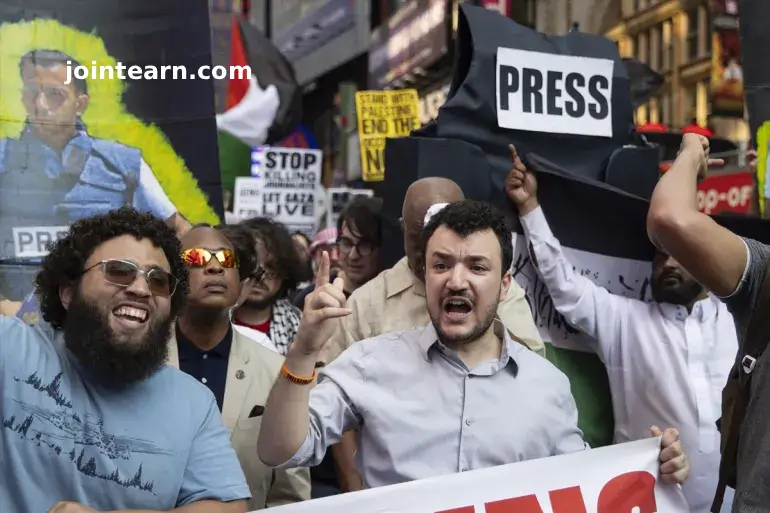
New York, January 15, 2026 – An appeals court in the United States has handed a legal victory to the administration of President Donald Trump by dismissing a petition from Palestinian activist Mahmoud Khalil, who had challenged his detention and deportation. The ruling potentially allows for Khalil’s re-arrest, although the order does not take effect immediately, and Khalil has indicated he plans to appeal the decision.
“Today’s ruling is deeply disappointing, but it does not break our resolve,” Khalil said in a statement.
“The door may have been opened for potential re-detainment down the line, but it has not closed our commitment to Palestine and to justice and accountability.”
Details of the Appeals Court Ruling
In a two-to-one decision on Thursday, the U.S. Court of Appeals for the Third Circuit concluded that the federal court that had ordered Khalil’s release last year lacked jurisdiction over the matter. The panel sided with the government’s position that immigration courts, not federal courts, have authority over removal proceedings, in accordance with the Immigration and Nationality Act (INA).
“Our holdings vindicate essential principles of habeas and immigration law,” the court stated.
“The scheme Congress enacted governing immigration proceedings provides Khalil a meaningful forum in which to raise his claims later on—in a petition for review of a final order of removal.”
The panel instructed that Khalil’s habeas petition be vacated and remanded with directions to dismiss it, effectively giving the Trump administration the upper hand in its effort to deport the activist.
Background on Mahmoud Khalil
Mahmoud Khalil, a lawful permanent resident and husband of a U.S. citizen, was born in Syria and holds Algerian citizenship. At the time of his detention, Khalil was pursuing a graduate degree at Columbia University in New York.
Khalil is part of a broader group of foreign students targeted by the Trump administration for deportation due to their criticism of Israel, raising concerns among rights advocates about violations of freedom of speech in the United States.
“Last year’s arrest of Mahmoud Khalil was more than just a chilling act of political repression—it was an attack on all of our constitutional rights,” said New York City Mayor Zohran Mamdani.
“Now, as the crackdown on pro-Palestinian free speech continues, Mahmoud is being threatened with rearrest. Mahmoud is free – and must remain free.”
Legal Proceedings and Jurisdiction Questions
Khalil’s case has proceeded along two tracks:
- Federal court habeas petition, which argued that his detention violated constitutional rights.
- Administrative immigration proceedings, which challenge his removal under the INA.
The appeals panel ruled that only the immigration courts have jurisdiction, aligning with the government’s argument that Khalil can raise claims later in the Board of Immigration Appeals (BIA) process. However, dissenting Judge Arianna Freeman warned that the immigration system may not allow a fair hearing on constitutional rights violations.
“Khalil claims that the government violated his fundamental constitutional rights. He has also alleged—and proven—irreparable injuries during his detention,” Freeman wrote in her dissent.
“It is most unlikely that Congress intended to foreclose all forms of meaningful judicial review over his claims.”
Broader Implications
The ruling has implications not just for Khalil but for other students and activists who have criticized Israel while studying in the United States. Federal courts previously released other students, including Turkish scholar Rumeysa Ozturk, based on habeas petitions, and a separate civil court ruling had deemed the administration’s deportation campaign illegal.
Rights groups, including the New York Civil Liberties Union (NYCLU), which represents Khalil, argue that the Trump administration targeted students for their speech, violating U.S. constitutional protections.
“Dissent is not grounds for detention or deportation, and we will continue to pursue all legal options to ensure Mahmoud’s rights are vindicated,” said Bobby Hodgson, NYCLU deputy legal director.
Secretary of State Marco Rubio has also invoked a rarely used provision of the INA, asserting authority to remove individuals deemed to pose adverse foreign policy consequences for the United States, a designation applied to Khalil and other pro-Palestinian students.
Next Steps
Khalil’s legal team can request a review by the full Third Circuit Court before potentially appealing to the Supreme Court. Meanwhile, questions remain about whether immigration courts can adequately address constitutional claims, including freedom of speech and due process rights, for foreign students and activists.
“The Trump administration violated the Constitution by targeting Mahmoud Khalil, detaining him thousands of miles from home, and retaliating against him for his speech,” Hodgson said.
The case continues to spark debate about free speech, immigration law, and political targeting in the United States, making it a key precedent for foreign students and activists facing deportation under controversial circumstances.


Leave a Reply