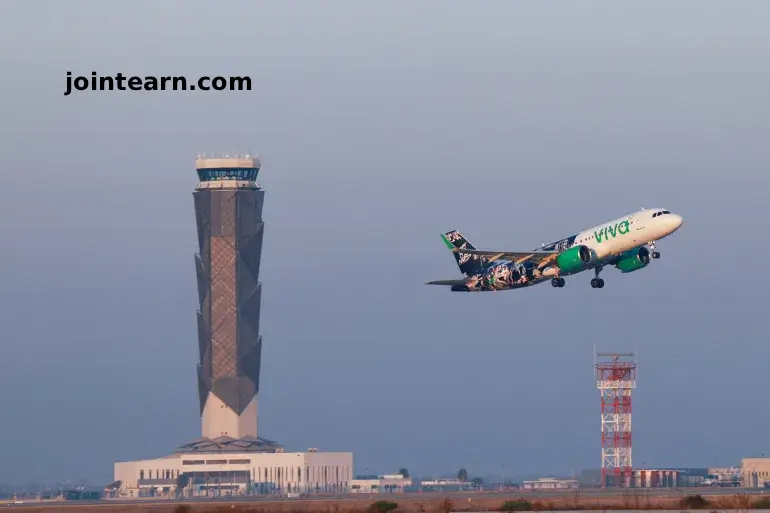
The United States Federal Aviation Administration (FAA) has issued advisories to airlines, urging heightened caution over Mexico, Central America, and parts of South America, including Ecuador and Colombia, due to increased U.S. military activity in the region.
The FAA alerts, released Friday, come amid a heightened U.S. military presence in Latin America, following the recent U.S. military operation in Venezuela and President Donald Trump’s warnings of potential strikes targeting drug cartels in Mexico and Colombia, escalating regional tensions.
FAA Issues Airspace Warnings
The FAA described the situation as a “potentially hazardous situation” affecting airspace above the Pacific Ocean and the Gulf of California (Sea of Cortes).
- The warnings, effective for 60 days, instruct airlines to exercise extreme caution.
- Restrictions follow a January incident in which JetBlue Flight 1112 had to take evasive action to avoid a midair collision with a U.S. Air Force tanker near Venezuela, reportedly with the military aircraft flying without an active transponder.
The FAA had previously imposed restrictions on Caribbean airspace following the U.S. raid on Caracas on January 3, which resulted in the abduction of Venezuelan President Nicolás Maduro and his wife, Cilia Flores, causing hundreds of flight cancellations across major airlines.
Trump Threats and Military Escalation
President Donald Trump has repeatedly threatened further military action in the region, including operations targeting drug cartels in Mexico. Trump stated that cartels are controlling parts of Mexico and declared that the U.S. “will now start hitting land” to combat trafficking networks.
The threats come after the U.S. military intervention in Venezuela, where U.S. forces attacked Caracas and captured President Maduro, prompting concerns about regional stability and civilian safety.
Mexico Reports Progress in Anti-Cartel Efforts
Despite U.S. threats, Mexican President Claudia Sheinbaum emphasized on Friday that Mexico is achieving “compelling results” in tackling drug cartels and curbing migration north.
Key points highlighted by Sheinbaum:
- Steep drop in homicide rates across major cities.
- Significant reduction in fentanyl seizures by U.S. authorities at the border.
- Lower levels of illegal migration compared to previous periods.
Sheinbaum also stressed the role of U.S. demand for narcotics and the flow of weapons into Mexico in driving cartel violence, urging Washington to address these issues as part of a shared responsibility framework.
“The other side also has to do its part. This consumption crisis they have over there also has to be addressed from a public health perspective, through education campaigns,” Sheinbaum said.
Diplomatic Engagements
On Thursday, a joint statement was issued by U.S. Secretary of State Marco Rubio and Mexican Foreign Secretary Juan Ramon de la Fuente following a phone call. They emphasized that more must be done to confront shared threats, reflecting ongoing collaboration amid rising tensions.
Earlier calls between Sheinbaum and Trump underscored that U.S. military intervention inside Mexico is unnecessary, and the Mexican government is seeking to maintain sovereignty while addressing organized crime through domestic law enforcement and social programs.
Regional Implications
The FAA advisories highlight the risks to commercial aviation posed by military operations and heightened U.S. presence in Latin America. Analysts warn that repeated military threats and airspace restrictions could:
- Disrupt commercial air traffic across the region.
- Increase geopolitical tensions between the U.S., Mexico, and South American nations.
- Complicate ongoing anti-drug operations and humanitarian missions.
The situation remains fluid, with airlines, government agencies, and passengers closely monitoring FAA updates and U.S. military announcements.


Leave a Reply