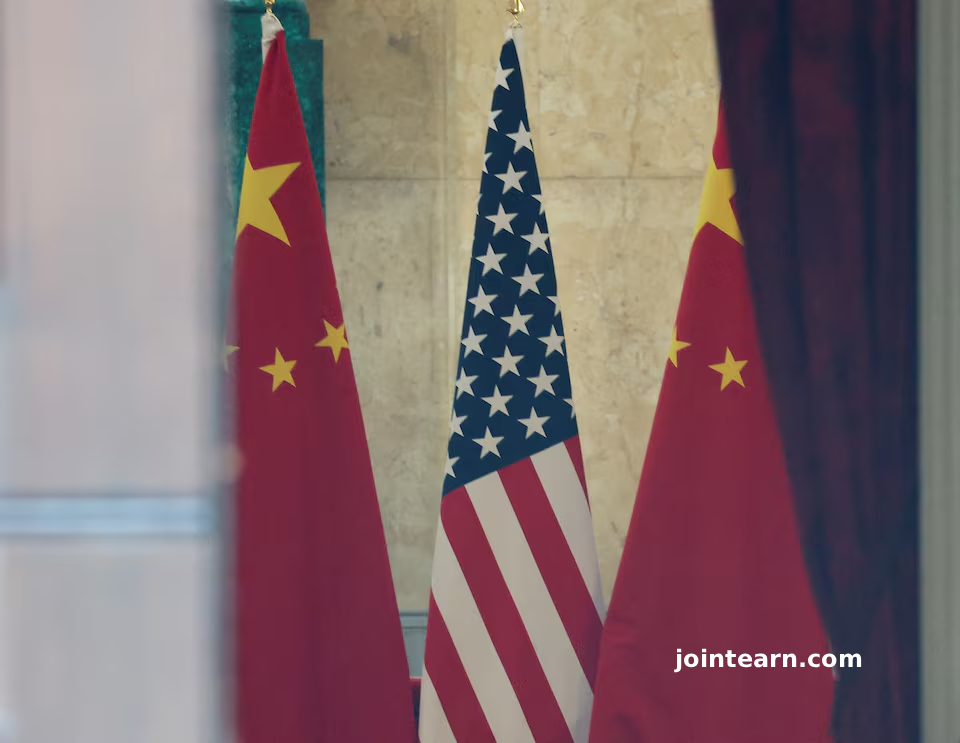
Washington, D.C. / Beijing, China – The United States has suspended plans to sanction China’s Ministry of State Security over a large-scale cyber espionage campaign, reportedly to avoid undermining a trade truce reached earlier this year, according to the Financial Times.
The cyber campaign, tracked under the codename Salt Typhoon, involved Chinese-linked hackers targeting numerous U.S. and international telecommunications companies, as well as a U.S. state’s Army National Guard network. The espionage operation spanned several years and raised concerns about intellectual property theft and national security.
Trade Truce Influences U.S. Cyber Policy
Sources cited by the Financial Times indicated that the U.S. also withheld plans for major new export controls against China to maintain stability in trade negotiations. The decision reflects a balancing act between national security concerns and ongoing economic diplomacy.
Earlier this year, following months of escalating tensions due to U.S. tariffs on Chinese goods, Chinese President Xi Jinping and former U.S. President Donald Trump reached a framework trade agreement in South Korea on October 30, 2025. Under this agreement:
- Washington agreed not to impose 100% tariffs on Chinese imports.
- China agreed to postpone an export licensing regime for critical rare earth minerals and magnets, essential for high-tech industries.
Cybersecurity and Diplomatic Implications
Experts note that the decision to delay sanctions illustrates the complex interplay between cybersecurity enforcement and international trade policy. While the U.S. retains the ability to act against cyber threats, officials appear cautious not to jeopardize ongoing trade negotiations and economic stability.
Analysts also warn that continued Chinese cyber operations could escalate tensions in the future, making it critical for both nations to establish robust cybersecurity frameworks alongside trade agreements.


Leave a Reply