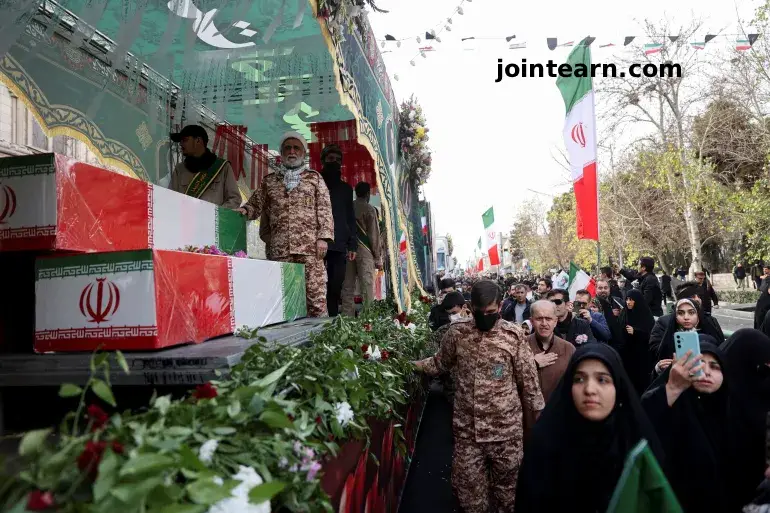
U.S.-Iran Tensions: Trump Faces No Easy “Win” Despite Tehran’s Vulnerability
Washington, D.C. – President Donald Trump has repeatedly stated his goal in Iran is to “win”, but analysts warn that any U.S. strike or military intervention faces enormous risks and no straightforward path to victory.
Despite Iran’s current vulnerabilities—political unrest, economic crises, and weakened regional allies—a military approach could trigger a prolonged, costly conflict rather than a quick resolution, experts say.
Iran’s Retaliation Risk
Unlike its largely symbolic response to past U.S. actions—such as the June 2025 bombing of nuclear facilities or the assassination of General Qassem Soleimani in 2020—Iran is likely to retaliate forcefully against any direct U.S. attacks on its government.
- A decapitation strike targeting Supreme Leader Ali Khamenei and other officials may fail to collapse the regime.
- A protracted war could destabilize the Middle East, push global oil prices higher, and potentially harm U.S. domestic interests.
“All the options are pretty terrible. It’s very hard to know what will take place if you do ‘A’ or ‘B’,” said Barbara Slavin, Stimson Center fellow.
“If the regime feels its back is against the wall, it could lash out in horrific ways against American forces and regional allies.”
Trump’s Public Statements
Since early January, amid anti-government protests in Iran, Trump has threatened military intervention if Iranian authorities harm protesters:
- January 2: Warned Iran that the U.S. is “locked and loaded” to protect demonstrators.
- Repeatedly urged protesters to take over state institutions, promising U.S. support.
However, as Iranian authorities imposed a total internet blackout and launched a deadly crackdown—killing thousands according to activist groups—Trump’s tone reportedly softened. He later praised Tehran for cancelling planned executions of protestors, showing a temporary shift toward diplomacy.
Military Options and Risks
The Pentagon is reportedly surging U.S. military assets to the Middle East, including deploying an aircraft carrier strike group. While Trump has demonstrated a willingness to use force in the past—e.g., killing ISIL leader Abu Bakr al-Baghdadi and the Maduro abduction in Venezuela—analysts caution that Iran is not Venezuela.
“This is not a one-and-done situation,” said Slavin.
“Does Trump really want a massive crisis in the Middle East after already handling Venezuela and other controversies?”
Even though the Trump administration’s National Security Strategy from late 2025 emphasized non-interventionism and a reduced U.S. focus on the Middle East, the humanitarian angle of Iranian protests may be pressuring the president toward action.
Iran’s Internal and Regional Challenges
Iran is facing its most severe crisis in decades:
- Domestic unrest: Widespread protests have challenged the government’s legitimacy.
- Economic collapse: The rial has lost over 90% of its value, driving inflation and hardship.
- Weakened allies: Hezbollah, Hamas, and Assad’s Syria—all part of Tehran’s regional network—have lost strength.
- Military vulnerabilities: Israel’s 2025 campaign severely damaged Iran’s air defenses, while U.S. strikes have hindered its nuclear program.
Yet, Iran’s leaders remain defiant and capable of strong retaliation, both regionally and against U.S. forces.
“Even limited U.S. attacks may prompt reckless Iranian decisions if they perceive a wider campaign is underway,” said Naysan Rafati, International Crisis Group analyst.
U.S. Domestic and Geopolitical Constraints
Trump faces significant constraints on military action:
- Domestic politics: Many in his base oppose foreign military engagement after past conflicts in Iraq and Afghanistan.
- Regional caution: Gulf allies fear escalation and have urged restraint.
- Operational limits: Analysts argue that achieving a rapid regime collapse would require extraordinary force and coordination with internal Iranian opposition, which is highly uncertain.
“Trump may be on a sugar high from Venezuela, but replicating that success in Iran would be vastly more difficult,” said Trita Parsi, Quincy Institute vice president.
Diplomacy Remains Possible, but Unlikely
Trump’s special envoy, Steve Witkoff, outlined U.S. demands for Iran:
- Ending nuclear enrichment and handing over highly enriched uranium.
- Reducing the missile program.
- Cutting support to proxies like Hezbollah.
However, experts warn that these demands amount to a call for Iranian capitulation, with little room for compromise.
“I don’t see diplomacy succeeding unless the U.S. recalibrates its goals,” said Parsi.
“Iran’s position on enrichment and missiles has been consistent. Achieving a negotiated solution would require a major shift.”
Some analysts note, though, that Tehran might consider a deal on nuclear material for sanction relief, which could be spun politically by Trump as a “victory,” even if controversial.
Conclusion
While Iran is weakened, military action carries extreme risks. Any U.S. strike could:
- Escalate into a prolonged war.
- Cause global economic shocks through rising oil prices.
- Threaten Trump’s political standing if the campaign drags on.
Experts conclude that Trump has no easy path to victory. Diplomacy remains a potential, if uncertain, alternative, while Iran’s resilience and capacity for retaliation mean that any military engagement could backfire strategically, politically, and economically.


Leave a Reply