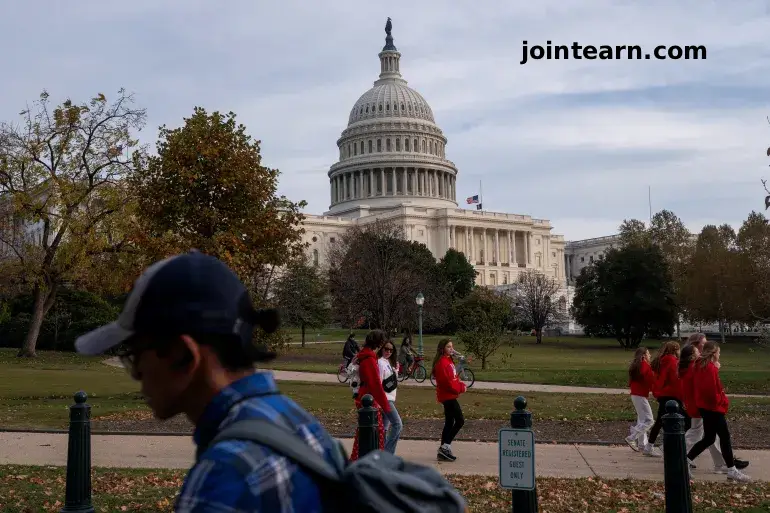
The United States Senate is preparing to vote on a crucial Republican stopgap funding package that could bring an end to the longest government shutdown in U.S. history. The move comes after a breakthrough deal negotiated by a group of centrist Democrats, who agreed to reopen the government with the promise that a vote on expiring healthcare subsidies under the Affordable Care Act (ACA) would be held by December.
Centrist Democrats Strike Deal
Senator Angus King, who led the negotiations, told reporters that the Democratic lawmakers supporting the bill believe the government shutdown has gone on long enough. He expressed optimism about the prospects of the legislation passing the Senate, stating, “That’s certainly what it looks like.”
The stopgap funding bill would reopen the government through January 2026 and fund essential programs, including food aid and the legislative branch, for the upcoming year. However, the amended package still requires approval by the House of Representatives and signature from President Donald Trump, a process that could take several days.
Upon hearing news of the deal, Trump commented, “It looks like we’re getting very close to the shutdown ending.”
Fallout from the 40-Day Shutdown
The shutdown, now in its 40th day, has had wide-ranging effects on the U.S. economy and federal operations:
- Flight cancellations and delays: Staffing shortages at the FAA have resulted in 2,300 U.S. flights canceled and more than 8,000 delayed as of Sunday, with New York, Chicago, and Atlanta airports particularly affected.
- Federal workforce impacts: Approximately 750,000 federal employees have been furloughed or forced to work without pay.
- Food assistance at risk: Roughly 42 million Americans rely on SNAP benefits, and courts have temporarily blocked full payments due to legal challenges, leaving millions facing uncertainty.
Al Jazeera’s Mike Hanna reported, “For Americans, this is really beginning to bite home, and they are trying to ramp up the pressure on senators.”
Healthcare Subsidies at the Center of the Debate
The Affordable Care Act (ACA) premium tax credits, established in 2021, have doubled ACA enrollment to 24 million Americans. Since the shutdown began on October 1, Senate Democrats have repeatedly voted against reopening the government without securing an extension of these subsidies.
While Republicans have expressed willingness to address healthcare subsidies only after restoring government funding, the centrist Democratic deal guarantees a future vote on the issue rather than an immediate extension.
Supporters of the bill include Senators:
- Angus King (Independent, caucuses with Democrats)
- Jeanne Shaheen (New Hampshire)
- Maggie Hassan (New Hampshire)
- Tim Kaine (Virginia)
Senator Kaine emphasized that the bill would protect federal workers from wrongful termination, reinstate furloughed employees, and ensure back pay is provided.
Opposition from Democrats
However, top Democrats in the Senate, including Chuck Schumer, opposed the measure. Schumer criticized the bill for offering only a promise of a future vote on healthcare subsidies rather than an immediate extension, stating, “I cannot in good faith support this CR that fails to address the health care crisis. This fight will and must continue.”
House Democrats also voiced opposition. Representative Greg Casar described the agreement as a “betrayal” of Americans counting on affordable healthcare protections, warning that accepting a vague promise from Republicans amounts to capitulation.
Trump Pushes Alternative Healthcare Plan
President Trump has reiterated his long-standing position that ACA subsidies should be replaced with direct payments to individuals, claiming the current system is a “windfall for health insurance companies” and harmful to the American public.
Senator Adam Schiff countered that Trump’s proposal could weaken the ACA, allowing insurers to deny coverage to individuals with pre-existing conditions. Schiff warned that Trump’s plan could give insurance companies greater power while undermining critical protections for millions of Americans.
Next Steps
The Senate vote on the stopgap funding package will determine whether the government shutdown ends soon or continues to disrupt federal operations, travel, and food aid. If passed, the legislation must still navigate the House of Representatives and receive presidential approval before federal workers are fully paid and government services restored.
With millions of Americans affected and travel disruptions mounting, the nation is watching closely as lawmakers attempt to resolve a 40-day political impasse.


Leave a Reply