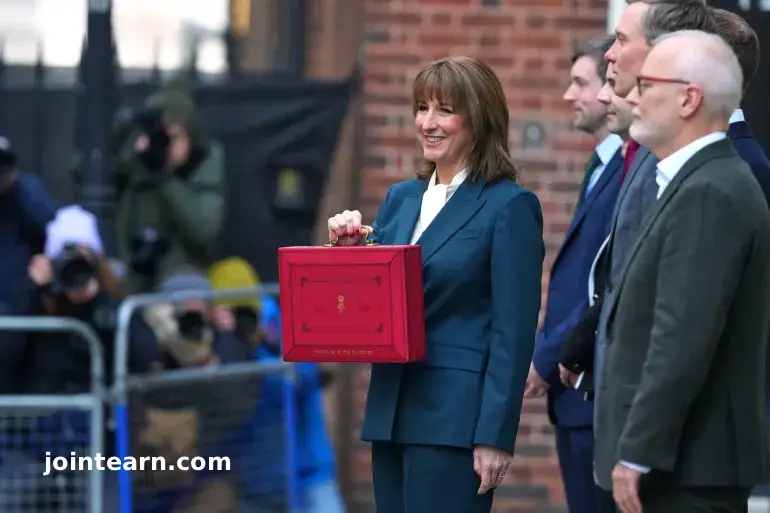
United Kingdom Chancellor of the Exchequer, Rachel Reeves, has announced sweeping tax increases totaling £26.1 billion ($34.4 billion) in her latest budget, aimed at stabilizing public finances amid slowing economic growth. The announcement comes in the wake of a highly embarrassing forecast leak by the Office for Budget Responsibility (OBR), which prematurely published economic projections, effectively revealing key policy measures before Reeves’ formal presentation to Parliament.
OBR Forecast Leak Sparks Political Furore
The unprecedented leak by the independent fiscal watchdog drew widespread criticism. Reeves described the incident as “deeply disappointing” and a “serious error,” while the OBR blamed a technical malfunction for the premature release of the data.
Conservative Party leader Kemi Badenoch condemned the leak, calling it a “shambolic laughing stock” and suggesting that Reeves should consider resignation. Similarly, Shadow Chancellor Mel Stride labelled the early publication of market-sensitive data as “utterly outrageous” and potentially criminal.
Despite the controversy, Reeves remained firm in defending her budget strategy, emphasizing stability over reckless borrowing or severe cuts.
Key Tax Measures in the 2025 Budget
Freeze on Income Tax Thresholds
A central feature of Reeves’ budget is the freeze on income tax thresholds and national insurance levels. As wages rise, more earners will be pushed into higher tax brackets—a phenomenon known as fiscal drag.
- 780,000 new basic-rate taxpayers by 2029-2030
- 920,000 additional higher-rate taxpayers
- 4,000 extra additional-rate taxpayers
This measure is projected to raise £8.3 billion ($10.95 billion) by 2029-2030 and will continue into 2030-2031.
Tax on Salary-Sacrificed Pensions and Investments
Other personal tax changes include:
- £4.7 billion ($6.2 billion) from national insurance on salary-sacrificed pension contributions
- £2.1 billion ($2.77 billion) from increased taxes on dividends, property, and savings income by 2 percentage points
The OBR estimates that these measures will raise the tax burden to 38.3% of GDP by 2030-2031, the highest on record in the UK.
Mansion Tax and EV Charges
Additional revenue measures include:
- A “mansion tax” on properties worth over £2 million ($2.6 million), expected to raise £400 million ($527.6 million) by 2028
- A 3 pence per mile charge on electric and plug-in hybrid vehicles starting in April 2028, projected to generate £1.4 billion ($1.85 billion)
Gambling Duty Increase
Duties on remote gambling will rise from 21% to 40%, generating over £1 billion ($1.3 billion) by 2031, according to the Chancellor.
Economic Context: Weakening Growth Projections
While the OBR upgraded GDP growth for 2025 slightly from 1% to 1.5%, medium-term projections have been downgraded:
- 2026: from 1.9% to 1.4%
- 2027: from 1.8% to 1.5%
The downgrade is largely attributed to sluggish productivity growth. Reeves emphasized that these challenges are the legacy of previous Conservative governments, framing Labour’s approach as one of economic stability and continuity.
Political Implications
The budget comes at a politically sensitive time for the Labour government. Prime Minister Keir Starmer faces declining poll ratings and internal party tension, with some MPs speculating on a potential leadership challenge.
Analysts suggest that any missteps in the budget could exacerbate political instability. Measures like removing the two-child benefit cap, while popular among Labour backbenchers, may not resonate as well with the broader electorate.
Reeves defended the budget, promising that Labour’s policies would “beat the forecasts” and lay the groundwork for long-term economic growth, including investment in infrastructure, housing, and job creation.
Conclusion
The UK’s 2025 budget represents a significant fiscal tightening with broad-reaching tax increases, set against a backdrop of weakening growth and political scrutiny. While the OBR leak has overshadowed the announcement, Chancellor Reeves has signaled that Labour’s approach will prioritize stability, economic security, and long-term planning, even as it places additional burdens on middle and higher-income taxpayers.


Leave a Reply