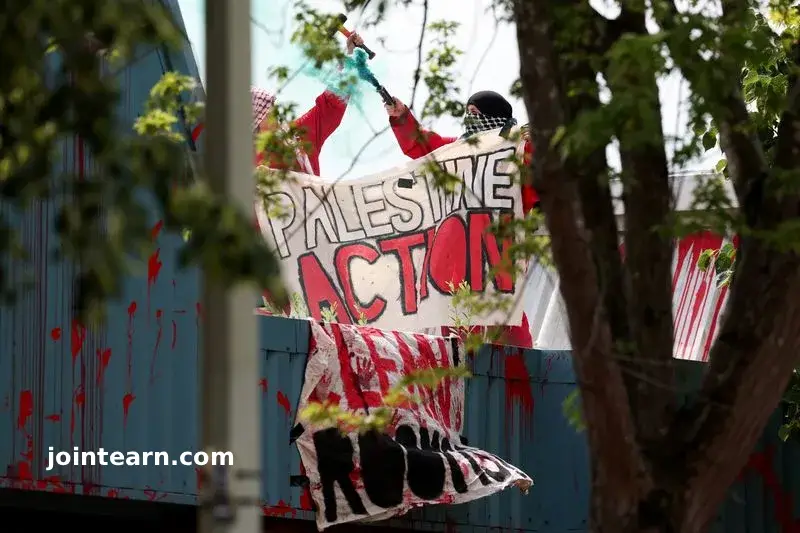
The British government’s decision to ban the pro-Palestinian campaign group Palestine Action as a terrorist organization is under judicial scrutiny this week, as lawyers representing co-founder Huda Ammori argue that the proscription misuses the UK’s anti-terrorism laws. The hearing at London’s High Court on Wednesday marks a key legal challenge with significant implications for protest rights and pending prosecutions.
Background: The Ban and Its Justification
Palestine Action was officially proscribed in July 2025, placing it on the same legal footing as extremist organizations like Islamic State and Al-Qaeda. Membership in the group, or support for it, carries a maximum prison sentence of 14 years under UK law.
The group gained attention for its direct-action campaigns, which targeted Israeli-linked companies in the UK. Activists have blocked entrances, vandalized property, and sprayed red paint at business sites. The Home Office stated that the ban followed an escalation in activity, culminating in the June 2025 break-in at RAF Brize Norton, where activists damaged two military planes.
Legal Arguments Against the Ban
Critics argue that acts of protest causing property damage do not constitute terrorism and that the ban excessively curtails the right to protest. Lawyers for Ammori contend that the proscription was unlawful and disproportionate, and that a successful challenge could allow defendants in ongoing cases to argue that the ban itself was invalid.
More than 2,000 people have been arrested for publicly expressing support for Palestine Action, with over 200 charged for holding placards reading: “I oppose genocide, I support Palestine Action.” Some individuals have faced charges for organizing meetings encouraging “mass civil disobedience.” Ammori’s legal team also highlighted incidents in which pro-Palestinian protesters were questioned by police without expressing support for the group, indicating a broader chilling effect on free speech.
Escalation Amid Gaza Conflict
Founded in 2020, Palestine Action intensified its activities during the Gaza war, particularly targeting Israeli defense companies and UK firms associated with them. Six members were previously arrested in January 2024 for allegedly planning to disrupt the London Stock Exchange. Last week, six others went on trial for aggravated burglary, criminal damage, and violent disorder related to a raid on Elbit Systems, including allegations of grievous bodily harm to a police officer.
International and Domestic Reactions
The ban has drawn criticism from human rights organizations, including Amnesty International and Liberty, who have intervened in the case. Critics argue that labeling a protest group as a terrorist organization threatens fundamental civil liberties and sets a concerning precedent for legitimate activism.
The Home Office, defending the ban, emphasized that Palestine Action conducted an “escalating campaign” involving sustained criminal damage, intimidation, and alleged violence, including serious injuries to individuals, and that it posed threats to national security infrastructure.
Potential Implications
If the High Court rules in favor of Palestine Action, it could overturn dozens of prosecutions and reshape the legal framework for protest-related offenses in the UK. The case highlights the tension between national security concerns and freedom of expression, as well as the scope of anti-terror legislation in democratic societies.


Leave a Reply