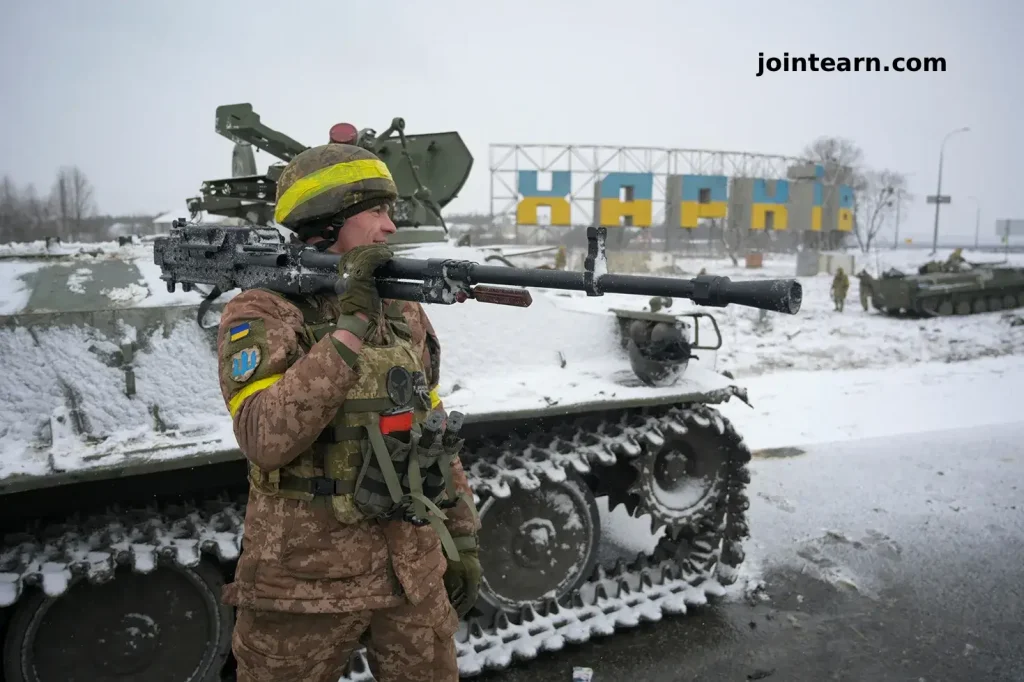
Ukraine is facing simultaneous military and diplomatic pressure as Russian forces intensify their assault on the eastern city of Pokrovsk, while Kyiv pushes back strongly against a controversial United States peace proposal that Ukrainian President Volodymyr Zelenskyy and European leaders say leans heavily toward Moscow’s interests.
Zelenskyy described the moment as “one of the hardest in our history,” highlighting the extraordinary challenge of defending critical territory while navigating global negotiations shaping the future of the war.
Heavy Combat Continues Around Pokrovsk
For a fifth consecutive week, Ukraine has been fighting to hold Pokrovsk and the surrounding Myrnohrad region. These cities form a key defensive hub in Donetsk, a frontline region Russia has long sought to seize.
Russia’s Ministry of Defence claimed new advances, announcing that its assault units had taken the Gornyak and Shakhtersky areas of Pokrovsk and were pushing into nearby Myrnohrad. The towns are now part of what analysts describe as a tightening Russian encirclement. Kyiv says supply routes remain open from the west but are under constant Russian fire.
Ukrainian officials reject claims that Pokrovsk is close to falling. According to Andriy Kovalenko from Ukraine’s Center for Countering Disinformation, “Our positions are held in the centre of Pokrovsk. Combat continues, and the enemy cannot secure control.”
Despite committing large forces to the Pokrovsk front, Russia has not slowed its operations elsewhere. Throughout late November, Russian officials announced control over multiple villages across Donetsk, Kharkiv, Dnipropetrovsk, and Zaporizhia regions—though Ukraine disputes some of these claims, including Russia’s assertion that Kupiansk had fallen.
Ukraine Reports Local Gains and Heavy Russian Losses
General Oleksandr Syrskii, Ukraine’s top military commander, said Ukrainian forces managed a counteroffensive near Dobropillia between August and October, breaking a Russian flanking attempt and reclaiming more than 430 square kilometres. He reported major Russian personnel losses, though these claims have not been independently verified.
Meanwhile, Russia continues large-scale drone and missile strikes on Ukrainian cities. Between November 20 and 26, Kyiv said it intercepted 85 percent of more than 1,100 drones and fourteen missiles launched across the country. Zelenskyy again appealed for additional air defence systems, especially medium-range protection.
A Controversial US Peace Plan Sparks Global Pushback
While fighting escalates, Kyiv is also navigating intense diplomatic negotiations. A 28-point US peace plan, shaped partly by Russian proposals and unveiled by the Trump administration, has drawn criticism from Ukraine, European allies, and even members of the US Congress.
The original draft included concessions demanded by Moscow, such as:
- Ukraine permanently abandoning its goal of joining NATO
- Recognition of almost all territory Russia currently occupies
- Ukrainian elections within 100 days
- A significant reduction of Ukraine’s military to around 600,000 troops
Ukraine and European governments argue the proposal legitimizes Russia’s territorial seizures and undermines Ukraine’s sovereignty.
European powers—including France, Germany, and the United Kingdom—submitted a counter-proposal supporting Ukraine’s right to maintain a strong defence force and rejecting territorial concessions resulting from aggression.
Talks in Geneva between Ukrainian negotiators and US officials have continued, with Zelenskyy stating that revisions are being made to make the plan more realistic, though he cautioned the path forward is “very challenging.”
Diplomatic Turbulence Deepens After Phone Leak
Negotiations took a dramatic turn after Bloomberg published transcripts of a leaked phone call between Trump ally Steve Witkoff and Russian presidential aide Yury Ushakov. In the call, Witkoff advised that Russian President Vladimir Putin should speak to Trump before Zelenskyy could, suggesting this could shape Trump’s stance on the peace plan.
The leak triggered intense backlash in Washington. Critics accused Witkoff of being too aligned with Russian interests, prompting calls for him to be removed from the mediation team.
Putin Signals Doubts About Negotiating With Kyiv
Speaking in Kyrgyzstan, Putin downplayed the peace plan’s significance. He argued that an agreement with Ukraine was “pointless” because Zelenskyy’s presidential term has been extended under wartime emergency rules.
He said the 28-point plan was “a set of questions” rather than a final agreement but acknowledged that it could form the basis for further negotiations.
Ukraine Continues Its Resistance—On the Ground and at the Negotiating Table
With winter approaching, Ukraine faces mounting pressures: advancing Russian troops near Pokrovsk, escalating strikes on its cities, and difficult negotiations among global powers debating the terms of a future peace settlement.
Despite these challenges, Ukrainian leaders insist they will not accept a plan that compromises sovereignty or rewards aggression. As Zelenskyy emphasized, the country must balance protecting its dignity with safeguarding vital international partnerships.


Leave a Reply