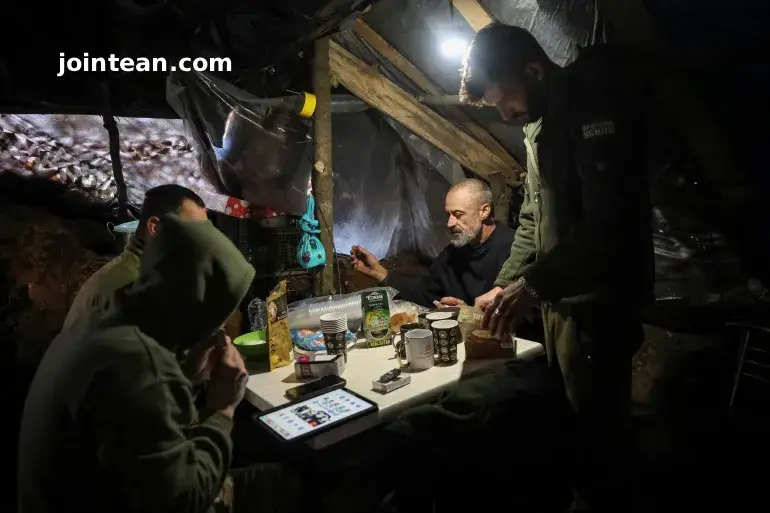
Ukraine is facing simultaneous military and diplomatic pressure as Russian forces intensify their offensive on the eastern city of Pokrovsk, while Kyiv contends with a Russian-backed peace proposal from the US administration of Donald Trump. President Volodymyr Zelenskyy described the current situation as “one of the hardest moments in our history,” reflecting both the military threat and geopolitical tension.
Fierce Defence of Pokrovsk
For the fifth consecutive week, Ukraine’s armed forces have held defensive positions in Pokrovsk, a key city in the Donetsk region, against Russian attempts to seal off the area. The Russian Ministry of Defence claimed on November 25 that its 2nd Army had “completely liberated” the Gornyak and Shakhtersky microdistricts, while fighting continues in the Vostochny and Zapadny districts of Myrnohrad, to the east of Pokrovsk.
Despite Russian claims of advances, Ukrainian officials insist the battle remains contested. Andriy Kovalenko, head of Ukraine’s Center for Countering Disinformation, stated, “Our positions are held in the centre of Pokrovsk, shooting battles continue, and the enemy fails to consolidate.”
Ukraine’s Counteroffensive Successes
Ukraine has actively conducted counteroffensives, particularly in the Dobropillia direction, splitting Russian offensive groups and reclaiming over 430 square kilometers north of Pokrovsk. Ukrainian commander-in-chief Oleksandr Syrskii reported that Russian losses in these operations have exceeded 13,000 killed or wounded, demonstrating Kyiv’s ongoing resistance despite overwhelming pressure.
Meanwhile, Russia maintains pressure on Ukraine’s rear, launching 1,169 drones and 25 missiles during the week of November 20-26. Ukrainian air defenses successfully intercepted 85% of the drones and 14 missiles, although Zelenskyy called for additional short- and medium-range air defense systems to strengthen city protection.
Contested Russian Claims
Russia has asserted advances across multiple regions, including Petropavlovka, Novoselivka, Maslyakovka, Yampol, Stavki, and other settlements in Donetsk, Kharkiv, Dnipropetrovsk, and Zaporizhia. Ukraine disputes several claims, notably Russia’s assertion that it captured Kupiansk in Kharkiv, which Ukrainian authorities firmly denied.
Diplomatic Tensions: The 28-Point US Peace Plan
The Trump administration’s 28-point peace plan for Ukraine has faced widespread criticism in Kyiv, Europe, and the US Congress for favoring Russian demands. Key aspects of the plan would:
- Prevent Ukraine from joining NATO
- Recognize Russian annexations of occupied territory as legal
- Require Ukrainian elections within 100 days of plan adoption, potentially threatening Zelenskyy’s leadership
- Reduce Ukraine’s armed forces by roughly one-third, to 600,000 personnel
European leaders and Ukrainian negotiators countered with proposals ensuring Ukraine maintains a strong army of at least 800,000 troops, retains control over its territory without forced concessions, and receives NATO security guarantees.
Ukraine has sought direct dialogue with Trump to revise the plan before formal agreement, while leaked communications suggest Russian influence may have shaped the peace proposal. Republican and congressional critics, including Congressman Don Bacon and Senator Roger Wicker, expressed skepticism about the plan’s impartiality.
Putin’s Position and Ongoing Negotiations
Russian President Vladimir Putin has publicly distanced himself from the plan, asserting that signing documents with Ukraine is “pointless” because Zelenskyy’s mandate has technically expired. Putin described the 28 points as “a set of questions proposed for discussion,” rather than a formal treaty, leaving future negotiations uncertain.
Meanwhile, Ukraine’s delegation, led by former Defense Minister Rustem Umerov, met with US negotiators under Secretary of State Marco Rubio in Geneva. Discussions continue to refine the original 28 points into a workable framework, with final decisions pending between Zelenskyy and Trump.
Strategic Outlook
The Pokrovsk-Myrnohrad enclave remains a strategic focus of Russian and Ukrainian forces, with Ukraine straining resources to hold positions. Simultaneously, the diplomatic battle over the Trump peace plan has intensified, forcing Kyiv to balance territorial defense with international negotiations.
Zelenskyy emphasized the stakes for Ukraine: “Now the list of necessary steps to end the war can become doable,” while acknowledging that achieving a fair and secure peace will be very challenging.


Leave a Reply