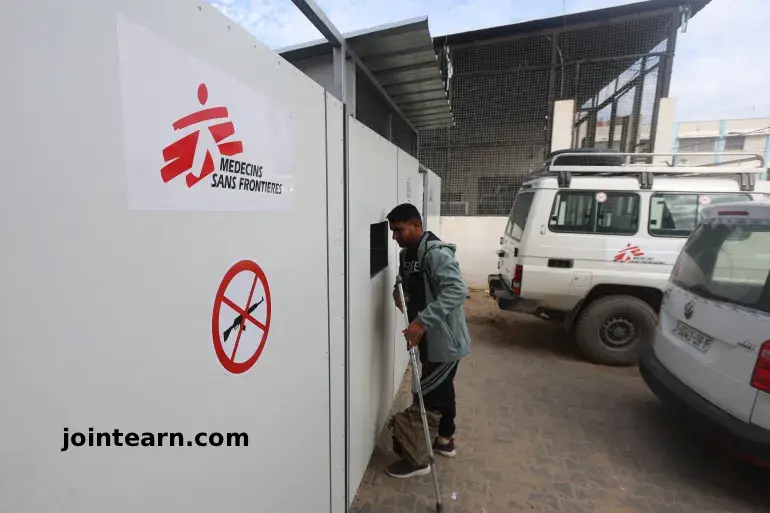
United Nations Secretary-General Antonio Guterres has called on Israel to reverse its planned ban on 37 nongovernmental organizations (NGOs) operating in Gaza and the occupied West Bank. The ban, set to take effect on March 1, 2026, targets aid groups critical to humanitarian operations in the region, raising concerns about worsening the ongoing humanitarian crisis in Gaza.
In a statement released on Friday, Guterres emphasized that the targeted NGOs are “indispensable to life-saving humanitarian work.” He warned that the suspension could undermine fragile progress achieved under the ceasefire and exacerbate the suffering of Palestinians displaced during ongoing hostilities.
Details of the NGO Ban
Israel’s government cited new registration rules as the basis for the ban. Under these rules, aid groups are required to submit detailed information on staff members, funding, and operational activities. Officials have pledged enforcement beginning March 1, 2026.
Humanitarian experts have condemned the requirements as arbitrary and a violation of international humanitarian principles. NGOs have warned that providing personal data about Palestinian staff could place employees at serious risk.
The affected organizations include well-known international groups such as Doctors Without Borders (MSF), the Norwegian Refugee Council, and the International Rescue Committee, among others.
Gaza’s Humanitarian Crisis
The humanitarian situation in Gaza remains dire. Nearly all of Gaza’s population has been displaced during the war, with many living in tents and temporary shelters amid harsh winter storms. Israel’s restrictions on aid have limited the delivery of food, medical supplies, hygiene materials, and shelter, despite the ceasefire agreement of October 2025, which was intended to ensure unhindered humanitarian access.
According to the UN, the NGO ban comes in addition to existing restrictions that have delayed critical aid. Guterres warned that “this recent action will further exacerbate the humanitarian crisis facing Palestinians,” highlighting the urgent need for continued international support.
International Reactions
On Friday, foreign ministers from Qatar, Egypt, Jordan, Saudi Arabia, the UAE, Turkiye, Pakistan, and Indonesia jointly expressed alarm over deteriorating conditions in Gaza. Their statement highlighted the risks posed by flooded camps, damaged tents, collapsing buildings, exposure to cold, and malnutrition, calling on the international community to pressure Israel to lift constraints on the entry and distribution of essential supplies, including tents, fuel, clean water, sanitation support, medical assistance, and shelter materials.
Human Toll of the Gaza Conflict
Since October 7, 2023, at least 71,271 Palestinians have been killed in Gaza, with roughly 500 aid workers and volunteers reported killed amid ongoing hostilities. Humanitarian organizations warn that continued restrictions, combined with extreme weather, threaten to take further lives, particularly among vulnerable populations including children, the elderly, and the sick.
Guterres’ Call to Action
Guterres’ appeal underscores the importance of international law and humanitarian principles, reminding Israel of its responsibilities as the occupying power. Reversing the NGO ban is seen as a critical step to ensure that essential services, including medical care, food distribution, and shelter, reach those most affected by the conflict.
The UN chief’s intervention adds pressure on Israel to comply with international norms and mitigate the impact of restrictions that threaten the lives of thousands of Palestinians in Gaza and the West Bank.


Leave a Reply