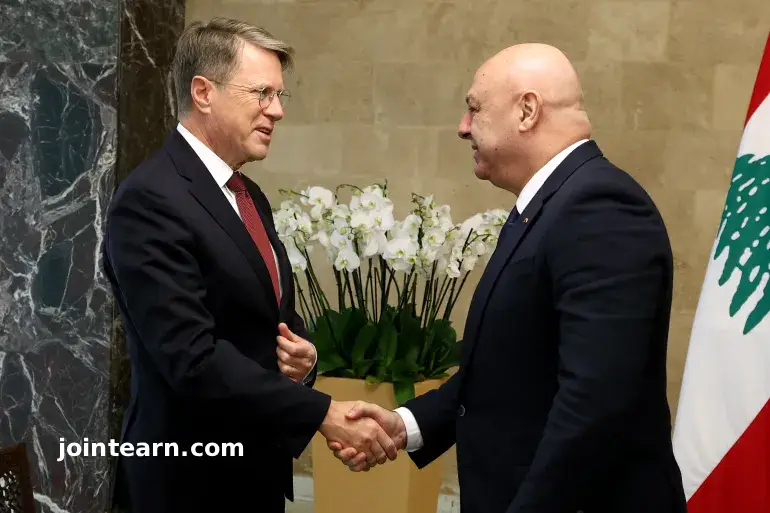
A high-level United Nations Security Council (UNSC) delegation met Lebanese President Joseph Aoun in Beirut on Friday, amid rising tensions along the Lebanon–Israel border and renewed debate over Hezbollah’s disarmament. The meeting follows a series of Israeli air raids on southern Lebanon that shook multiple villages only a day earlier.
Aoun Urges UNSC to Pressure Israel to Respect Ceasefire
According to Lebanon’s National News Agency (NNA), President Aoun called on the UNSC to apply firm diplomatic pressure on Israel to uphold the November 2024 ceasefire, which he said has been violated nearly every day since its signing.
“We look forward to pressure from your side,” Aoun told the visiting diplomats, stressing that Israel must fully withdraw from Lebanese territories it still occupies in the south.
The UNSC delegation—led by officials including Slovenia’s UN Ambassador Samuel Žbogar—is also scheduled to meet with Prime Minister Nawaf Salam, Parliament Speaker Nabih Berri, and Lebanese Army Commander Rodolphe Haykal.
UN Delegation to Tour Southern Lebanon
Aoun said the delegation will tour the border region to witness “the real picture on the ground,” as the Lebanese Army implements a plan aimed at restricting weapons in southern Lebanon. The visit is intended to help the UN better understand ongoing violations and assess the situation firsthand.
Lebanon–Israel Engagement Shows Tentative Signs of Movement
The visit comes at a time of cautious diplomatic movement between the two countries, which have technically been at war since 1948.
On Wednesday, civilian representatives from Lebanon and Israel held their first direct talks in decades. The United States praised the meeting as a step toward stability, though Lebanese officials insisted the talks were strictly linked to implementing the 2024 truce—not any form of normalization.
Prime Minister Salam described the discussions as positive but warned against overinterpreting the event.
Israel Continues Strikes on Southern Lebanon Despite Ceasefire
On Thursday, Israeli forces carried out attacks in four villages across southern Lebanon. Israel said the strikes targeted Hezbollah military positions, but the raids also destroyed civilian homes and damaged essential infrastructure. Hundreds of Israeli strikes have occurred since the ceasefire, killing more than 300 people, including at least 127 civilians, according to UN figures.
Al Jazeera correspondent Zeina Khodr reported that Israel’s actions appeared intended to send a blunt message: “negotiations will be held under fire until Hezbollah is fully disarmed.”
Lebanese Government: ‘Negotiation Is the Only Path’
Information Minister Paul Morcos said Lebanon views ongoing negotiations with Israel—scheduled to resume on December 19—as its only viable path forward.
“There is no other option but negotiation,” Aoun told cabinet members, stressing that Lebanon will not compromise its sovereignty despite its commitment to diplomacy over conflict.
The president called for “the language of negotiation—not the language of war” to prevail.
Ceasefire Terms Undermined by Continued Occupation
The November 2024 ceasefire agreement required Lebanon to prevent cross-border attacks and obligated Israel to halt offensive operations and withdraw from Lebanese lands. However, Israeli forces continue to occupy at least five positions inside Lebanon.
Israel argues its operations are aimed at preventing Hezbollah from rebuilding military infrastructure.
Hezbollah Rejects Disarmament as Israeli Bombardment Continues
Lebanon’s government has committed to a framework that would eventually disarm Hezbollah, but the group’s leaders insist disarmament is impossible under continued Israeli attacks and occupation.
Hezbollah’s deputy leader Naim Qassem said the group intends to retaliate for the recent killing of senior commander Haytham Ali Tabatabai in an Israeli strike on Beirut’s southern suburbs.
He called the assassination “a heinous crime” and declared Hezbollah retains “the right to respond” at a time of its choosing.


Leave a Reply