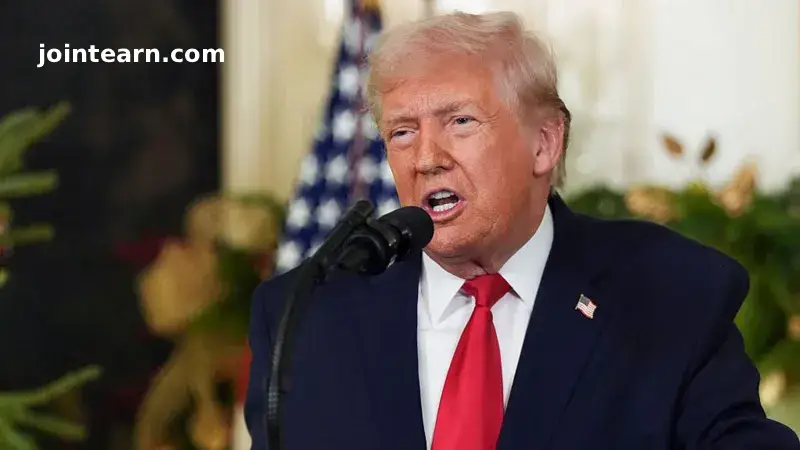
The Trump administration has announced a massive arms sale to Taiwan valued at around $11 billion (£8.2 billion). The deal includes advanced rocket launchers, self-propelled howitzers, and a range of missiles, marking one of the largest US weapons packages ever approved for the island.
This sale, which still requires Congressional approval, is the second arms package to Taiwan since Donald Trump returned to the White House in January 2025.
What the Deal Includes
According to the US Defense Security Cooperation Agency (DSCA), the package comprises:
- High Mobility Artillery Rocket Systems (HIMARS) worth $4 billion
- Self-propelled howitzers also valued at $4 billion
- Various long- and short-range missiles
If approved, this sale will surpass the $8.38 billion worth of 19 arms sales conducted under the Biden administration and will add to the $18.3 billion Trump approved in his first term, including an $8 billion weapons package.
The US State Department emphasized that the sale supports Taiwan’s efforts to modernize its armed forces and maintain a credible defensive capability.
Taiwan’s Response
Taiwan’s Ministry of Defense welcomed the package, noting it would help the island rapidly build robust deterrence capabilities. The government has also outlined plans to increase defense spending, targeting more than 3% of GDP next year, rising to 5% by 2030.
President Lai Ching-te announced in October the construction of a dome-like air defense system designed to protect against “hostile threats,” highlighting Taiwan’s focus on self-defense without explicitly naming China.
China Condemns the Sale
China, which considers Taiwan a breakaway province, strongly condemned the announcement. Foreign Ministry spokesman Guo Jiakun warned that:
“The US’s attempt to support independence through force will only backfire… It will only accelerate the push towards a dangerous and violent situation across the Taiwan Strait.”
China has increased military drills and incursions into Taiwan’s airspace and waters in recent years, signaling growing assertiveness in the region.
Regional Implications
The US-Taiwan arms sale comes amid heightened tensions in the Indo-Pacific region:
- In June, Japan protested Chinese aircraft carrier drills in the Pacific, an unprecedented escalation.
- Recently, Chinese fighter jets locked radar on Japanese aircraft near disputed islands, following comments from the Japanese Prime Minister about deploying self-defense forces in the event of a Chinese attack on Taiwan.
- There have been naval confrontations this month between boats from both China and Japan near contested islands.
Analysts suggest the new weapons package aims to strengthen Taiwan’s defensive capabilities while sending a signal to Beijing about US commitment to the region.
Conclusion
The proposed $11 billion arms sale to Taiwan represents a major escalation in US-Taiwan military cooperation and underscores growing China-Taiwan-US tensions in the Indo-Pacific. With Congressional approval still pending, the deal could reshape regional security dynamics, reinforcing Taiwan’s defensive capabilities amid an increasingly assertive China.


Leave a Reply