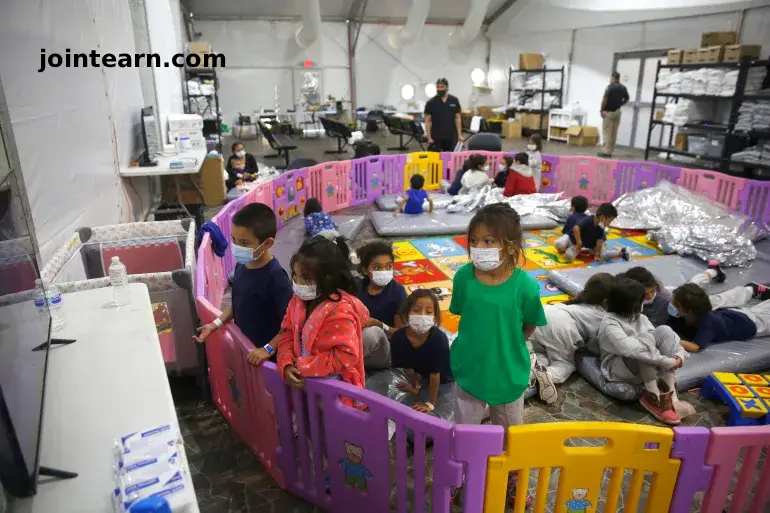
Hundreds of immigrant children in the United States have been held in federal detention facilities beyond the court-mandated limit, including some who spent more than five months in custody, according to recent court filings. The revelations have alarmed legal advocates, who argue that the government is failing to uphold protections for vulnerable minors.
Court-Ordered Limits on Immigrant Child Detention
The issue stems from a longstanding civil lawsuit, launched in 1985, which led to the establishment of court oversight in 1997. Under the agreement, children cannot be held in federal custody for more than 20 days in facilities not licensed for childcare.
Recent filings indicate that this limit has been regularly exceeded, with some children held for up to 168 days, far beyond what is legally permissible. Lawyers representing detainees argue that the government has failed to provide adequate explanations for these prolonged detentions.
Reports of Unsafe Conditions
Legal advocates have highlighted disturbing conditions at detention sites, including:
- Contaminated or moldy food, including reports of broccoli and cauliflower with worms.
- Delayed access to medical care, with one child’s eye injury going untreated for two days.
- Insufficient legal counsel and delayed processing of cases.
- Injuries from facility accidents, such as a child breaking a foot when struck by a volleyball net pole.
A report from US Immigration and Customs Enforcement (ICE) on December 1 indicated that approximately 400 children were held for more than the 20-day limit between August and September 2025.
Factors Cited for Delays
The government cited several reasons for delays in releasing children, including:
- Transportation delays between facilities.
- Medical needs requiring treatment before transfer.
- Legal processing for immigration and asylum cases.
However, attorneys argue that these factors do not justify the prolonged detentions, particularly in cases where children spent months in custody or were held in hotels repurposed for temporary detention beyond the allowed 72 hours.
Specific Incidents Highlight Ongoing Concerns
Advocates interviewed families and identified five children held for 168 days, though their ages were not disclosed. Reports from the Dilley, Texas detention site, which reopened earlier this year, described continued medical neglect and unsafe conditions.
- One child with food poisoning was told by medical staff to return only if vomiting occurred eight times.
- Children reported diarrhea, stomach aches, and heartburn due to poor-quality food.
Legal teams argue that the government’s reporting fails to fully account for these violations and does not justify keeping children in potentially harmful conditions for extended periods.
Next Steps in Court Oversight
Chief US District Judge Dolly Gee of the Central District of California is scheduled to hold a hearing next week on the reports. The court may decide whether additional interventions are necessary to enforce the 20-day custody limit and ensure the welfare of immigrant children.
Advocates hope that increased scrutiny will lead to improved conditions, timely release, and better protections for unaccompanied minors in US custody.
Conclusion:
The acknowledgment by US authorities that immigrant children have been held far beyond the court-mandated 20-day limit highlights ongoing challenges in the country’s immigration detention system. With reports of unsafe conditions, delayed medical care, and extended custody, legal advocates and courts are pressing for stricter enforcement and accountability to protect the welfare of vulnerable children.


Leave a Reply