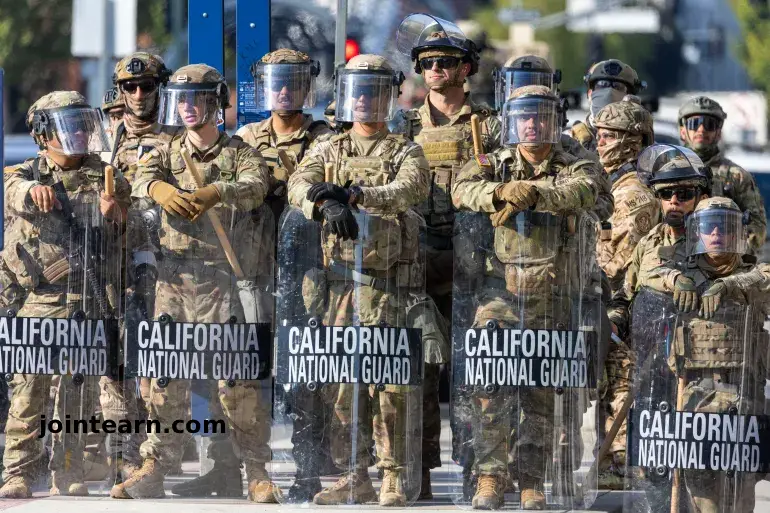
In a landmark decision, a US federal judge has halted President Donald Trump’s extended deployment of National Guard troops in Los Angeles, California. The ruling marks a significant legal victory for California Governor Gavin Newsom, who had actively opposed the Trump administration’s controversial military presence in the state.
Judge Orders National Guard Troops Return to State Control
United States District Judge Charles Breyer ruled on Wednesday that the federal government’s claim—that the deployment was necessary to control protests stemming from aggressive immigration raids—was insufficient. According to the ruling, the National Guard troops must be returned to the authority of the California governor, reinforcing the principle of state control over local military forces.
Judge Breyer emphasized the constitutional system of checks and balances, stating, “The founders designed our government to be a system of checks and balances. Defendants, however, make clear that the only check they want is a blank one.”
Controversial Deployment Sparks National Debate
Earlier this year, approximately 4,000 California National Guard members were sent to Los Angeles without Governor Newsom’s consent, with only about 100 remaining by December. The Trump administration argued that the troops were needed to protect federal officials and property and had extended the deployment through February 2026.
This decision is not isolated. The Trump administration has frequently deployed National Guard troops to cities across the country, often ignoring local objections and deploying forces in the absence of immediate threats or emergencies. These actions have sparked widespread debate over federal authority versus state sovereignty.
Political Reactions and Legal Implications
Democratic leaders, including Governor Newsom, have criticized the deployments as an authoritarian attempt to suppress dissent in cities perceived as resistant to Trump’s policies. Newsom’s office celebrated the ruling on social media, posting: “Another W (win) for Democracy, L (loss) for the rule of the Don.”
Trump’s rhetoric targeting Democrat-led cities and immigrant communities—labeling them as unsafe or “crime-infested”—has drawn national attention. The president has also suggested the potential for using the military domestically more frequently to combat what he calls “the enemy within,” fueling controversy and legal scrutiny.
Broader Implications for Federal-State Relations
This ruling could have far-reaching consequences for how the federal government interacts with state-controlled National Guard units. The case underscores the importance of local oversight and the constitutional limits on presidential authority when deploying military forces within the United States.
Moreover, the Trump administration has faced similar clashes with California over deploying state National Guard troops to Portland, Oregon, highlighting ongoing tensions between federal and state governments over law enforcement and immigration policies.
What’s Next?
The preliminary injunction granted by Judge Breyer places a temporary halt on the deployment until Monday, allowing state and federal officials time to adjust and respond. Legal analysts suggest that this case may become a precedent for future disputes over federal troop deployments in U.S. cities.
For now, the decision is being hailed by California officials as a win for democracy and state authority, signaling limits to the federal government’s power to unilaterally deploy military personnel in states without consent.


Leave a Reply