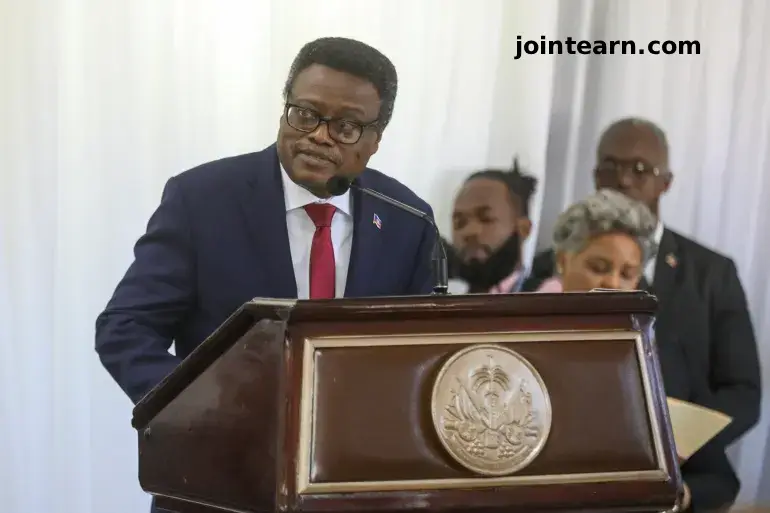
Haitian transitional council member Fritz Alphonse Jean denies US allegations as visa restrictions are enforced amid rising gang violence and political instability.
The United States government has announced visa restrictions against a Haitian government official accused of ties to criminal gangs, part of its ongoing crackdown on illicit networks in the region. While the US initially did not disclose the identity of the official, economist and former central bank governor Fritz Alphonse Jean confirmed to media outlets that he was the target.
Visa Sanctions Target Haitian Official
According to the US State Department, the visa restrictions are aimed at an unnamed official “for supporting gangs and other criminal organizations” and obstructing Haiti’s fight against terrorist-designated gangs. The sanctions bar entry into the US and revoke any valid visas held by the individual.
Jean publicly denied the allegations, asserting that the claims were false and politically motivated. He also suggested that the US and Canadian authorities exerted pressure on the transitional presidential council as it considered candidates for upcoming national elections.
“Once we started reviewing the possibilities of changing the head of government, members of [the council] started receiving threats of visa cancellation and other sanctions from the US embassy representative and the Canadian ambassador,” Jean said.
Context: Gang Violence in Haiti
Haiti faces a critical gang violence crisis, particularly in the capital, Port-au-Prince, where criminal groups control approximately 90 percent of the city. The US has previously designated Haitian gangs, including Viv Ansanm and Gran Grif, as foreign terrorist organizations.
High-profile gang leaders, such as Jimmy “Barbecue” Cherizier, have been indicted in the US, with rewards offered for information leading to their capture. In October 2025, the US imposed sanctions on gang leaders associated with Viv Ansamn.
The escalating violence has created a severe humanitarian crisis, with over 1.4 million Haitians displaced in 2025, according to the International Organization for Migration. UN estimates indicate that between April and June alone, 1,617 people were killed and 580 wounded due to gang activity.
Political Instability Compounds the Crisis
Haiti’s political turmoil has further empowered gangs. Since the assassination of President Jovenel Moise in 2021, the country has lacked a fully functioning government. Scheduled national elections have repeatedly been delayed, and the last democratically elected officials’ terms ended in 2023, leaving the nation without elected lawmakers.
In response, a transitional presidential council was established in April 2024 to serve as Haiti’s governing body until elections could be held. The council, including politicians, academics, and businessmen, has faced internal disagreements, allegations of corruption, and criticism for representing only the country’s elite.
Currently, Laurent Saint-Cyr chairs the nine-member council. Jean previously served in this role from March to August 2025. Despite allegations, Jean maintains that the council is committed to combating corruption, gang violence, and the proliferation of drugs, weapons, and illegal arms.
Roadmap for National Elections
The council had initially planned a multi-round election cycle starting in November 2025 and concluding in February 2026. However, elections have been postponed, with a new provisional timeline aiming to begin campaigns in March 2026 and hold votes in August and December 2026. Questions remain about whether council members will step down as scheduled in February.


Leave a Reply