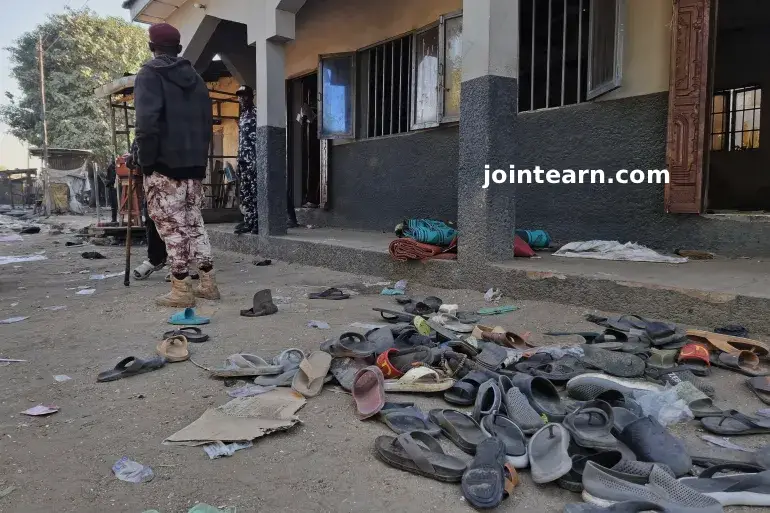
Nigeria – The United States conducted “powerful and deadly” air strikes against ISIL-affiliated groups in Nigeria, President Donald Trump announced on Thursday. The Christmas Day strikes marked the first known direct US military intervention on Nigerian soil and sparked debate over the true motivations behind the attacks.
Trump and other US right-wing figures have repeatedly cited an alleged “Christian genocide” in Nigeria’s Middle Belt region, claiming the Nigerian government has failed to protect its Christian population. However, the recent strikes targeted locations in northwest Nigeria, raising questions about the link between the operations and the reported attacks on Christian communities.
Details of the US Strikes
The US Africa Command reported that initial assessments showed “multiple ISIS terrorists were killed in the ISIS camps.” US Secretary of Defense Pete Hegseth thanked Nigeria for cooperating with the strikes, emphasizing the US’s readiness to act against ISIL.
President Trump, posting on Truth Social, stated that the strikes targeted ISIS positions responsible for killing “primarily innocent Christians.” Videos shared by the US Defense Department showed bomb deployments from unmarked locations, likely launched from the Gulf of Guinea, according to analysts.
The Nigerian Foreign Ministry confirmed that the strikes occurred in northwest Nigeria, but emphasized that the operations were coordinated, legally sanctioned, and not motivated by religious considerations. Minister of Foreign Affairs Yusuf Tuggar described the action as part of a broader regional security response.
Who Were the Targets?
Analysts suggest that the strikes likely targeted Lakurawa, a recently emerged ISIL-linked faction in Sokoto State. While photos and videos from Jabo, a town in Sokoto, show bomb fragments and fires, no casualties were immediately confirmed.
Nigeria hosts multiple armed groups with ties to ISIL and al-Qaeda, including:
- Boko Haram – Based in Borno State, northeast Nigeria; notorious for kidnappings and attacks on both Christian and Muslim communities.
- ISWAP (ISIL West Africa Province) – Split from Boko Haram in 2016; active in the Lake Chad Basin and parts of northwest Nigeria.
- Lakurawa – Newly emerged in Sokoto, Zamfara, and Kebbi states; originally composed of former bandits and militants with connections to ISIL in Sahel regions.
Analysts caution that Lakurawa is not a homogenous group, and it remains unclear whether it coordinates directly with ISWAP.
The Alleged “Christian Genocide” Debate
US claims of a “Christian genocide” have primarily referred to attacks in Nigeria’s Middle Belt, where violent clashes between predominantly Muslim Fulani herders and Christian farmers have intensified over land and water disputes. Amnesty International reported nearly 10,000 deaths and over 500,000 displaced since 2023 in states like Benue and Plateau.
Trump and Senator Ted Cruz have highlighted these atrocities, framing them as a genocide against Christians. However, the recent air strikes targeted northwestern Nigeria, a region with predominantly Muslim communities and bandit activity, not the Middle Belt.
This discrepancy has fueled criticism that the US narrative oversimplifies Nigeria’s complex security situation, conflating two separate issues: ideological terrorism and local herder-farmer conflicts.
Nigeria’s Role and Sovereignty Concerns
The Nigerian government confirmed that the strikes were carried out with its consent, based on shared intelligence and coordination. Nevertheless, opposition figures, including Omoyele Sowore, criticized the operation as an infringement on Nigeria’s sovereignty and a reflection of unequal US-Nigeria relations.
Security analyst Femi Owolade noted that the strikes illustrate a cooperative but asymmetric partnership: Nigeria relies on external intelligence, while the US frames the conflict as part of its broader counter-ISIS strategy and narrative of protecting Christians.
Historical Context of US-Nigeria Security Cooperation
The US has long supported Nigeria in combating Boko Haram and other armed groups, primarily through training, intelligence, and weapons support under the Multinational Joint Task Force (MNJTF). The MNJTF includes Nigeria, Niger, Chad, Cameroon, and Benin, but recent political tensions, particularly in Niger and Chad, have strained the coalition.
Thursday’s air strikes mark a significant escalation, as they are the first direct US military operations in Nigeria rather than advisory or training support. Analysts warn that regional instability and fragmented armed groups may complicate future security efforts.


Leave a Reply