The United States has officially announced the launch of Phase Two of its Gaza peace plan, aimed at ending the ongoing Israeli-Palestinian conflict in the Gaza Strip. The announcement was made by US Special Envoy Steve Witkoff, who described the transition as a shift from a ceasefire to demilitarization, technocratic governance, and comprehensive reconstruction of the Palestinian territory.
Witkoff’s statement, shared on social media Wednesday, emphasized that the US expects full compliance from Hamas, including the immediate return of the final deceased hostage, warning that failure to meet these obligations will bring serious consequences.
Details of Phase Two: Technocratic Governance and Reconstruction
The second phase of the US-brokered plan will establish a transitional administrative body to govern Gaza. This provisional body is intended to manage day-to-day operations, oversee reconstruction efforts, and ensure the demilitarization of the territory.
“The US expects Hamas to comply fully with its obligations, including the immediate return of the final deceased hostage. Failure to do so will bring serious consequences,” Witkoff said.
While Hamas has condemned Israel’s repeated violations of the ceasefire, the Palestinian group has not yet formally commented on the US announcement. Reporting from Deir el-Balah indicates that Hamas had previously expressed willingness to step aside from day-to-day governance under the framework of the US plan.
The specifics of the technocratic body’s composition, authority, and powers remain unclear. Observers have also raised concerns about the feasibility of Gaza’s reconstruction, where more than 80 percent of buildings have been damaged or destroyed due to Israeli bombardments.
Israel’s Ceasefire Violations
According to the Gaza Government Media Office, Israel has violated the ceasefire more than 1,190 times since it was implemented in October, killing over 400 Palestinians and blocking humanitarian aid.
“The durability of the ceasefire itself remains a key variable. Any deterioration could delay or even ruin these plans,” said Al Jazeera correspondent Tareq Abu Azzoum.
Israeli Prime Minister Benjamin Netanyahu emphasized that returning the body of former police officer Ran Gvili remains a top priority and that the formation of the technocratic body will not affect these efforts.
Key Components of the US 20-Point Gaza Plan
The Trump administration’s 20-point plan, initially proposed in September 2025, aims to stabilize Gaza and includes:
- Creation of a “Board of Peace” chaired by Donald Trump.
- Deployment of an international stabilization force to maintain security.
- Oversight of a Palestinian technocratic government to manage civil administration.
- Full demilitarization of Gaza and reconstruction of homes, schools, hospitals, and infrastructure.
Last week, Netanyahu appointed former UN Middle East envoy Nickolay Mladenov to lead the board, tasked with supervising the technocratic committee.
Regional Reactions
Mediators Qatar, Turkiye, and Egypt welcomed the technocratic committee, naming Ali Abdel Hamid Shaath as its head. In a joint statement, the countries urged full commitment from all parties to implement the ceasefire agreement and to create conditions conducive to sustainable peace and reconstruction.
Senior Al Jazeera analyst Marwan Bishara questioned the fairness of the process, noting that the plan is heavily biased in favor of Israel, while Palestinian rights and freedoms remain largely ignored.
“The people in Gaza continue to suffer … while President Trump and his entourage are celebrating as ‘peacemakers.’ Israel is not interested in leaving Gaza, and the US is not pressuring them. Phase two may remain stalled for a very long time,” Bishara said.
Humanitarian Crisis in Gaza
Despite diplomatic efforts, humanitarian conditions in Gaza remain dire. UN agencies and NGOs continue to call on Israel to allow unhindered aid deliveries, including food, shelter, and equipment for rebuilding destroyed homes.
Legal experts note that Israel’s restrictions violate international law, including its obligations as the occupying power in Gaza and provisions outlined in the US-brokered ceasefire, which mandates 600 aid trucks enter the territory daily.
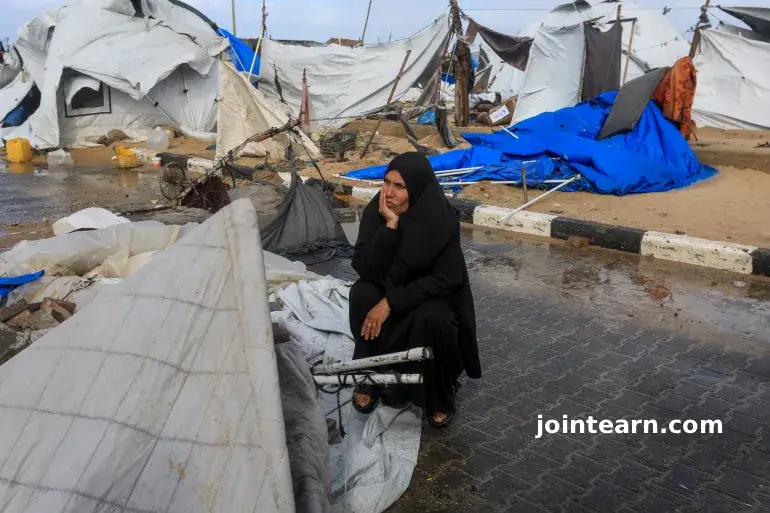
Hundreds of thousands of Palestinians remain in makeshift shelters and tent camps, exposed to harsh winter conditions, while attacks by Israeli forces continue to claim civilian lives. On Wednesday, a medical staff member at Nasser Hospital in Khan Younis was shot dead, and at least 15 bodies were brought to hospitals in Gaza, including 13 recovered from rubble.
Since the war began in October 2023, over 71,400 Palestinians have been killed, and more than 171,000 injured.
Key Takeaways
- The US has launched Phase Two of its 20-point Gaza plan, focusing on demilitarization, technocratic governance, and reconstruction.
- The transitional Palestinian body will manage day-to-day governance in Gaza, overseen by a US-led board of peace.
- Israel has violated the ceasefire over 1,190 times, blocking aid and continuing military operations.
- Humanitarian conditions in Gaza remain critical, with massive destruction of infrastructure and ongoing civilian casualties.
- Regional mediators Qatar, Turkiye, and Egypt support the technocratic committee but emphasize full compliance from all parties.
- Experts warn the plan may favor Israel, leaving Palestinians vulnerable to ongoing hardship and political marginalization.


Leave a Reply