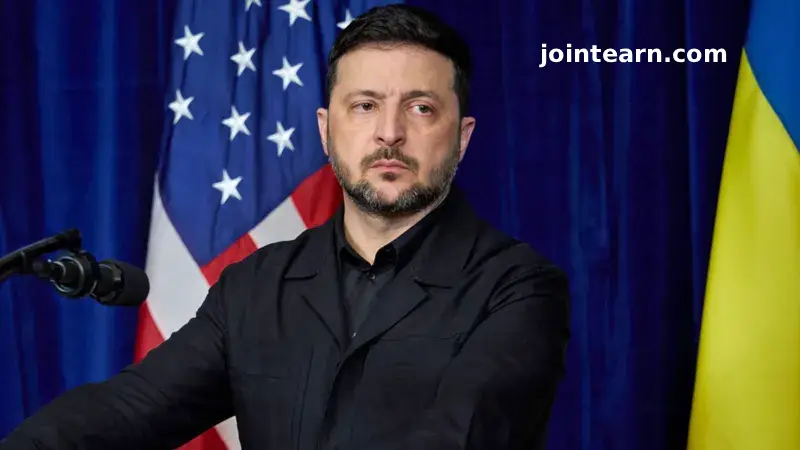
The United States has offered Ukraine a 15-year security guarantee, Ukrainian President Volodymyr Zelensky announced following peace talks with US President Donald Trump in Florida on Sunday. The discussions focused on a revised peace plan, which Zelensky said was close to completion, although several key issues remain unresolved.
President Trump stated that the agreement on security guarantees was “close to 95% done,” but Zelensky indicated that Ukraine hopes for guarantees extending up to 50 years to ensure long-term protection against future aggression.
Key Issues in the Peace Plan
Zelensky highlighted two main unresolved matters in the negotiations: territorial disputes and the future of the Russian-occupied Zaporizhzhia nuclear plant. The fate of Ukraine’s contested Donbas region—comprising Donetsk and Luhansk—is still a major sticking point. Russia currently controls approximately 75% of Donetsk and nearly 99% of Luhansk.
During the press conference at Trump’s Mar-a-Lago resort, Zelensky emphasized that security guarantees are critical for lasting peace:
“Without security guarantees, this war cannot be considered truly over. We cannot acknowledge that it has ended, because with such a neighbour there remains a risk of renewed aggression,” he said.
Zelensky proposed that guarantees could span 30, 40, or even 50 years, but the US has not yet responded to this extended timeframe. Trump noted that European allies would likely take on a significant portion of the security responsibility alongside US support.
Donbas and Territorial Disputes
While the US and Ukraine have reportedly made progress on security guarantees, the Donbas conflict remains unresolved. Zelensky suggested that Ukrainian authorities could negotiate the establishment of a free economic zone in parts of Donbas still under Kyiv’s control, with Ukrainian forces maintaining policing rights. Russia, however, insists that Ukraine withdraw its troops from the region.
Trump also floated the possibility of trilateral talks between the US, Russia, and Ukraine, though he cautioned that stalled negotiations could prolong the conflict. Zelensky indicated that Ukrainian officials could meet at the White House in January, potentially alongside European leaders, to advance discussions.
Support from European Allies
Following the Florida talks, European leaders expressed cautious optimism. European Commission President Ursula von der Leyen praised “good progress” while reinforcing the importance of “ironclad security guarantees” for Ukraine. French President Emmanuel Macron announced that Kyiv’s allies would convene in Paris next month to further discuss security arrangements.
Ceasefire and Referendum Plans
Zelensky also insisted that any peace plan should be subjected to a referendum in Ukraine, requiring a 60-day ceasefire for proper implementation. Russia has rejected the idea of a temporary ceasefire, arguing that it could extend the conflict. A recent call between Trump and Russian President Vladimir Putin reportedly confirmed Moscow’s opposition, with Trump acknowledging that Russia has little interest in a ceasefire that would allow Ukraine to hold a vote.
Continued Military Tensions
Despite diplomatic optimism, the situation on the ground remains tense. Kyiv reported 25 airstrikes by Russia on Sunday, 21 of which were successfully intercepted. Meanwhile, Russia claimed it intercepted 89 Ukrainian UAVs, primarily over the Bryansk region.
Although both Trump and Zelensky expressed optimism after their meeting, analysts note that a comprehensive peace agreement remains elusive, with major territorial and security issues yet to be resolved.


Leave a Reply