US Intercepts Second Oil Tanker Near Venezuela
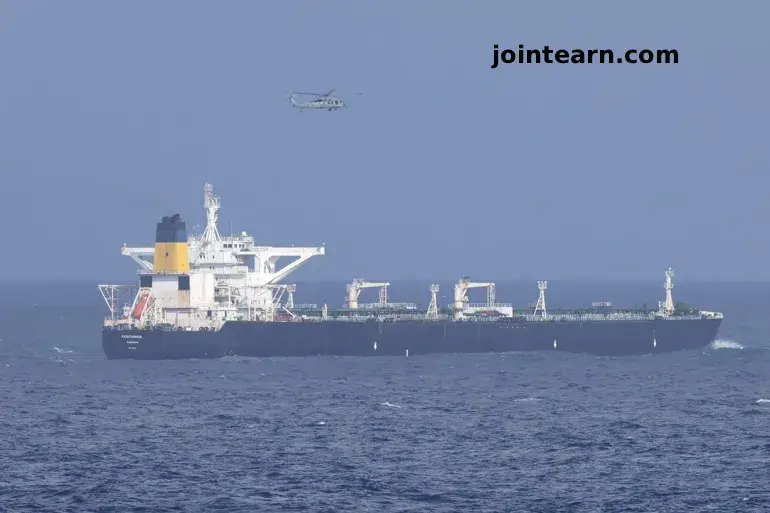
The United States has seized a second oil tanker off the coast of Venezuela, escalating tensions in the region and drawing sharp criticism from Caracas. The interception, part of a blockade ordered by President Donald Trump, was confirmed by US Homeland Security Secretary Kristi Noem. She posted on X that the Coast Guard, supported by the Pentagon, apprehended the vessel as part of efforts to prevent illicit oil shipments allegedly funding narco-terrorism in the region.
“The United States will continue to pursue the illicit movement of sanctioned oil. We will find you, and we will stop you,” Noem wrote, accompanied by aerial footage of a US military helicopter hovering over the tanker.
Venezuela Condemns Seizure as “Act of International Piracy”
Venezuelan Vice President Delcy Rodriguez denounced the operation as “theft and hijacking” and a “serious act of international piracy.” She stated that the US forcibly disappeared the tanker’s crew in international waters and vowed that Caracas would take “all corresponding actions, including filing a complaint before the United Nations Security Council and other multilateral organizations.”
The Venezuelan government emphasized that such operations violate international law and undermine maritime security in the Caribbean.
Details of the Seized Vessel
The tanker, identified as the Panama-flagged Centuries, was intercepted east of Barbados in the Caribbean Sea. According to internal PDVSA documents cited by Reuters, the vessel was carrying approximately 1.8 million barrels of Venezuelan Merey crude oil destined for China. The ship reportedly used a false name, “Crag,” as part of a shadow fleet employed to obscure the origin of Venezuelan oil.
Legal experts note that the Centuries has not been officially sanctioned by the US, marking a controversial expansion of Trump’s blockade policy. Jeremy Paner, a Washington-based lawyer, said this action contradicts Trump’s stated policy to target only sanctioned tankers.
Impact on Venezuelan Oil Exports
The US actions have caused a sharp drop in Venezuelan crude exports. Since the first tanker seizure, many vessels have remained in Venezuelan waters to avoid the risk of interception. While some shipments are sanctioned, others carrying Venezuelan, Iranian, or Russian oil are not, highlighting the complexity of international oil trade under sanctions.
Notably, US-based companies like Chevron continue to transport Venezuelan oil legally through authorized vessels.
Escalating US Military Presence and Strikes
The tanker seizure coincides with a significant US military build-up in the Caribbean and the Pacific near Venezuela. Trump’s administration has conducted over two dozen strikes on vessels allegedly involved in drug trafficking, reportedly resulting in at least 100 deaths. These operations have been criticized by legal scholars and human rights groups as extrajudicial killings and potential violations of international law. Trump has also hinted that land strikes in Venezuela could follow.
Maduro Accuses US of Seeking Oil Control
Venezuelan President Nicolas Maduro maintains that the US military escalation is aimed at regime change and seizing Venezuela’s vast oil reserves—the largest globally. Maduro has described the measures as part of a broader strategy to undermine Venezuelan sovereignty and control natural resources.
Adam Clements, a former US diplomat, suggested that the latest tanker seizure is part of the Trump administration’s ongoing pressure campaign, which may include “19th-century foreign policy goals” in the region.
Historical Context: Venezuela’s Oil Nationalization
Venezuela nationalized its oil sector in 1976, placing it under state control through PDVSA. Later, in 2007, former President Hugo Chavez nationalized remaining foreign oil projects, effectively ending US oil companies’ operations in the country. While Trump has cited lost US energy investments as justification for the blockade, international law recognizes Venezuela’s permanent sovereignty over its natural resources.
Regional Reactions and Mercosur Summit Tensions
The tanker seizure occurred as South American leaders met for a Mercosur summit. Brazilian President Luiz Inacio Lula da Silva warned that US military actions could trigger a humanitarian catastrophe and set a “dangerous precedent for the world.” In contrast, Argentine President Javier Milei, a Trump ally, supported US pressure, arguing it could help “free the Venezuelan people.”
The incident has intensified diplomatic tensions and raised concerns about the broader impact of US-Venezuela confrontations on regional stability.
Conclusion: Rising US-Venezuela Tensions
The interception of the Centuries tanker marks a significant escalation in US-Venezuela relations, raising legal, economic, and geopolitical concerns. With Venezuelan oil exports disrupted and international condemnation growing, the situation highlights the complex interplay of sanctions enforcement, US foreign policy objectives, and regional stability in Latin America.


Leave a Reply