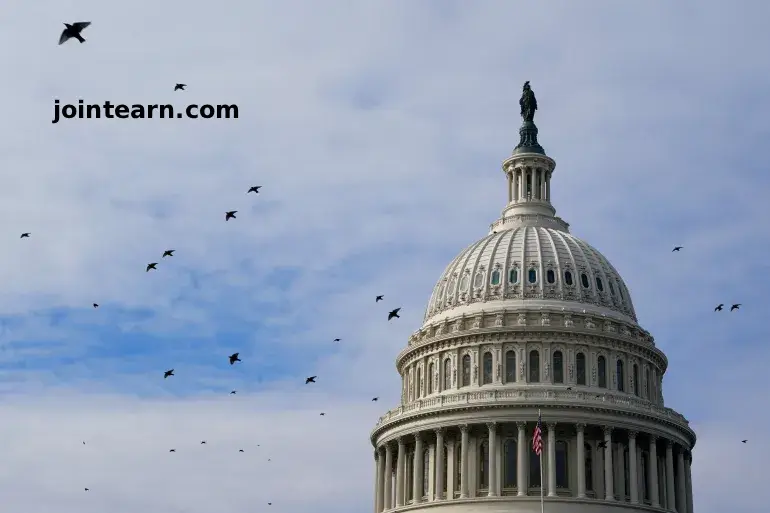
Washington, DC – The US Senate took a significant step on Thursday by advancing a resolution aimed at limiting President Donald Trump’s military authority in Venezuela, reflecting growing bipartisan unease over the unilateral military abduction of Venezuelan President Nicolas Maduro. The procedural vote passed 52 to 47, with several Republican senators joining all Democrats in supporting the measure.
If fully enacted, the resolution would prevent Trump from deploying US forces against Venezuela or engaging in hostilities in the country without explicit congressional authorization, reinforcing the constitutional requirement that only Congress can declare war.
“With this historic, bipartisan vote to prevent further war in Venezuela, Congress has begun the long-overdue work of reasserting its constitutional role in decisions of war and peace,” said Cavan Kharrazian, senior policy director at the Demand Progress advocacy group.
Vote Signals Republican Dissent
Thursday’s vote marked a rare break from party loyalty among Republicans. Senators Rand Paul, Lisa Murkowski, Susan Collins, Todd Young, and Josh Hawley joined Democrats to advance the resolution. The measure now proceeds to full Senate debate, followed by consideration in the House, before potentially reaching President Trump’s desk. Any presidential veto could only be overridden with a two-thirds majority in both chambers—a threshold unlikely to be met.
Trump reacted sharply to the dissenting Republicans, posting on Truth Social that the five senators “should be ashamed” and “should never be elected to office again.”
Congressional Oversight vs. Presidential Overreach
Legal experts have long warned that the US Congress has largely ceded its constitutional authority over military actions abroad. Under Article I of the Constitution, Congress holds the sole power to declare war—a power not exercised since World War II. The War Powers Resolution of 1973 was enacted to restrict unilateral military actions by the president, but its enforcement has historically been weak.
David Janovsky, acting director of the Constitution Project at the Project on Government Oversight, told Al Jazeera that Trump’s operations in Venezuela constitute a “clear-cut case” of presidential overreach.
“This is exactly the type of situation where Congress needs to assert its authority and prevent unilateral actions that could escalate into broader conflict,” he said.
Trump’s Justifications for Military Action
Supporters of Trump in Congress argue that the president’s actions in Venezuela were limited, decisive, and necessary for US national security. Senator James Risch described the raid to remove Maduro as a “47-minute” operation that did not constitute a prolonged military engagement, suggesting congressional approval was not required.
Trump and his aides have framed the Maduro abduction as a law enforcement operation, citing federal charges against Venezuela’s leader, including drug trafficking and narcoterrorism. Vice President JD Vance echoed this justification, stating that Maduro “does not get to avoid justice because he lives in a palace in Caracas.”
However, critics assert that these claims do not exempt the president from constitutional and international law obligations, especially when US military forces operate on foreign soil.
Bipartisan Concerns About Escalation
Senate Majority Leader Chuck Schumer emphasized the constitutional role of Congress in authorizing war.
“We must send Donald Trump a clear message on behalf of the American people: no more endless wars,” Schumer said.
Senator Rand Paul criticized the Republican Party’s acquiescence to executive overreach, describing the Maduro operation as an act of war that exceeds presidential authority.
“Bombing another nation’s capital and removing its leader is an act of war, plain and simple,” Paul wrote. “No provision in the Constitution provides such power to the presidency.”
The vote reflects broader concerns that Trump may continue to threaten military action in Venezuela, Colombia, and even Greenland—an autonomous territory of Denmark—without congressional approval.
Implications for US-Venezuela Relations
US military assets remain deployed in the Caribbean following the abduction of Maduro, and the Trump administration has indicated that operations targeting Venezuelan drug trafficking will continue. Questions remain about how the US intends to exert control over Venezuela’s interim government, led by Maduro’s former deputy, Delcy Rodriguez, and the country’s oil industry.
Experts warn that without congressional oversight, unilateral actions risk escalating tensions, undermining the rule of law and potentially drawing the United States into broader regional conflicts.
Key Takeaways
- US Senate advances resolution to limit Trump’s military authority in Venezuela.
- Bipartisan support highlights concerns about unilateral military action and constitutional overreach.
- The resolution would require congressional approval for future hostilities against Venezuela.
- Trump and allies defend the Maduro raid as a law enforcement action citing US federal indictments.
- Critics, including legal scholars and some Republicans, argue the operation constitutes an act of war and violates the US Constitution.
- The vote underscores ongoing debates over executive power, war powers, and US foreign policy in Latin America.


Leave a Reply