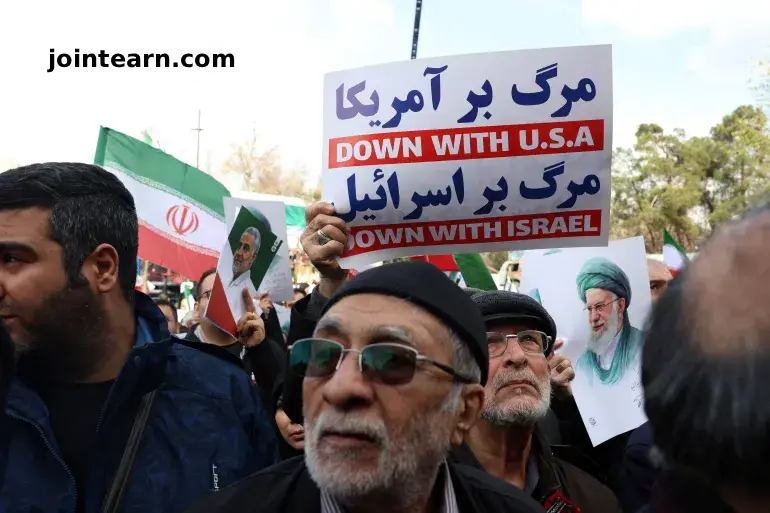
Tehran, January 15, 2026 – The United States has warned that “all options remain on the table” in response to the ongoing killings of antigovernment protesters in Iran, signaling potential military or diplomatic action if Tehran continues its crackdown. The warning comes amid mass demonstrations, a nationwide internet blackout, and heightened tensions in the Iranian capital.
White House Press Secretary Karoline Leavitt told reporters on Thursday that President Donald Trump had communicated to Iran that “if the killing continues, there will be grave consequences”. She claimed that scheduled executions of protesters had been halted but provided no independent verification.
Background: Nationwide Protests in Iran
Since late December 2025, thousands of Iranians have taken to the streets in protests sparked by soaring inflation, economic instability, and the sharp devaluation of the Iranian rial. Demonstrations have spread to multiple cities and towns across the country, and activist groups estimate that over 1,000 demonstrators have been killed, although Al Jazeera has not independently verified these figures.
The Iranian government, in turn, reports that more than 100 security personnel have been killed during the unrest, describing the protesters as armed rioters backed by the United States and Israel.
A Tehran resident told Al Jazeera, “There is a big military presence on the streets of the capital and elsewhere. There is a great deal of uncertainty. A lot of people are worried. There is a lot of death, sadness, and anger.”
US Warnings and Rhetoric
The Trump administration has repeatedly warned Iran against executing protesters or using excessive force, emphasizing that continued violence would have “grave consequences”.
Leavitt reiterated on Thursday:
“The president and his team are closely monitoring this situation, and all options remain on the table for the president.”
Earlier in the week, Trump had issued stronger threats, suggesting the US might consider military action. On Wednesday, he appeared to soften his tone, stating that assurances had been received indicating that killings of demonstrators had stopped.
Iran’s Response and Military Posture
Iranian officials have publicly denied plans to execute protesters. Foreign Minister Abbas Araghchi told Fox News:
“Hanging is out of the question.”
Araghchi also warned that Iran is ready to respond militarily if the US tests its resolve:
“If Washington wants to test the military option it has tested before, we are ready for it.”
Meanwhile, Iran has maintained a heavy military presence across major cities. Brigadier General Mohammad Karami, commander of the IRGC Ground Forces, said the military was “ready at the highest possible level,” and Defence Minister Aziz Nasirzadeh vowed to use all available capabilities to suppress what the government describes as armed terrorist groups orchestrating the protests.
The Iranian government has repeatedly claimed that the unrest is being orchestrated by the US and Israel, accusing foreign powers of designing and executing the demonstrations.
Internet Blackout and Information Restrictions
A nationwide internet blackout, in effect since January 8, has made it difficult to verify reports or gain independent information from inside Iran. Online monitoring group NetBlocks noted that access to social media and communication platforms remains severely restricted, limiting both journalists and activists in reporting on the situation.
US Sanctions in Response to Crackdown
Despite a relative softening in Trump’s public rhetoric, the US imposed fresh sanctions against Iranian officials on Thursday, citing their role in the violent suppression of protests. Among those targeted were Ali Larijani, Secretary of Iran’s Supreme National Security Council (SNSC), and several other officials described as the “architects” of Tehran’s crackdown.
The sanctions are part of a broader US strategy combining diplomatic pressure, economic penalties, and the threat of military options to deter further human rights abuses in Iran.
Humanitarian and Political Implications
The ongoing protests reflect deep economic frustration, political discontent, and social unrest across Iran. Analysts warn that the continued crackdown could lead to:
- Further escalation of violence, potentially drawing international attention and intervention.
- Economic destabilization, as sanctions and unrest compound Iran’s financial crisis.
- Regional tensions, with potential spillover effects in neighboring countries and the Middle East.
Observers note that Iran faces a delicate balance between maintaining domestic control and managing international consequences, particularly from the United States and European allies.
Conclusion: A High-Stakes Standoff
With all options on the table, the US continues to monitor Iran closely, signaling that failure to end the protest killings could trigger severe consequences, including additional sanctions or military measures. Meanwhile, Iran’s leadership maintains a high-alert military posture and continues to blame external actors for the unrest.
The situation remains highly fluid, with both domestic unrest and international pressure shaping the trajectory of Iran’s political crisis. Analysts emphasize that the coming days will be critical in determining whether Iran can stabilize internally or whether the standoff with the US escalates further.


Leave a Reply