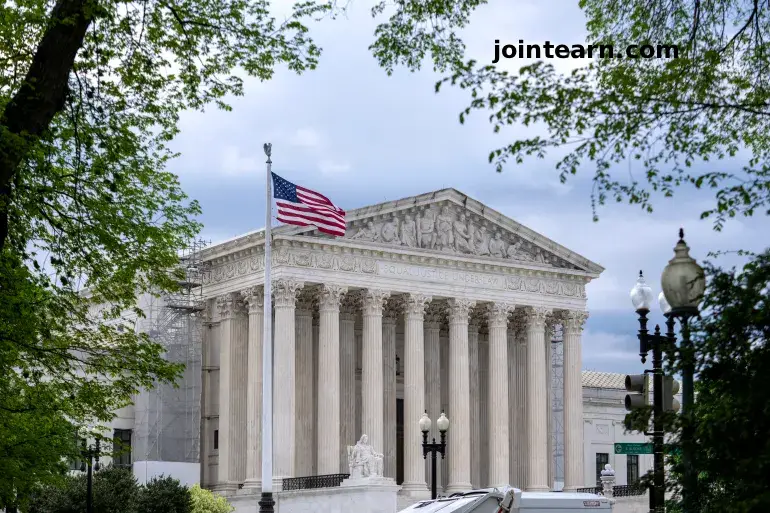
The United States Supreme Court is weighing a case that could significantly loosen restrictions on political party spending, potentially reshaping the nation’s campaign finance system. The conservative-majority court is considering arguments from Republican-led committees seeking to overturn a 2001 ruling that upheld federal limits on coordinated party expenditures.
Background: Campaign Finance and the Supreme Court
The case reflects the ongoing tension between campaign finance regulation and free speech rights. Conservative justices, including Clarence Thomas and Samuel Alito, appeared receptive to arguments asserting that spending by political parties constitutes a constitutionally protected form of First Amendment free speech.
The Supreme Court has historically weakened limits on political contributions. The landmark 2010 ruling Citizens United v. Federal Election Commission removed many restrictions on corporate and individual expenditures, leading to a dramatic surge in campaign spending. Super PAC contributions, which can raise unlimited funds from donors and organizations, rose from $62.6 million in 2010 to $622.7 million by 2012, eventually reaching $4.1 billion by 2024, according to transparency group OpenSecrets.
Current Case Details
The lawsuit was brought by two Republican committees representing House and Senate candidates in Ohio, including Steve Chabot and then-Senate candidate JD Vance, and was filed in 2022. The plaintiffs argue that coordinated spending limits infringe upon free speech and prevent political parties from fully communicating with voters.
Lawyer Noel Francisco told the court: “The coordinated party spending limits are at war with this court’s recent First Amendment cases.” He emphasized that removing restrictions would allow parties to exercise greater freedom in expressing political viewpoints.
Liberal Concerns
Some liberal justices expressed concern about the potential consequences of removing spending caps. Justice Sonia Sotomayor warned that eliminating coordinated expenditure limits could leave “no control whatsoever” over political spending, potentially giving disproportionate influence to wealthy donors and corporations.
The Trump administration has joined the push to strike down previous election laws intended to prevent wealthy contributors from bypassing individual contribution limits by funneling money through political parties.
Implications for US Elections
A decision to roll back coordinated party spending limits could:
- Increase overall campaign spending dramatically
- Strengthen the influence of wealthy donors and corporations in elections
- Reduce the effectiveness of existing campaign finance safeguards
- Shift the balance of power in close congressional and Senate races
Critics argue that such a decision would exacerbate inequality in political influence, while supporters maintain it would expand free speech and political engagement.
As the Supreme Court deliberates, the ruling could have far-reaching consequences for the 2026 midterm elections and beyond, potentially reshaping the funding landscape for political campaigns in the United States.


Leave a Reply