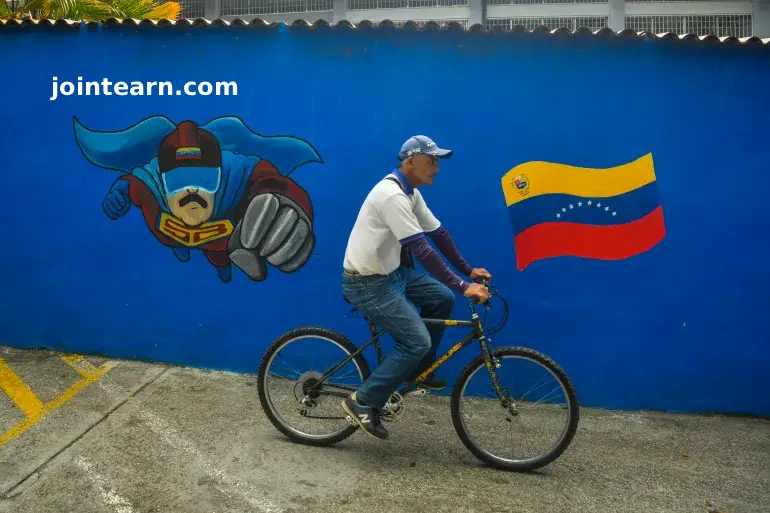
Venezuela is facing an unprecedented political and humanitarian crisis following the controversial abduction of President Nicolás Maduro by U.S. military forces. Interim President Delcy Rodriguez, previously Maduro’s vice president, has firmly stated that Venezuela remains under its own governance, rejecting claims of foreign intervention. Meanwhile, the U.S. administration has offered limited clarity about its long-term plans in the country, raising regional and global concerns.
Rodriguez Affirms Venezuelan Sovereignty
During a nationally televised address on Tuesday, Delcy Rodriguez asserted that Venezuela’s government is fully in charge, despite the removal of Maduro and his wife, Cilia Flores, who pleaded not guilty to drug-trafficking conspiracy charges in a New York court earlier this week.
“The government of Venezuela is in charge in our country, and no one else. There is no foreign agent governing Venezuela,” Rodriguez emphasized.
Rodriguez’s statement comes as part of a broader effort to stabilize the country amid international criticism and domestic unrest.
Prosecutor General Calls Maduro Abduction an Act of “Terrorism”
Venezuela’s Prosecutor General, Tarek William Saab, condemned the U.S. operation as illegal and of “a terrorist nature.” Saab highlighted that the military strike was conducted without a declaration of war or approval from the United Nations Security Council, and demanded the immediate release of Maduro and his wife.
The military operation, launched early Saturday morning, resulted in dozens of deaths in Venezuela. Official reports confirmed that 24 Venezuelan soldiers and 32 Cuban military personnel were killed during the assault. In response, Rodriguez declared a seven-day period of mourning to honor those lost in the operation.
U.S. Response Remains Ambiguous
Since the abduction, the Trump administration has provided little information on its strategy for Venezuela’s future. While President Trump initially claimed that the U.S. would “run” Venezuela, Secretary of State Marco Rubio later clarified that U.S. officials would only guide the country’s direction, primarily through sanctions and an ongoing oil embargo.
Several members of Congress expressed frustration over the lack of transparency. Senate Minority Leader Chuck Schumer stated,
“This briefing, while very extensive and long, posed far more questions than it ever answered.”
Senate Majority Leader John Thune, a Republican ally of Trump, expressed cautious optimism, suggesting that Rodriguez might cooperate on aligning Venezuela’s policies with U.S. national security priorities.
Domestic Reaction in Caracas
In Venezuela’s capital, Caracas, government-organized rallies demonstrated public support for Rodriguez. Marchers displayed “V” victory signs, while Minister of Interior Diosdado Cabello, himself indicted by the U.S., participated in the gathering.
Despite these public displays, tension remains high. Venezuelan reporter Noris Argotte Soto reported that most residents remain indoors due to the presence of security forces and government-aligned paramilitaries conducting checkpoints, searches, and social media monitoring.
Regional and International Concerns
The U.S. military operation has raised alarms across Latin America and beyond. President Trump suggested that Colombia could be targeted if it failed to control the drug trade, calling Colombian President Gustavo Petro a “sick man” involved in cocaine trafficking. Colombian Foreign Affairs Minister Rosa Yolanda Villavicencio announced plans to meet with U.S. officials to present a formal complaint over these threats.
Trump also renewed controversial statements about potentially taking control of Greenland, an autonomous territory of Denmark, citing U.S. national interest. Denmark, along with European allies including France, Germany, Italy, Poland, Spain, and the United Kingdom, quickly condemned the remarks, emphasizing Greenland’s sovereignty.
Former Opposition Leader Sees Opportunity
Exiled Venezuelan opposition leader Juan Guaidó described Maduro’s removal as a chance to restore democracy and rebuild the country’s economy, particularly the oil industry. However, Guaidó criticized Rodriguez as an “acting dictator,” emphasizing that a true transition requires the reinstatement of the rule of law.
Humanitarian and Political Implications
The unfolding crisis has created severe uncertainty for Venezuelans, who continue to grapple with limited access to food, water, and essential services. Analysts warn that political instability and international sanctions may exacerbate the humanitarian situation.
Experts also note that the U.S. approach in Venezuela could set a precedent for foreign intervention in Latin America, potentially reshaping regional alliances and security dynamics.


Leave a Reply