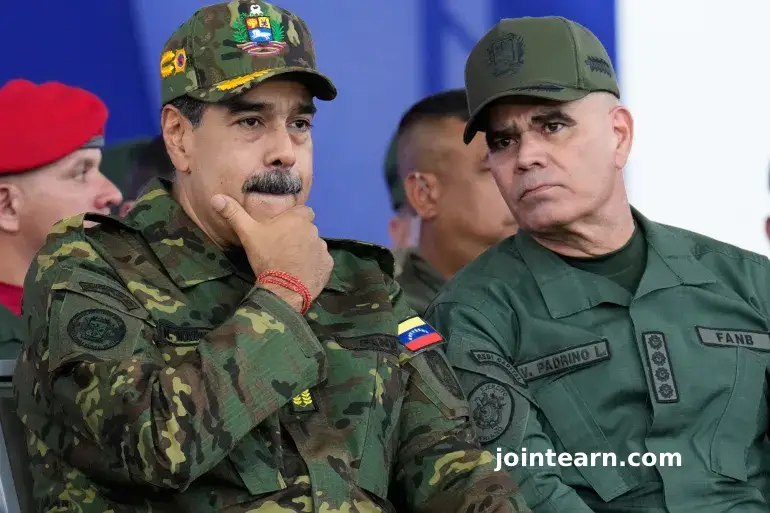
Venezuela’s National Assembly has approved legislation imposing severe penalties on individuals or organizations that support or finance blockades and acts of piracy against the country. The law, passed on December 23, 2025, allows for prison sentences of up to 20 years and comes amid escalating tensions between Venezuela and the United States.
Context: US Seizure of Venezuelan Oil Tankers
The law follows recent U.S. actions in international waters, including the seizure of oil tankers linked to Venezuela. President Nicolas Maduro’s government has denounced these moves as illegal acts of piracy, asserting that the United States is attempting to undermine Venezuelan sovereignty and seize control of the country’s vast oil reserves.
Lawmakers emphasized that the legislation aims to protect Venezuela’s national economy and safeguard living standards for its population. Lawmaker Giuseppe Alessandrello stated that the law would prevent economic sabotage and protect Venezuelans from the impacts of foreign interference.
International Reactions
The legality of U.S. measures, including military strikes against alleged drug trafficking vessels and the tanker seizures, is widely contested. Venezuela’s UN representative, Samuel Moncada, told the Security Council that the United States is acting outside international law and targeting Venezuelan sovereignty.
Support for Venezuela has been voiced by Russia and China, both criticizing the Trump administration’s aggressive actions in Latin America. Russia’s ambassador, Vassily Nebenzia, described U.S. actions as creating a “template” for future interventions in the region.
However, several Latin American countries, including Argentina, Panama, and Chile, reportedly expressed support for U.S. policies, reflecting regional divisions over the situation.
US Military Presence and Statements
The U.S. military has increased deployments in the Caribbean, including special operations aircraft and cargo planes. President Donald Trump described the forces as “the biggest we’ve ever had in South America,” signaling a willingness to exert economic and military pressure on Venezuela.
The U.S. ambassador to the UN, Mike Waltz, described oil sales as a crucial lifeline for Maduro’s government, labeling it a “criminal enterprise” allegedly involved in drug trafficking—a claim that has been widely disputed and lacks substantiation.
Domestic Implications for Venezuela
The new law also serves as a pretext for cracking down on internal dissent. Human rights groups have criticized the Maduro government for increased repression following the July 2024 presidential election, in which Maduro claimed victory amid widespread allegations of fraud. Opposition parties and several countries have questioned the legitimacy of his win.
Maduro maintains that U.S. actions are aimed at overthrowing his government and illegally seizing Venezuelan oil resources. The law is seen as both a defensive measure against foreign interference and a tool to consolidate domestic control.
Key Takeaways
- Venezuela passes a law imposing up to 20-year prison sentences for supporting U.S. blockades or acts of piracy.
- The legislation follows the seizure of Venezuelan oil tankers by the United States.
- The law is framed as protecting Venezuela’s economy and national sovereignty.
- International reactions are split, with Russia and China supporting Venezuela and some Latin American nations siding with the U.S.
- The move strengthens Maduro’s ability to crack down on domestic dissent amid contested elections and ongoing political unrest.


Leave a Reply