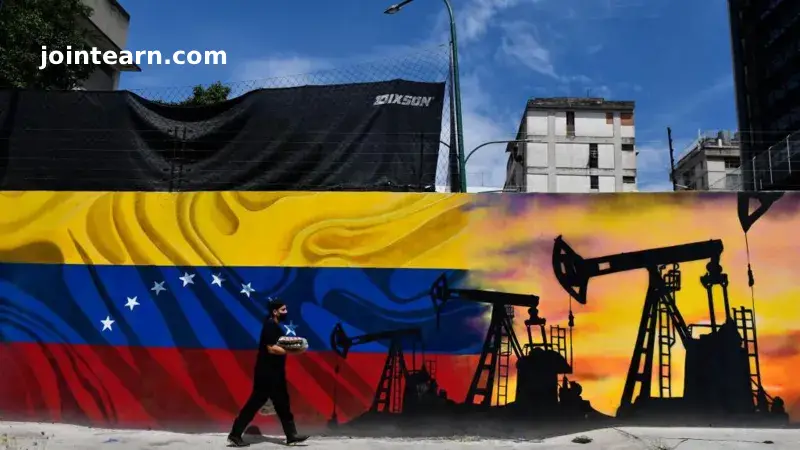
Venezuelan President Nicolás Maduro claims that escalating pressure from the United States is primarily motivated by Washington’s desire to seize Venezuela’s vast oil reserves. Recent US military actions, including the seizure of an oil tanker allegedly carrying Venezuelan crude in violation of sanctions, have intensified the debate over America’s real goals in the South American nation.
Venezuela’s Oil Reserves vs. Current Production
Venezuela is home to the world’s largest proven oil reserves, estimated at around 303 billion barrels. Despite this, the country’s current oil production is a fraction of its potential. Years of mismanagement, nationalization under Hugo Chávez, and the subsequent Maduro administration’s tight control over PDVSA—the state-owned oil company—have caused a significant decline in output.
In November 2025, Venezuela produced approximately 860,000 barrels per day, barely a third of the level seen a decade ago, representing less than 1% of global oil consumption. US sanctions, initially imposed in 2015 under the Obama administration and expanded under subsequent administrations, have further restricted investment and access to necessary parts and expertise.
“The real challenge is infrastructure,” said Callum McPherson, head of commodities at Investec, highlighting that Venezuela’s oil is difficult to exploit without substantial modernization.
Does the US Really Want Venezuela’s Oil?
Some American voices have openly suggested intervention could benefit US oil companies. Florida Republican Congresswoman María Elvira Salazar recently stated that reopening Venezuela’s oil industry would be a “field day” for American firms, allowing them to repair pipelines and rigs while boosting domestic oil supplies.
Former President Donald Trump, who campaigned on “drill, baby, drill” and has advocated expanding oil production to reduce fuel prices, could appear receptive to such arguments. However, the White House maintains that its main focus is drug trafficking and the legitimacy of Maduro’s government, rather than controlling Venezuela’s oil.
White House Press Secretary Karoline Leavitt emphasized that stopping the flow of illegal drugs into the US is the administration’s “number one priority.” Experts like Clayton Siegle, senior fellow at the Center for Strategic and International Studies, suggest the US position should be taken largely at face value, noting that oil is not central to official policy.
US Interests in Venezuela’s Energy Sector
Despite the political focus on sanctions and drug control, American companies do have stakes in Venezuela. Chevron is currently the only US oil firm operating in the country, producing around 20% of Venezuela’s crude output. Analysts note that Chevron and other potential investors could profit if US sanctions were lifted, particularly because Venezuelan heavy crude is less expensive and in demand for Gulf Coast refiners.
Matt Smith, an oil analyst at Kpler, explained:
“US refiners have struggled to access Venezuelan heavy crude due to sanctions and declining production. There’s clear commercial interest, even if production expansion is not politically motivated.”
Challenges to Reviving Venezuela’s Oil Industry
Even if sanctions were lifted or Maduro was removed, restoring Venezuela’s oil production would be challenging. Analysts estimate it would take tens of billions of dollars and potentially a decade to return to previous output levels.
A Wood Mackenzie report suggests that modest investments could increase production to about 2 million barrels per day over two years, but significant obstacles remain, including aging infrastructure, OPEC membership, and global shifts in oil demand.
David Oxley, chief climate and commodities economist at Capital Economics, warns:
“Oil demand is no longer growing as it was. Long-term projections show subdued or declining demand in the 2030s. Companies need to consider whether Venezuelan oil investments are profitable before committing significant capital.”
Conclusion
While Venezuela holds enormous oil reserves, its current production is limited, and restoring the industry would require massive investment and time. The US, under Trump or other administrations, has expressed interest in both geopolitical and economic outcomes, but drug trafficking and regime legitimacy remain the official priorities. Any move toward seizing or exploiting Venezuelan oil would face practical, financial, and political challenges that make immediate gains unlikely.


Leave a Reply