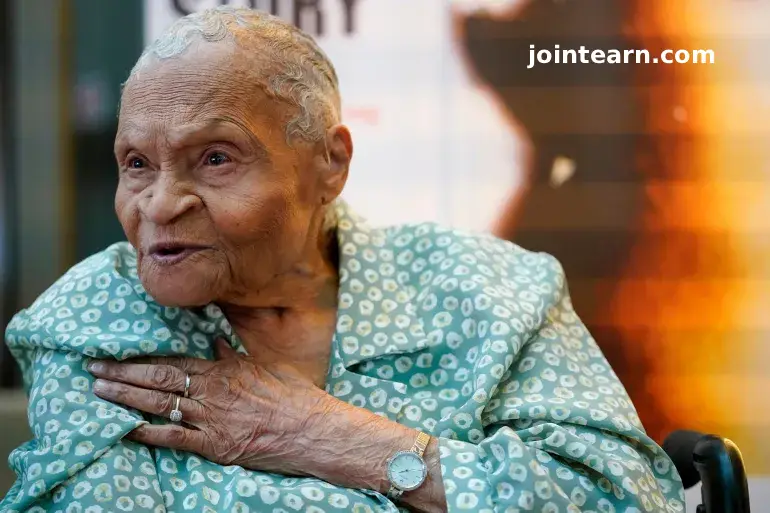
Viola Ford Fletcher, one of the last surviving witnesses of the 1921 Tulsa Race Massacre, has passed away at the age of 111. Fletcher was widely recognized not only for surviving one of the deadliest incidents of racial violence in United States history but also for her lifelong advocacy for justice and recognition for the victims.
A Life of Resilience and Activism
Tulsa Mayor Monroe Nichols paid tribute to Fletcher, calling her “Mother Viola Fletcher” and acknowledging her extraordinary resilience:
“She was a survivor of one of the darkest chapters in our city’s history and endured more than anyone should. Mother Fletcher carried 111 years of truth, resilience, and grace and was a reminder of how far we’ve come and how far we must still go.”
Fletcher was only seven years old when the massacre destroyed Tulsa’s Greenwood District, a thriving Black community often referred to as “Black Wall Street.” Under the Jim Crow laws, Oklahoma, like much of the American South, imposed strict racial segregation during that period.
The 1921 Tulsa Race Massacre
The massacre began on May 31, 1921, when 19-year-old Black shoeshiner Dick Rowland was arrested on allegations of assaulting a white woman, according to the U.S. Justice Department’s Civil Rights Division. When a crowd of white men gathered at the courthouse demanding Rowland’s lynching, a group of Black men intervened to protect him, sparking violent confrontations that escalated over two days.
Over the course of the attacks, vigilante groups and law enforcement burned down 35 blocks of the Greenwood District, which was home to one of the wealthiest Black communities in the country. The Bureau of Labor Statistics estimated in 2024 that the total damage was around $32.2 million when adjusted for inflation. Estimates suggest that up to 300 residents were killed, with another 700 injured, although many were buried in unmarked graves, leaving the exact toll unknown.
Survivors, including Fletcher and her family, were forced to flee and rebuild their lives from scratch. Her family became sharecroppers, a form of subsistence farming in which most of the harvest was surrendered to landlords.
Limited Recognition and Ongoing Advocacy
Despite the massacre’s magnitude, it received little national attention for decades. It wasn’t until 1997 that Oklahoma established an investigative commission, and efforts to secure reparations for victims in 2001 were blocked due to the statute of limitations.
On the centennial anniversary in 2021, Fletcher testified before the US Congress, recounting her experiences and advocating for justice. In 2023, she co-authored her memoir, Don’t Let Them Bury My Story, with her grandson, further documenting her life and the history of the Tulsa Massacre.
Tributes from Leaders and the Public
Fletcher’s passing drew tributes from across the United States, including from former President Barack Obama:
“As a survivor of the Tulsa Race Massacre, Viola Ford Fletcher bravely shared her story so that we’d never forget this painful part of our history. Michelle and I are grateful for her lifelong work to advance civil rights, and send our love to her family.”
Fletcher’s life and activism serve as a powerful reminder of resilience, the importance of historical memory, and the ongoing struggle for racial justice in America.


Leave a Reply