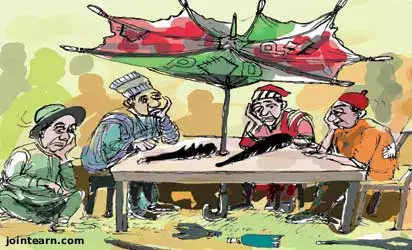
WADATA Plaza, the national secretariat of the Peoples Democratic Party (PDP), became a full-blown battleground last Tuesday as rival factions clashed violently over control of the party’s headquarters.
Police officers from the FCT Command fired tear gas repeatedly, affecting governors, party leaders, supporters, and journalists alike. In minutes, the once-proud PDP secretariat transformed into the symbolic and physical center of a desperate struggle for the soul of Nigeria’s biggest opposition party.
The tensions didn’t arise overnight. Rival camps—one loyal to FCT Minister Nyesom Wike and the other to Oyo Governor Seyi Makinde—had been circling each other cautiously for months. The Plaza had long stopped being just an office; it had become a throne room, where political authority was tested through presence and control.
When newly elected National Chairman Kabiru Turaki, SAN, entered the building, he did so with a sense of purpose. Supported by Governors Makinde and Bala Mohammed, his move to assert control over the Plaza was not just symbolic—it was a bold claim to leadership in a party that has lost its compass.
In today’s PDP, power is measured by control of the physical space. Files, seals, and offices are no longer ordinary; they are symbols of authority. To lead, one must first stand firmly in the headquarters.
Gone are the days when disputes were quietly resolved through mediation by party elders. Letters, conventions, and appeal committees no longer carry the weight they once did. The Plaza now mirrors the party’s fractures: every door, barricade, and corridor reflects a struggle for survival and dominance.
The police presence added another layer to the contest. Security forces have become a key instrument in Nigeria’s political battles, and their involvement underscored how internal conflicts now extend beyond the party’s walls.
The broader consequence is clear: the fight over Wadata Plaza is draining energy, time, and public trust. For an opposition party, unity and readiness are essential, yet the Plaza has become a symbol of division, weakening PDP at a critical moment.
Ultimately, the party’s future may hinge on who controls the keys to the secretariat. If Turaki succeeds, PDP could reclaim a chance at rebuilding. If not, Wadata Plaza may remain a permanent reminder of a party struggling under the weight of unresolved conflicts.


Leave a Reply