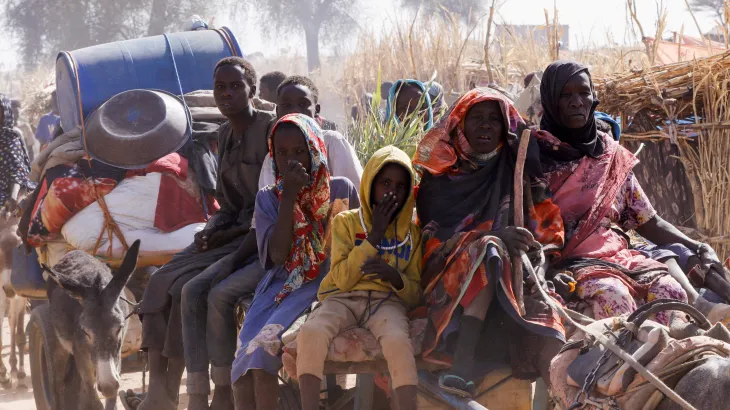
The humanitarian crisis in Sudan continues to worsen as civilians flee escalating conflict between the paramilitary Rapid Support Forces (RSF) and the Sudanese Armed Forces (SAF). Thousands of displaced people, including women, children, and the elderly, are facing life-threatening conditions as they seek safety in makeshift camps in White Nile province.
Escalation in Heglig and Mass Displacement
In early December, the RSF seized control of the strategic Heglig oilfield in West Kordofan province after SAF forces withdrew. This takeover sparked a fresh wave of displacement, with families forced to abandon their homes with little more than the clothes on their backs.
Approximately 1,700 civilians, most of them children and women, fled from towns and villages near Heglig, enduring grueling journeys under extreme conditions. Many arrived at the Gos Alsalam displacement camp in Kosti, where shelter, food, and medical aid remain critically limited.
“We left without anything … we just took some clothes,” said an elderly woman at the camp, her voice reflecting exhaustion and despair.
Dire Conditions in Displacement Camps
Inside the Gos Alsalam camp, newly arrived families are met with insufficient humanitarian support. Tents are erected hastily, leaving many residents exposed to harsh weather. Basic necessities such as blankets, clean water, and proper bedding are scarce, worsening the suffering of an already vulnerable population.
An elderly woman shared her struggle: “We have no blankets or any sheets, nothing. We are old people.”
Birth and Survival Amid Conflict
The conflict has forced civilians to endure unimaginable hardships. One mother, Umm Azmi, recounted giving birth on the roadside without medical assistance. “I was trying for nine months … but I gave birth in the street – the condition is very difficult,” she said. “I had just given birth, and I had nothing to eat. Sometimes we eat anything we find in the streets.”
These stories illustrate the extreme vulnerability of civilians caught between the RSF and SAF, who have been engaged in a brutal conflict for nearly three years, displacing over 14 million people nationwide.
A Widening Humanitarian Catastrophe
The United Nations estimates that some 21 million people in Sudan are facing acute hunger, marking the country’s crisis as the largest humanitarian emergency in the world. The ongoing violence has not only disrupted food distribution but also hindered humanitarian aid from reaching those in need, leaving millions exposed to malnutrition, disease, and death.
International agencies and local humanitarian organizations are struggling to provide even basic assistance to displaced populations. Despite ongoing relief efforts, the scale of the crisis far exceeds available resources, leaving families dependent on scarce aid and ad hoc support.
Looking Forward
As the conflict between the RSF and SAF continues, civilians remain trapped in a cycle of displacement, insecurity, and deprivation. Without a durable ceasefire and coordinated humanitarian response, the suffering of Sudanese civilians is expected to intensify, further exacerbating the country’s political instability and social turmoil.
The plight of displaced Sudanese families highlights the urgent need for international attention and increased humanitarian support. Ensuring access to food, medical care, and safe shelter is critical to preventing further loss of life and long-term societal collapse.


Leave a Reply