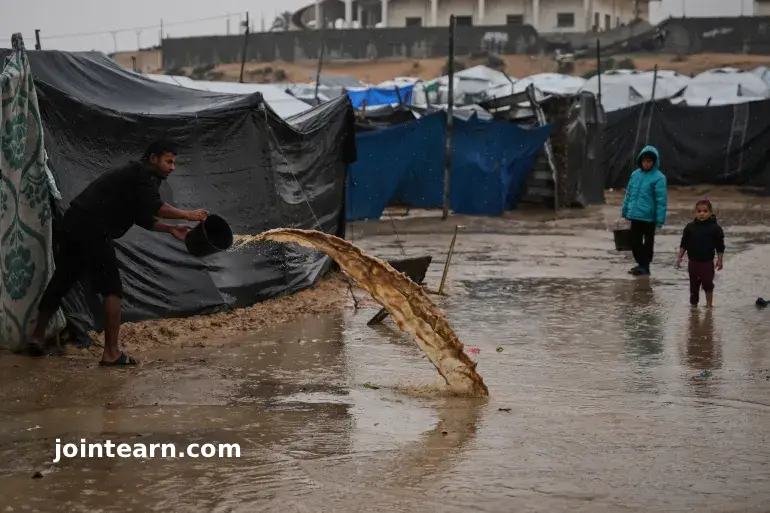
Storm Byron has battered Gaza’s tent camps, drenching tens of thousands of displaced Palestinians and exposing the fragility of a two-month-old ceasefire. Families in makeshift shelters are now facing flooded tents, soaked belongings, and heightened health risks amid freezing winter conditions.
Flooded Camps and Overwhelmed Families
In tent camps across Gaza, residents waded through knee-deep water as torrential rains poured down, turning dirt roads into mudslides and sending sewage and debris rushing through streets. Children were forced to trudge through opaque brown floodwater while families scrambled to save their possessions and food supplies.
Um Salman Abu Qenas, a displaced mother in Khan Younis, said: “We have been drowned. I don’t have clothes to wear and we have no mattresses left.” Other residents reported that not a single tent escaped flooding, with children, elderly, and sick people most at risk.
Aliaa Bahtiti described her eight-year-old son “soaked overnight, and in the morning he had turned blue, sleeping on water,” while Baraka Bhar struggled to care for her three-month-old twins, one of whom suffers from hydrocephalus.
Humanitarian Aid Shortages Worsen Crisis
Aid organizations warn that the humanitarian situation is worsening due to insufficient shelter materials entering Gaza, as ceasefire obligations are not being fully met. Israel’s military has reportedly failed to allow 600 aid trucks daily into Gaza, a key requirement of the truce.
“Cold, overcrowded, and unsanitary environments heighten the risk of illness and infection,” the United Nations Relief and Works Agency for Palestinian Refugees (UNRWA) said on X. “This suffering could be prevented by unhindered humanitarian aid, including medical support and proper shelter.”
Structural Damage and Emergency Response
The Palestinian Civil Defence reported that at least three previously damaged buildings in Gaza City partially collapsed due to heavy rain. Authorities urged residents to avoid damaged structures. Since the storm began, over 2,500 distress calls have been received from Palestinians with damaged tents and shelters.
Residents are manually bailing water from their tents using buckets and mops, while many rely on salvaged tarpaulins, plastic sheets, and blankets tied to wooden poles for shelter. For the 1.5 million Palestinians living under these fragile shelters, the storm represents a life-threatening hazard on top of existing conflict-related hardships.
Gaza’s Ongoing Struggle
For families in Gaza, the storm highlights how the humanitarian crisis remains largely unaddressed despite a ceasefire. Many describe feeling trapped between the sky and the ground, unable to shield their families from flooding, cold, and disease.
Aid groups continue to call for unhindered access to Gaza, stressing that both emergency and long-term support is critical to prevent further loss of life and suffering as winter conditions persist.


Leave a Reply