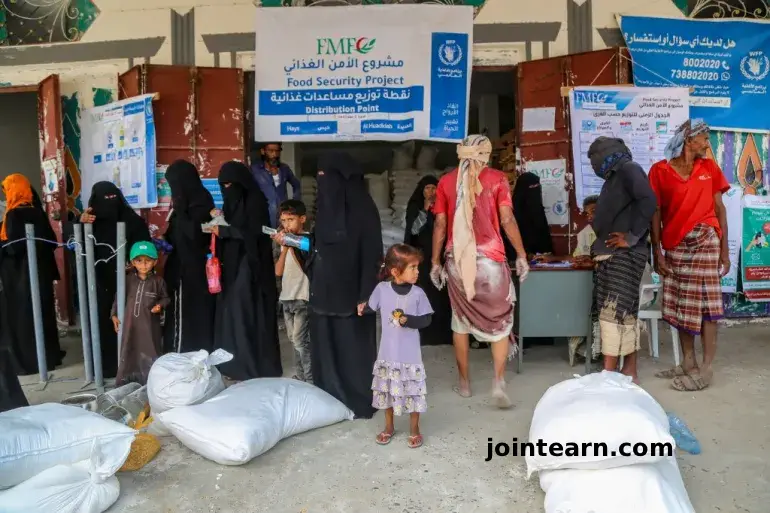
Yemen, one of the world’s most impoverished nations, is confronting a severe food crisis in 2026, with more than 18 million people—over half the population—at risk of worsening hunger, according to the International Rescue Committee (IRC). Aid agencies warn that the situation is rapidly deteriorating, fueled by conflict, economic collapse, and sharp reductions in humanitarian assistance.
Alarming Projections and Rising Hunger
New projections released under the Integrated Food Security Phase Classification (IPC) system indicate that an additional one million Yemenis are now at risk of life-threatening hunger. The assessment also identifies pockets of potential famine affecting more than 40,000 people across four districts within the next two months—the bleakest outlook for Yemen since 2022.
Years of war and mass displacement have destroyed livelihoods, disrupted food production, and limited access to basic health and nutrition services. These pressures are compounded by a nationwide economic collapse, which has drastically reduced household purchasing power and driven up the cost of essential food items.
Collapse in Humanitarian Funding
Humanitarian aid for Yemen has reached critically low levels. By the end of 2025, the country’s required humanitarian response was less than 25% funded, the lowest in a decade. Life-saving nutrition programmes received under 10% of the funding needed, leaving millions without essential support.
“This rapid deterioration—driven by catastrophic humanitarian funding cuts, climate shocks, economic collapse, and compounded by recent insecurity—calls for urgent action to reverse the unfolding catastrophe,” the IRC said in a statement.
Caroline Sekyewa, the IRC’s country director in Yemen, emphasized the speed of the crisis, warning that the situation could quickly return to the severe shortages seen in previous years.
“People of Yemen still remember when they didn’t know where their next meal would come from. I fear we are returning to this dark chapter again. What distinguishes the current deterioration is its speed and trajectory,” Sekyewa said.
Families Forced into Desperate Choices
The humanitarian crisis is forcing Yemeni families into impossible choices. Parents are struggling to feed their children, with some resorting to collecting wild plants or skipping meals to survive.
“Food insecurity in Yemen is no longer a looming risk; it is a daily reality,” Sekyewa said.
Despite the severity of the situation, the IRC stressed that the crisis is preventable with immediate international support. Cash assistance has been highlighted as one of the most effective interventions, enabling families to meet basic needs with dignity.
Political and Security Tensions Fuel the Crisis
The food crisis is occurring alongside renewed political instability and security tensions. In December 2025, the UAE-supported Southern Transitional Council (STC) seized significant territory in southern and eastern Yemen, approaching the Saudi border before Saudi-backed forces regained much of the land.
Analysts warn that unresolved rivalries between Saudi Arabia and the UAE, coupled with ongoing disputes over geopolitics and oil policy, could drag Yemen into wider conflict, further exacerbating the hunger crisis.
Urgent Call for International Action
Aid organizations, including the IRC, are calling for immediate donor action to prevent widespread famine. Without prompt and sustained support, millions of Yemenis may face a life-threatening food shortage in early 2026, with children, pregnant women, and displaced families at the highest risk.
“Yemen’s food security crisis is not inevitable,” Sekyewa stressed. “Immediate humanitarian intervention and funding can save lives.”
The Yemen food crisis 2026 serves as a stark reminder of the devastating impact of conflict, economic collapse, and underfunded aid programs on vulnerable populations. International attention and coordinated action are essential to prevent this unfolding catastrophe from claiming more lives.


Leave a Reply