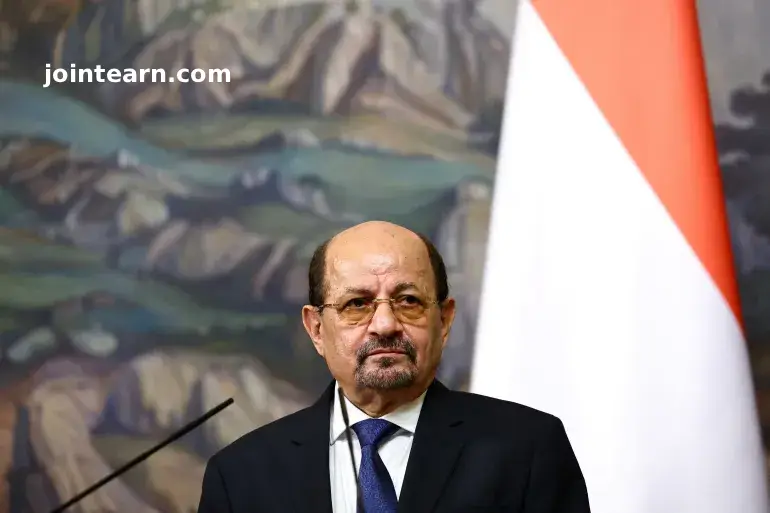
Sanaa, Yemen – Yemen’s Saudi-backed Presidential Leadership Council (PLC) has accepted the resignation of Prime Minister Salem bin Breik and appointed Foreign Minister Shaya Mohsin Zindani as the country’s new prime minister, according to state news agency Saba. Zindani has been tasked with forming the next cabinet amid ongoing political consolidation and regional tensions.
Saudi Arabia Consolidates Control Over Yemen’s Presidential Leadership
Bin Breik formally submitted his resignation, which the PLC approved before Zindani’s appointment. The leadership reshuffle comes amid heightened friction between Saudi Arabia and the United Arab Emirates (UAE) over Yemen’s southern territories and the role of separatist forces.
The main southern separatist group, the Southern Transitional Council (STC)—widely considered by Saudi officials to be UAE-backed—advanced across southern and eastern Yemen in December, reaching near the Saudi border. The PLC, with Saudi backing, subsequently pushed back the STC, regaining control of those areas.
These developments highlight growing differences between Saudi Arabia and the UAE, which have previously coordinated under a coalition to fight the Iran-backed Houthi rebels in Yemen, contributing to one of the world’s most severe humanitarian crises.
Dismissal of STC Members Signals Political Shift
On the same day as Zindani’s appointment, Yemen’s eight-member PLC dismissed Faraj Salmeen Al-Bahsani, a vice president of the STC who was receiving treatment in the UAE and formerly governor of Hadramout province, a key oil-producing region. The decision consolidates Saudi influence over Yemen’s presidential body and further weakens southern separatist leadership.
Earlier this month, STC leader Aidarous al-Zubaidi, also a PLC member, was accused of “high treason” and fled to the UAE after the group attempted to seize control of southern territories. Bahsani’s dismissal cited his support for Zubaidi’s actions and public statements aligned with the STC takeover.
Appointments Reflect Pro-Saudi Orientation
Following the dismissals, the PLC appointed two pro-Saudi figures:
- Lieutenant General Mahmoud al-Subaihi – former defense minister and security advisor to PLC chairman Rashad al-Alimi.
- Salem al-Khanbashi – governor of Hadramout province.
These appointments reinforce the Saudi-backed administration’s control over Yemen’s decision-making structures and aim to stabilize governance in the south.
Saudi Support for Yemen’s Government
Saudi Arabia has pledged substantial financial support to the Yemeni government to stabilize the country. On Thursday, the kingdom provided $90 million to cover two months’ salaries for public servants and military personnel. This comes just a day after Saudi Arabia announced a $0.5 billion humanitarian aid package for reconstruction and development projects in Yemen.
The funding is designed to strengthen the PLC’s authority, maintain security in southern Yemen, and prevent further separatist incursions or unrest.
Regional Implications and the UAE Factor
Tensions between Saudi Arabia and the UAE in Yemen’s south underscore the fragile nature of Gulf involvement in the country. While both countries were previously aligned in the fight against the Houthis, divergent priorities over separatist groups and territorial control have led to political friction.
Separatist representatives have expressed grievances about the Riyadh-based talks, claiming coercion and restrictions. Bahsani previously urged Saudi authorities to allow southern factions to meet outside of Saudi Arabia, free from external pressures.
The STC maintains that any decisions made under Saudi oversight are not fully representative of southern Yemenis, while the PLC has moved to ensure governance aligns with Saudi-backed objectives.
Outlook for Yemen
The appointment of Shaya Mohsin Zindani as prime minister marks a decisive step in consolidating central government authority under Saudi guidance. With the dismissal of STC-aligned figures and the appointment of pro-Saudi officials, the PLC aims to stabilize governance, control strategic provinces, and advance public service delivery amid Yemen’s ongoing civil conflict.
The combination of political restructuring, financial support, and strategic appointments positions the PLC to assert stronger authority over Yemen’s south, even as tensions with the UAE and the broader Houthi conflict in the north continue to challenge stability.


Leave a Reply